











I am a creature of the sun and salt, having built a life — and career — navigating the world’s third-largest barrier reef here in the Florida Keys.
Our waters feel like a bath, and the biggest wardrobe dilemma is sometimes which SPF-rated sunshirt to wear for the day. So, the odds were not logical nor favorable that I’d feel comfortable in a place far from home, where the ocean hovers just above freezing and the sun doesn’t set for months.
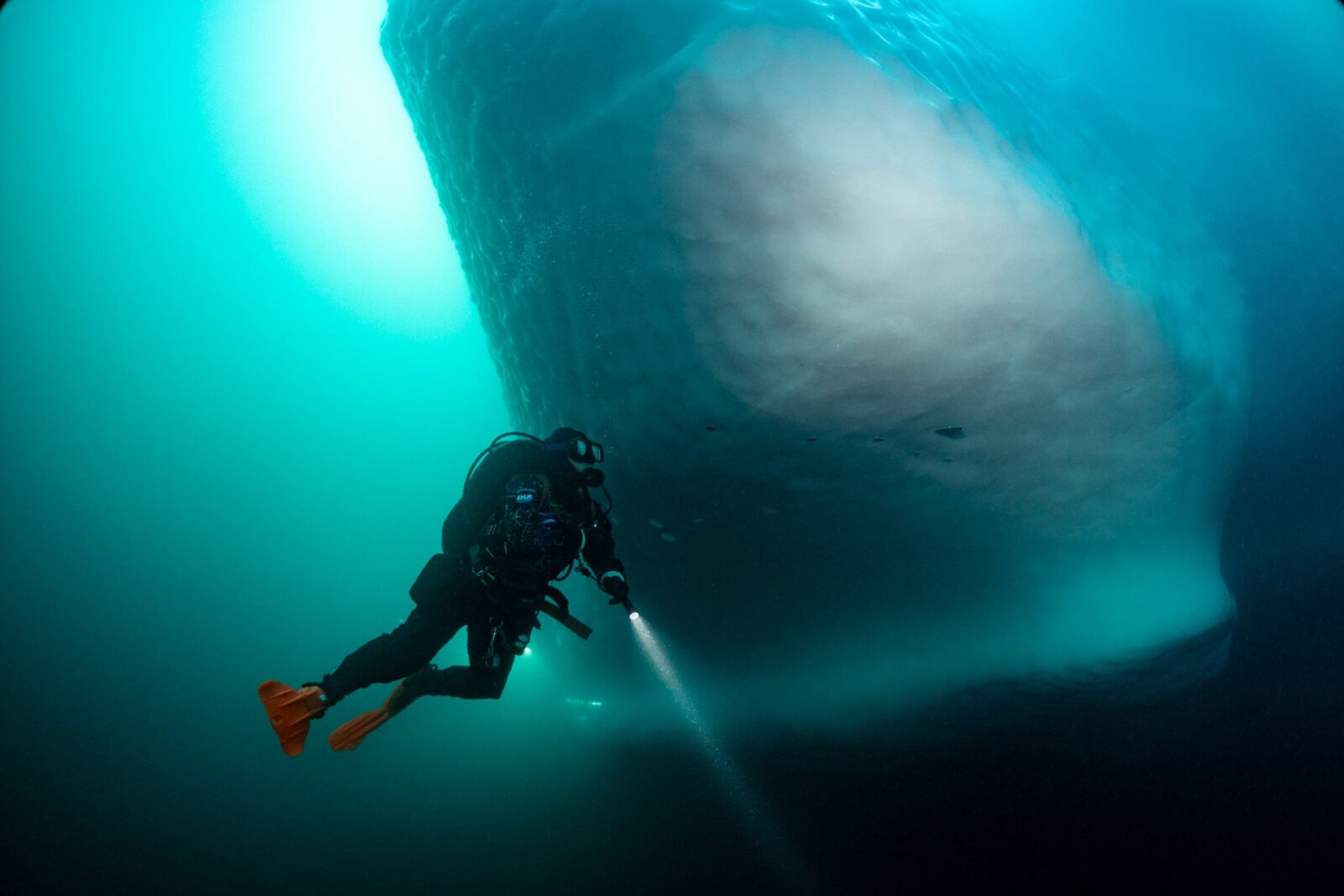
But this summer, I did just that. I journeyed from our southernmost archipelago to the northernmost town on Earth with a permanent civilian population: Longyearbyen. My primary objectives included leading acoustic studies with my nonprofit organization, The Seabirds Foundation, and participating in citizen science and exploratory scuba dives. Beyond that, the trip was a study in hilarious, breathtaking contrasts, proving that a girl from the Keys can not only survive but thrive at the top of the world — and even find some surprising, sobering parallels between the two island chains along the way.
First, let’s set the map straight: just like the Florida Keys, this place has its own unique hierarchy. Think of Svalbard as the entire archipelago of the Florida Keys. This Norwegian territory sits well above the Arctic Circle, and its name means “cold shores.” Within Svalbard, the largest and northernmost island with permanent settlements is Spitsbergen; a Keys equivalent would be Key Largo, but placed where Key West now sits.

Longyearbyen, where I spent a blustery week, is similar to Old Town Key West, the “capital” and most populated hub of the biggest island in the archipelago. Around 2,000 people live here year-round, and infrastructure includes the world’s northernmost international airport, nightclub and sushi restaurant.
Arriving in Longyearbyen in August felt like stepping onto another planet. The Arctic has a special allure: a rawness that brings out the wilder side of people and places. The air is crisp, and I inhaled deeply to take it all in.
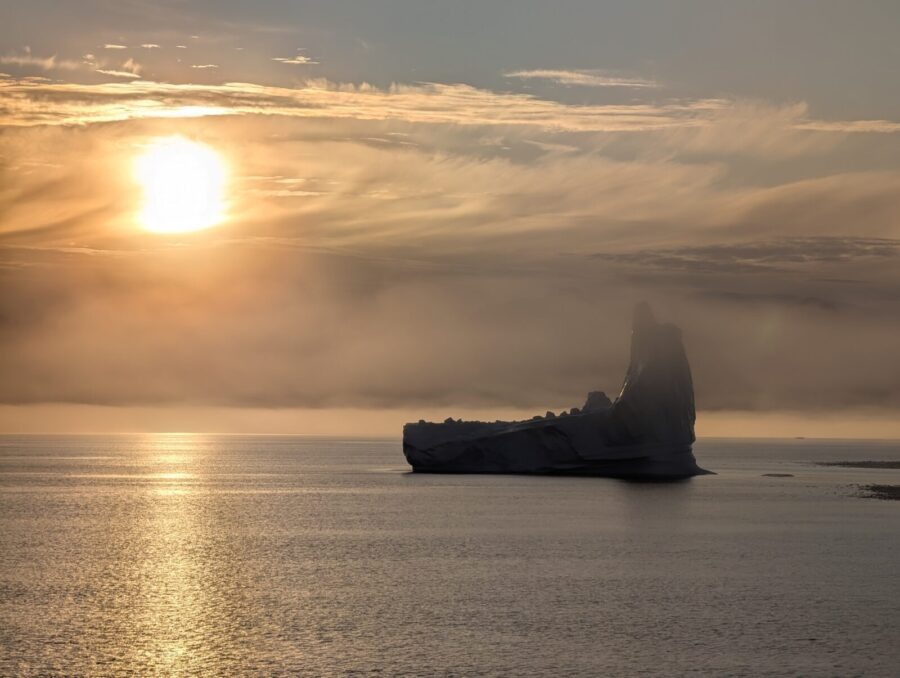
A mere 814 miles from the North Pole, Longearbyen is so far north (about 78°N latitude) that “one night … lasts for three months during the winter,” and the sun doesn’t set for five months of the year. I arrived during this constant, surreal midnight sun, a phenomenon where, from April 19 to Aug. 23 every year, the sun stays above the horizon. I wandered the town’s two main streets at 3 a.m. because I could, still incredulous that it was as bright as 3 p.m. There was one other tourist out, an influencer of sorts filming a selfie video down an empty street.
And, while the setting was farfetched, it was also instantly familiar; an island mentality pervaded, with a quirkiness that can only be appreciated by others who choose to live in such remote places. While the Keys enjoy relaxed “no shirt, no shoes, no problem” vibes, Longyearbyen has a “no shoes” custom held over from the town’s coal-mining days. Many buildings, including hotels, restaurants, bars and even some shops ask patrons to remove their shoes before entering, leaving the snow and Arctic grit at the door. Instead of well-manicured toes, people here sport the latest in winter sock-wear.
Just as we have unique wildlife, our beloved Key deer, they have theirs: Svalbard reindeer roam the hills outside of town and are the smallest type of reindeer on earth – their own subspecies.
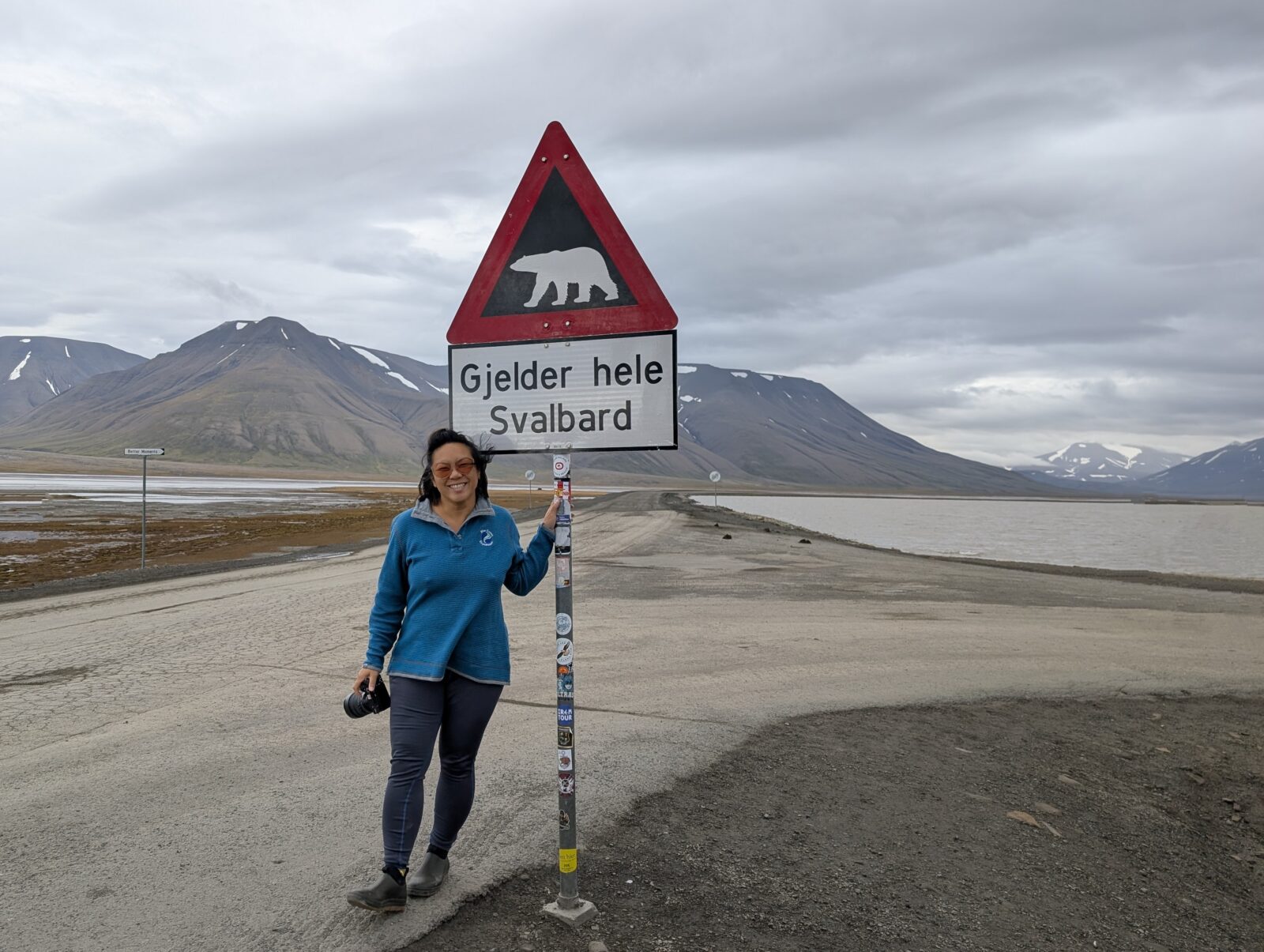
Our mile marker signs help us orient ourselves along U.S. 1 while their polar bear warning signs keep residents and visitors within the safe zone. Since there are more polar bears than people in Svalbard, it is actually illegal to travel outside of a settlement without a firearm and polar bear training.
Several local Longyearbyen laws luckily don’t have a southernmost analog:
- No cats allowed on Svalbard to protect sensitive native birdlife.
- You cannot be born or die on Spitsbergen: women about to give birth and people gravely ill must travel to mainland Norway for care.
- No burials permitted, because the permafrost prevents bodies from decomposing.
The surreal experience of traveling so far north also reminded me of our shared reality: both island chains are on the frontlines of climate change, just experiencing opposite effects of the same warming planet. The Arctic is heating up nearly four times faster than the rest of the world, melting glaciers that pour freshwater into the ocean and raise sea levels. Down in the Keys, abnormally-warm water cooks our corals, and rising sea levels — fueled in part by melt at the poles — pose a threat to our islands’ low-lying way of life. A literal world apart, these two places are united by an ocean in crisis.
Both can serve as bellwethers, sending the same urgent message from opposite parts of our planet. Both are full of resilient, adaptable, interesting people who’ve learned to live by the unique rules that nature has set in very spectacular, remote and fragile places.
Leaving the land of eternal summer for the land of the midnight sun, I wasn’t really sure what to expect. To my surprise and comfort, I discovered that an island girl, no matter how sun-kissed, can still find her footing anywhere – especially if she remembers to take her shoes off at the door.