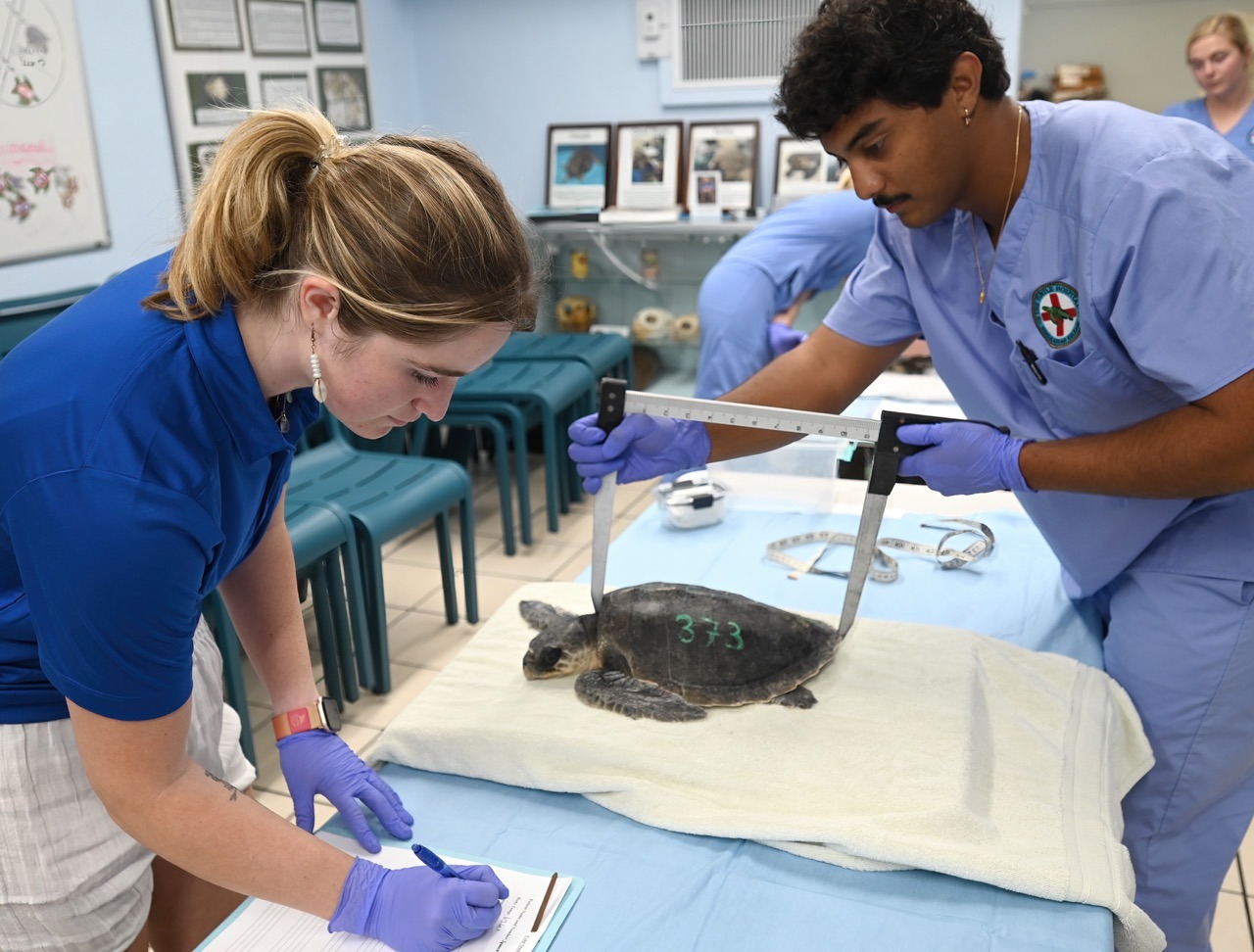
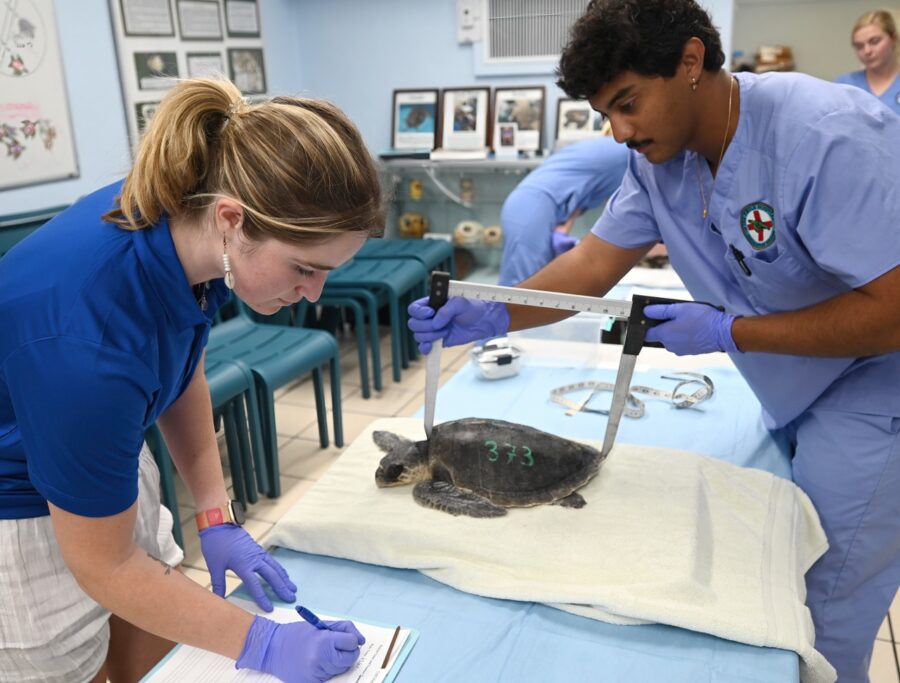
Diego Lopez, right, a rehabilitation specialist at the Florida Keys-based Turtle Hospital, measures one of 25 cold-stunned Kemp’s ridley sea turtles that arrived Tuesday, Dec. 9, 2025, after being flown from the New England Aquarium to Marathon, Fla. Taylor Adams, left, records the measurements. The critically endangered turtles were found stranded recently on the coast of Cape Cod, Mass., as a result of the condition. “Cold stunning” is a hypothermic reaction that occurs when sea turtles are exposed to cold water for a prolonged time. It typically causes them to stop eating and swimming. The turtles are to warm up at the hospital and be rehabilitated for eventual release. FOR EDITORIAL USE ONLY (Andy Newman/Florida Keys News Bureau
More than two dozen critically endangered Kemp’s ridley sea turtles arrived in the Keys on Dec. 9 to warm up and receive treatment after suffering “cold stunning” in waters off New England.
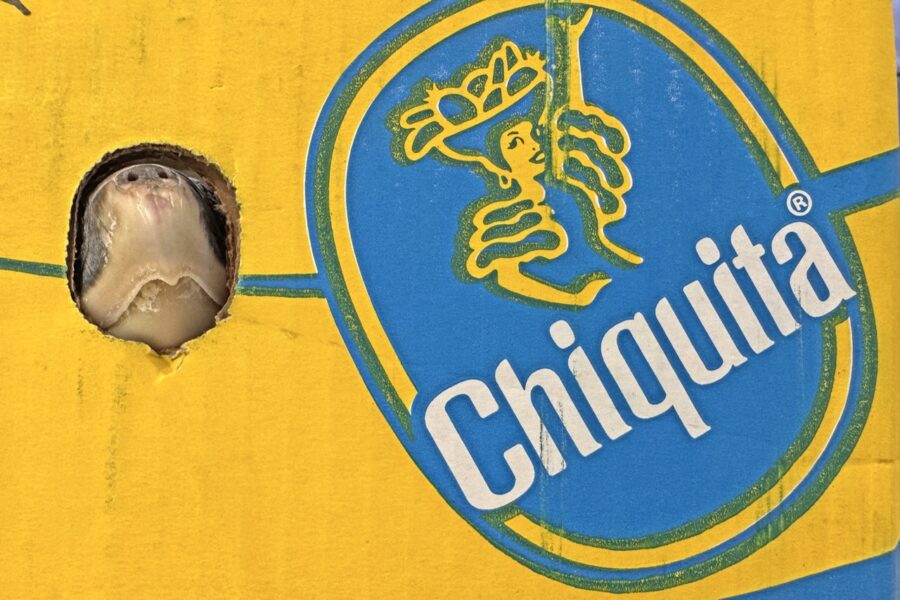
Found stranded as a result of the condition, the 25 turtles were rescued and flown to Florida Keys Marathon International Airport, arriving Tuesday afternoon in banana boxes from a temporary holding center at the New England Aquarium.
“Because of global warming, the turtles remain in the bay off Cape Cod longer than normal and, when severe cold weather suddenly moves in, the little turtles get trapped,” said Turtle Hospital manager Bette Zirkelbach. “Fortunately, there are teams of volunteers that patrol the beaches there to rescue as many turtles as possible.”
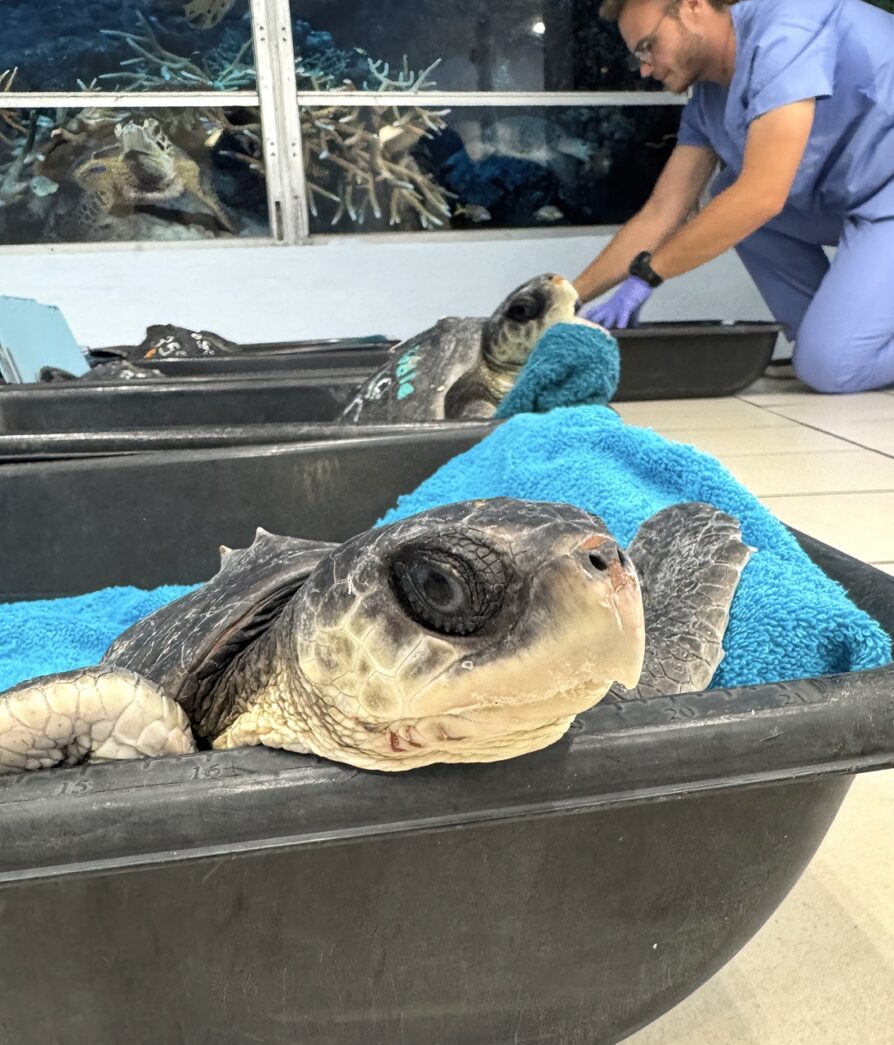
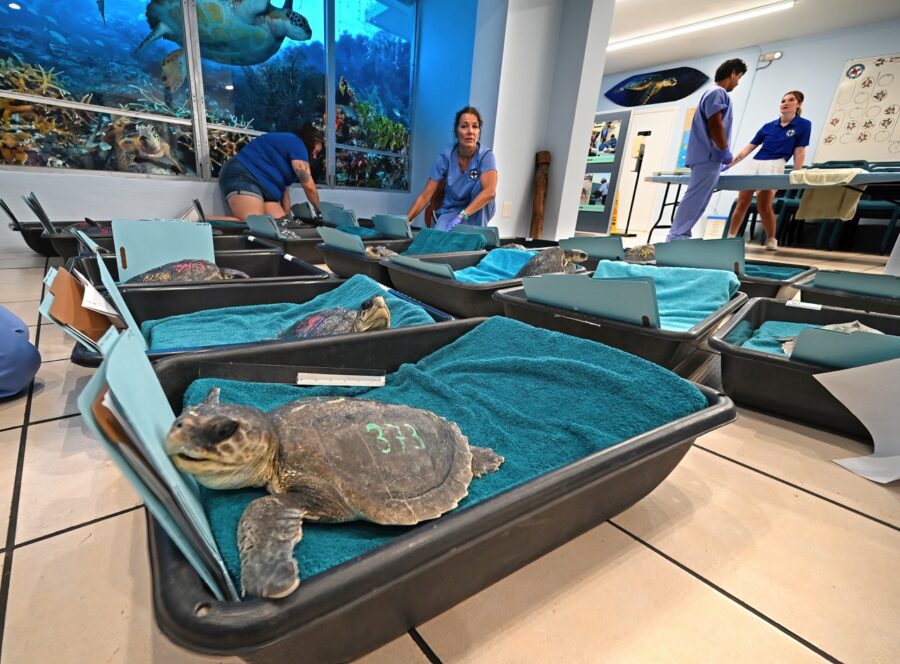
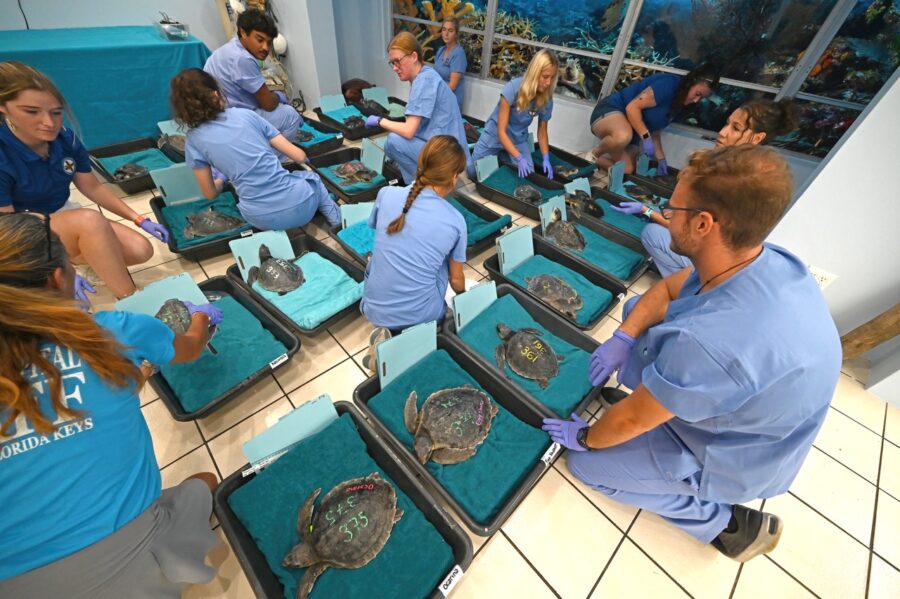
The turtles now are in warmer water in outside tanks at the Turtle Hospital.
“Cold stunning” is a hypothermic reaction that occurs when sea turtles are exposed to cold water for a prolonged time. It typically causes them to stop eating and swimming, Zirkelbach said.
“Sea turtles … take on the temperature of the air and the water surrounding them, because they are unable to regulate their own body temperature,” Zirkelbach said. “Anything below 50 degrees Fahrenheit can become a mortality event for a sea turtle.”
She said the rescue, transportation to the Keys, rehabilitation and release is a result of cooperative actions by many entities and people.
“It’s a massive effort combined with many organizations that rescue these turtles right at the site,” she said. “There’s an incredible organization, ‘Lighthawk,’ where volunteer pilots fly these turtles down to warmer places.”
The pilots donate their aircraft, fuel and time.
After arrival at the Turtle Hospital, the “cold-stunned” turtles are tested to discover whether they have pneumonia, infections or other ailments, with their treatment and rehabilitation determined by test results.
Kemp’s ridley sea turtles are the most endangered of all sea turtle species, Zirkelbach said.
Diego Lopez, right, a rehabilitation specialist at the Florida Keys-based Turtle Hospital, measures one of 25 cold-stunned Kemp’s ridley sea turtles that arrived Tuesday, Dec. 9, 2025, after being flown from the New England Aquarium to Marathon, Fla. Taylor Adams, left, records the measurements. The critically endangered turtles were found stranded recently on the coast of Cape Cod, Mass., as a result of the condition. “Cold stunning” is a hypothermic reaction that occurs when sea turtles are exposed to cold water for a prolonged time. It typically causes them to stop eating and swimming. The turtles are to warm up at the hospital and be rehabilitated for eventual release. Andy Newman/The Turtle HospitalBette Zirkelbach, manager of the Florida Keys-based Turtle Hospital, unloads a banana box with a cold-stunned Kemp’s ridley sea turtle that was flown from the New England Aquarium to Marathon, Fla., Tuesday, Dec. 9, 2025. The reptile was one of 25 critically endangered Kemp’s ridley sea turtles that were found stranded recently on the coast of Cape Cod, Mass., as a result of the condition. They were flown to the Florida Keys by a volunteer organization called LightHawk, composed of pilots who donate their services, aircraft and fuel to help sea turtles. Andy Newman/The Turtle HospitalBlood is extracted from an endangered Kemps Ridley sea turtle Tuesday, Dec. 9, 2025, at the Florida Keys-based Turtle Hospital in Marathon, Fla. The reptile was one of 25 cold-stunned Kemp’s ridley sea turtles that arrived after being flown from the New England Aquarium to Marathon, Fla. The critically endangered turtles were found stranded recently on the coast of Cape Cod, Mass., as a result of the condition. “Cold stunning” is a hypothermic reaction that occurs when sea turtles are exposed to cold water for a prolonged time. It typically causes them to stop eating and swimming. The turtles are to warm up at the hospital and be rehabilitated for eventual release. Andy Newman/The Turtle HospitalAn endangered Kemps Ridley sea turtle looks at its temnporarysurroundings Tuesday, Dec. 9, 2025, after arriving at the Florida Keys-based Turtle Hospital in Marathon, Fla. The reptile was one of 25 cold-stunned Kemp’s ridley sea turtles that were flown from the New England Aquarium to Marathon, Fla. The critically endangered turtles were found stranded recently on the coast of Cape Cod, Mass., as a result of the condition. “Cold stunning” is a hypothermic reaction that occurs when sea turtles are exposed to cold water for a prolonged time. It typically causes them to stop eating and swimming. The turtles are to warm up at the hospital and be rehabilitated for eventual release. Andy Newman/The Turtle HospitalStaff at the Florida Keys-based Turtle Hospital tend to some or the 25 cold-stunned Kemp’s ridley sea turtles that arrived Tuesday, Dec. 9, 2025, after being flown from the New England Aquarium to Marathon, Fla., to warm up and be rehabilitated for eventual release. The critically endangered turtles were found stranded recently on the coast of Cape Cod, Mass., as a result of the condition. “Cold stunning” is a hypothermic reaction that occurs when sea turtles are exposed to cold water for a prolonged time. It typically causes them to stop eating and swimming. Andy Newman/The Turtle HospitalStaff at the Florida Keys-based Turtle Hospital tend to 25 cold-stunned Kemp’s ridley sea turtles that arrived Tuesday, Dec. 9, 2025, after being flown from the New England Aquarium to Marathon, Fla., to warm up and be rehabilitated for eventual release. The critically endangered turtles were found stranded recently on the coast of Cape Cod, Mass., as a result of the condition. “Cold stunning” is a hypothermic reaction that occurs when sea turtles are exposed to cold water for a prolonged time. It typically causes them to stop eating and swimming. Andy Newman/The Turtle HospitalAn endangered Kemps Ridley sea turtle peers out of a banana box Tuesday, Dec. 9, 2025, after arriving at the Florida Keys-based Turtle Hospital in Marathon, Fla. The reptile was one of 25 cold-stunned Kemp’s ridley sea turtles that were flown from the New England Aquarium to Marathon, Fla. The critically endangered turtles were found stranded recently on the coast of Cape Cod, Mass., as a result of the condition. “Cold stunning” is a hypothermic reaction that occurs when sea turtles are exposed to cold water for a prolonged time. It typically causes them to stop eating and swimming. The turtles are to warm up at the hospital and be rehabilitated for eventual release. Andy Newman/Florida Keys News Bureau