









By Alex Rickert and Jim McCarthy
In the Florida Keys, immigration enforcement and changing international markets are draining the lifeblood of the island chain’s lobster industry. And locals are sounding the alarm.
For more than four decades, commercial fisherman Bruce Irwin has made his living on Keys waters. Working more than 100 hours per week to provide for his family, at the age of 63, today he said should be enjoying retirement. Instead, these days he’s back on his boats, filling the space of legal, documented immigrants at risk of being detained by immigration enforcement operations.
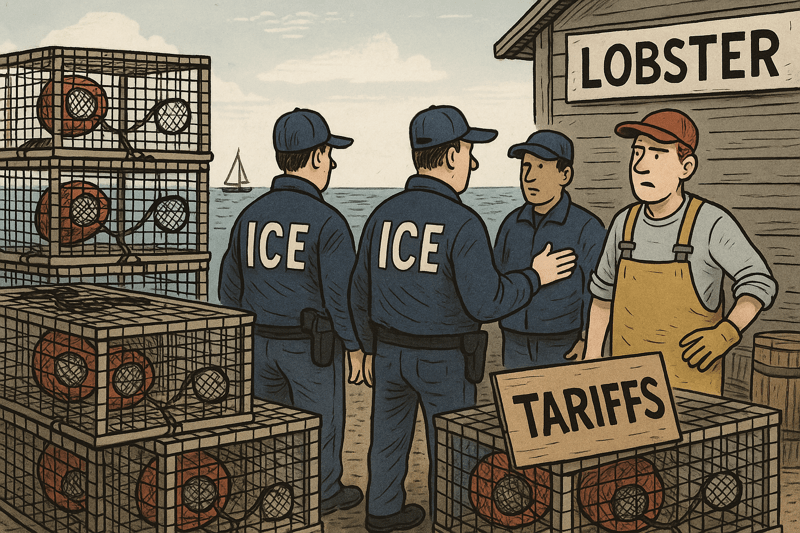
In early August, a social media post by Customs and Border Protection boasted of an arrest of “4 illegal aliens from Nicaragua” aboard a commercial fishing vessel in Marathon.
“Don’t try it … We are watching!” the post said. “Another win for #BorderSecurity.”
While the post generated a fair show of support, other comments from Keys locals weren’t so inviting.
“Show me an American who can keep up with these guys, I’ll hire you right now, then watch you crash on the first trip,” one comment wrote.
“Safe from what? Hardworking individuals who have no prior (arrests) and have legal work permits?” said another. “Legal working permits are being revoked … and those individuals are now being deported.”
Irwin and other fishermen throughout the Keys say that even if workers are here legally, their documents are no longer worth the paper they’re printed on.
“My crew came here seeking asylum. They checked in and did everything right, got their visas and work permits, which are cleared by the Department of Homeland Security. (The crew) come to work, and we’re all legal,” Irwin said. “They (CBP) will do a little raid, take people off the boats, so they scare them all to where they all want to leave. If you fight it, they just detain you indefinitely.
“It’s the most unfair thing I’ve ever seen in my life.”
Unwilling to send his crew to sea with no assurance they’d return home, Irwin said he’s back on the boat – but there’s no replacing the work he’s lost.
“The labor crisis in the Keys is huge … and we get these people, and we’re ecstatic – they’re the best people we’ve had in so long,” he said. “But my guys haven’t been on my boat. I don’t want to be responsible for you getting deported. I’m not living with that.
“It’s crippling many small businesses across the nation. If you want to take the undocumented people that never did any paperwork, then fine. But the guys who came here and did it right, why wouldn’t you want them here? One guy told me this is the best his family’s ever been in his life, and he’s so grateful for what he’s accomplished here in the country.”
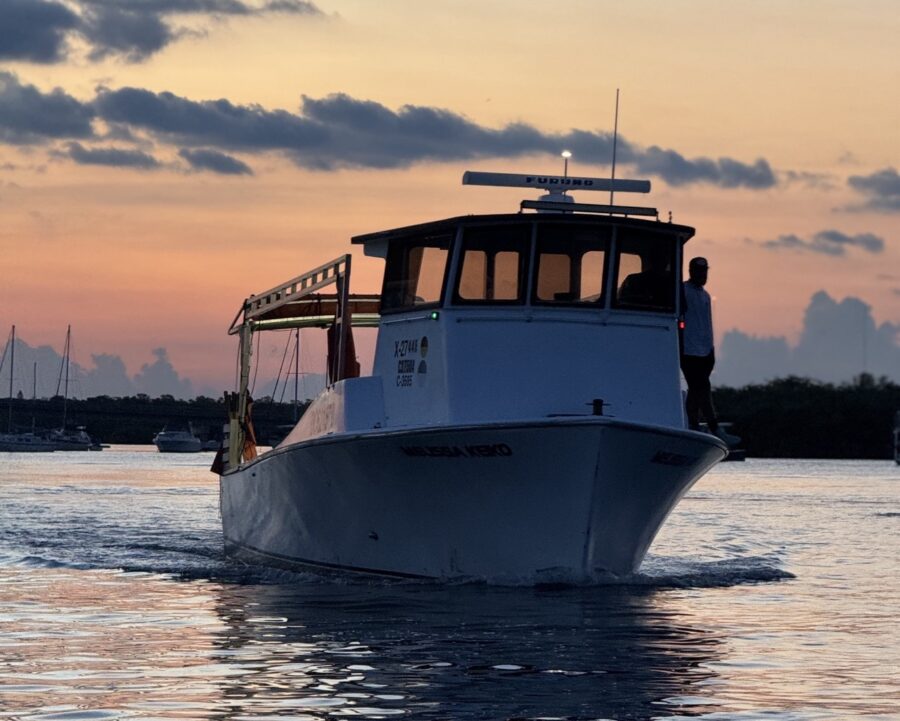
Captain James “Bucko” Platt tells a similar story of his crew aboard the Melissa Keiko, the boat he owns and operates for his business, Marathon Crab and Lobster Company.
“My normal crew that has worked with me for close to 10 years are from Nicaragua, and they’re work-permitted guys,” he said. “They’ve never been in any trouble. They’re family-oriented, religious, non-violent – not the type of people that I was expecting the federal government to be deporting.”
Down in Key West, Keys Fresh Seafood market owner John Buckheim told the Weekly that on Aug. 18, an attempt to help a boat in need turned into a raid that left the vessel stuck at his dock.
“I had a shrimp boat pull into my dock yesterday that needed water. Two plain-clothes guys walked up to the back of the boat. They made one signal, and out of nowhere, a fully tactical guy came running out from behind a car and took a guy down and off the boat,” he said. “I was giving him a free slip and free water, just to do what’s right. Now, he’s stuck at my dock for the next week in a 100-foot boat.
“He’s burning 75 gallons a day in diesel running the generator to keep his product in his boat frozen, and now it’s a two-man crew. It’s not safe for them to go back out until they find another guy. We just tied up an American business, and clogged up another business.”
On Aug. 18, the Weekly reached out to the offices of U.S. Rep. Carlos Gimenez and U.S. Sens. Rick Scott and Ashley Moody on the recent arrests of commercial fishing crew members by ICE in the Florida Keys. None of the offices responded to questions before press time on Aug. 20.
But a letter by Jerome Young, executive director for the Florida Keys Commercial Fisherman’s Association, to Gimenez’s office regarding the arrests by immigration authorities did garner a response by Beatriz Viera, his director of community affairs and constituent services.
Viera said recent enforcement actions by ICE are the result of President Trump’s executive order. Signed by the president Jan. 20, the order initially intended to remove illegal immigrants with criminal histories. Among other things, the order also directed the attorney general to prosecute criminal offenses related to anyone illegally entering the U.S.
However, Beatriz said the directive altered prior policies and is being “applied broadly, which is why individuals — even those with work permits — are being detained pending further review of their immigration status.”
“It’s important to know each case is different and not all shall be handled in the same way. Also, having a work permit does not necessarily mean they are admitted by USCIS (U.S. Citizenship and Immigration Services) and usually means there is more to discuss on the case,” she said.
Beatriz added they’re seeking clearer guidance from federal agencies to understand the criteria and procedures being used in the apprehensions. The Weekly’s questions, which went unanswered, asked Gimenez, Scott and Moody if they received any clarification on the arrests of individuals, such as the fish crew members in the Keys who had valid work visas.
International market evaporates
Already hard-pressed to protect – or replace – their workforce, the Keys’ commercial lobster fleet has another burden to bear: competing with rock-bottom prices of seafood from Caribbean nations, as a changing international landscape cripples the value of their exports.
According to an NBC report, in 2024, Keys fishermen caught nearly 4 million pounds of lobster. In recent years, three quarters of that catch has been exported to China.
The “gold rush,” as one source called it, was made possible in part by a four-year ban on Australian lobster imports to China that began in November 2020, along with a growing taste for the delicacy from the sea and the popularity of lobster during Lunar New Year celebrations.
In search of new lobster sources, the Chinese turned to the U.S., where spiny lobster from the Keys could easily be taken to the mainland and loaded on jumbo jets for export.
Several sources interviewed by the Weekly for this report said the historical “magic number” for the sale of whole lobster is roughly $8 per pound for a Keys commercial boat to make money, with $9 or $10 providing a more comfortable cushion.
At its peak, lobster prices when exported to China shot well north of $20 per pound, causing some vendors to turn away from more traditional buyers like European cruise lines. Others traded in items like stone crab traps and let other fishing efforts lapse as they capitalized on spiking prices.
But with retaliatory tariffs in response to those imposed by the Trump administration, Australian exports that re-opened in December 2024, and new runways and water systems built to export live product from Cuba, Honduras and Nicaragua, the overseas market isn’t anywhere near what it once was, and buyers who formerly purchased product from the Keys before the Chinese sales have turned their attention elsewhere.
At the same time, thanks to initiatives like the Caribbean Basin Trade Partnership Act (CBTPA) of 2000, many Caribbean countries can continually capitalize on reduced regulations and labor and operating costs while exporting tariff-free seafood to the U.S.
It’s a primary reason why, in an island chain that touts its fresh seafood, most of the products sold locally don’t come from Keys waters.
According to NOAA, the U.S. as a whole imports roughly 70% to 85% of its seafood. The fishermen interviewed by the Weekly for this piece say the percent of imported seafood making it to plates in Keys restaurants pushes that upper limit – and they’re calling for truth in advertising when eateries advertise their “fresh catch.”
“Consumers rarely know they’re being served imported lobster and fish, selected not for quality, but cost,” said Young in a press release. “We’re forced to operate within a structurally imbalanced market. We believe that if seafood labeling laws made origin transparent, Americans would choose local – even at a higher price.”
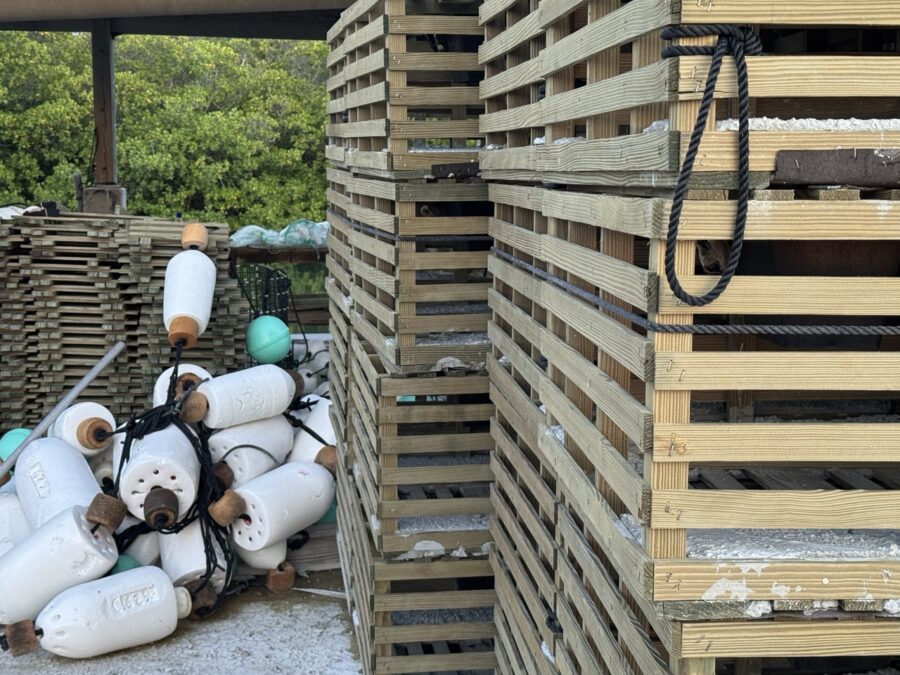
Depending on who you ask, today, imported frozen lobster tails can be purchased for $10 to $18 per pound. Comprising ⅓ of the weight of a whole lobster, that’s about $3 to $6 per pound for whole bugs – a price Irwin said would make most local fishermen “go out of business in very short order” with rising supply costs. Today, he said, a single trap alone costs $75, and just to make it through a season comfortably, he’d need to sell whole lobster for $10 per pound.
In fact, he said, when he previously owned Marathon-based retailer Brutus Seafood, “it was cheaper for me to buy Caribbean lobster and sell it than it was to take it off my own boat.”
The lack of a domestic lobster market isn’t necessarily a new phenomenon, and U.S. exports to Europe and China have historically made up the difference. But with these markets drying up, the low-priced Caribbean imports are particularly devastating.
Beyond cries for help for tariffs to level the playing field, local fishermen say it’s time for labeling laws and local retailers to shed light on where customers’ products are coming from.
In a YouTube video titled “Lobster Fisherman Starving at $5 a Pound Ask President For Help,” third-generation Key West fisherman Jorge Blanco said the current landscape isn’t a question of “los(ing) money – we’re going out of business.”
Blanco said he wouldn’t be surprised to see 30% of Key West commercial fishermen leave the industry this year – “and if we get a hurricane, 75%, guaranteed.”
Irwin agreed, adding that heightened trap losses in Key West from recent hurricanes that skirted the Keys have only made matters worse.
“They’re so distraught, they’re ready to sell out and go,” Irwin said. “It’s going to cost some people a lot – maybe their business. If you took out a loan to pay for your business, right now, you’re not gonna make it.”
“I’ve never seen the industry the way it is right now,” agreed Platt. “It used to be that if you worked hard, did everything right, and had a big enough business, you could make a good living, pay your mortgage. Now, it’s pretty much all you can do just to maintain the boat and gear while paying the crew and hope hard work pays off in the end.”
“The only way we fix it is either shut it down completely, give (other countries) a quota, or give them a big tariff,” Blanco added. “The Florida Keys were built on the backs of fishermen, and we’re going extinct.”