














Yes, you can still keep that license plate frame to cheer on your alma mater. No, you can’t black out the numbers to try and hide from SunPass.
Over the last two months, the Keys – and Florida as a whole – have seen a rash of social media complaints and calls over a “new” license plate rule. Motorists reported being pulled over because a license plate frame they’d used issue-free for years was obstructing a portion of the plate – and was therefore illegal.
In one highly-publicized Broward County case, a man spent the night in jail after being arrested because the “S” in the “Sunshine State” motto at the bottom of his license plate was partially obscured by the frame holding it.
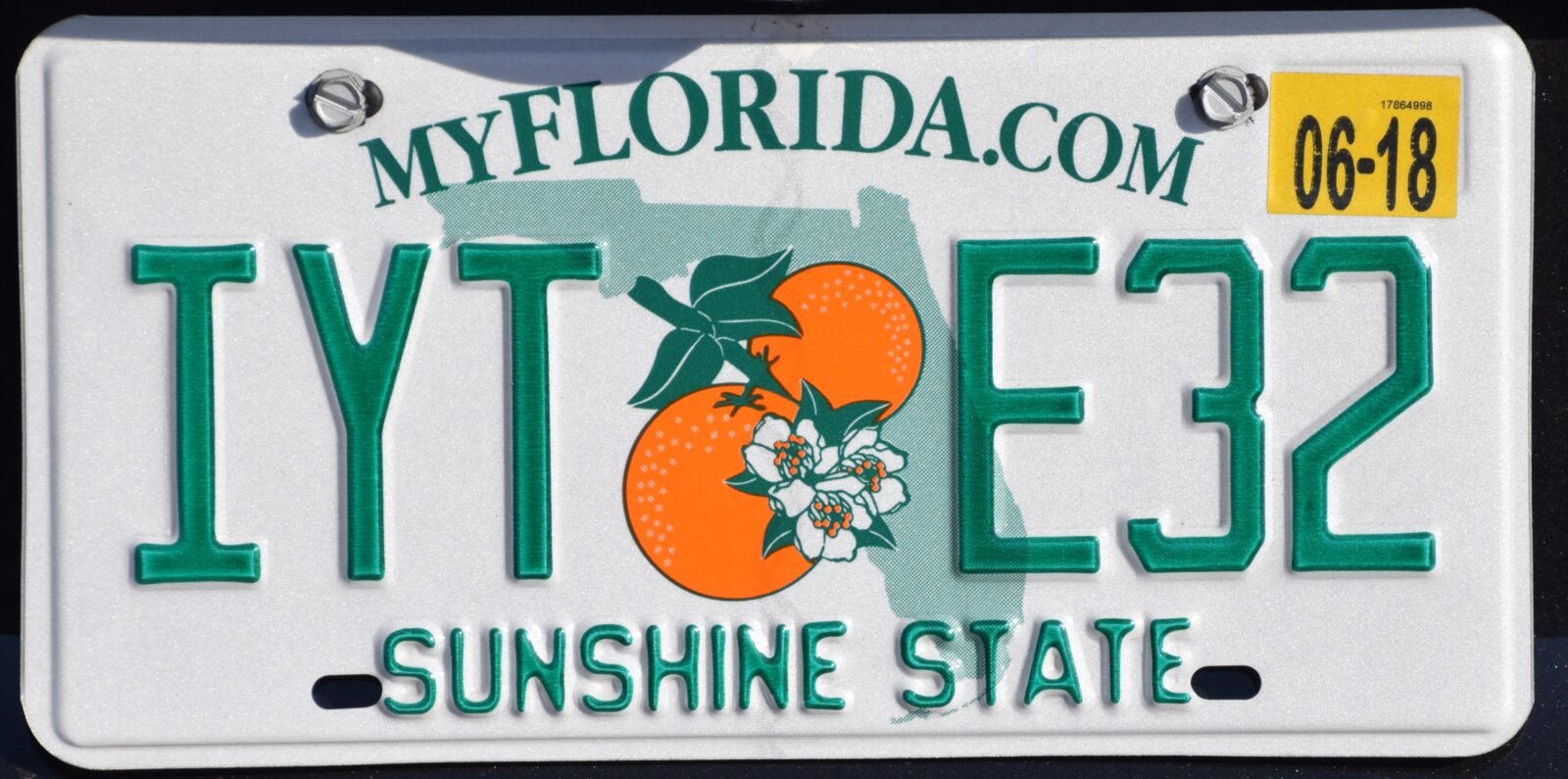
The widespread confusion is due to an over-generalization of a new Florida law that went into effect in October. The new law (statute 320.061) prohibits altering the original appearance of a license plate or registration sticker including a “coating, covering or other material onto or around” the plate. The charge? A second-degree misdemeanor, carrying up to 60 days in jail and/or a $500 fine.
But now, cases like the viral Broward County incident are prompting a memo from the FLHSMV, clarifying that the law never meant to criminalize decorative frames infringing on the borders of plates – including those commonly used to support auto dealerships, sports teams or colleges. Rather, it was meant to target those who use tinted coverings, reflective tape or other means to avoid tolls by zooming past automatic plate readers on Florida highways undetected.
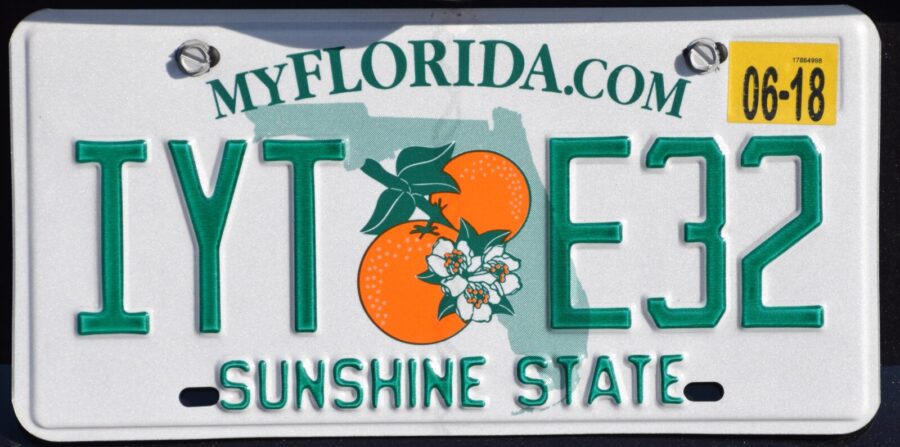
Dated Dec. 12, the memo states that frames are allowed as long as they don’t obscure any part of the license plate’s alphanumeric identifier or registration sticker in the top right corner.
Frames that partially cut into the Florida state name or motto along the plate’s top or bottom edge, Monroe County Sheriff Rick Ramsay told the Weekly, are still good to go.
“We had one of my officers actually stop somebody (for a frame),” he said. “So we actually put out a directive telling people to stop doing this. The frames are lawful, as long as they don’t block the letters, numbers or decals. If it blocks Florida on top or ‘In God We Trust’ on the bottom, it’s not a violation.”
The FLHSMV memo does state that officers must be able to identify the state issuing the plate – already a challenging task at times in a state with more than 100 specialty plates on top of the default two-orange design. Asked if the caveat could still be used as the basis for a traffic stop if a frame blocks part of a less-common plate, Ramsay said he’s instructed his deputies otherwise.
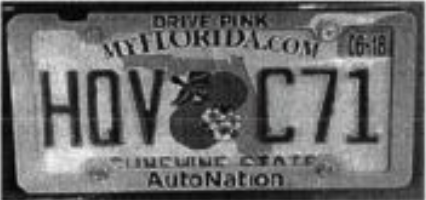
“I think that’s an interpretation of each police agency, how they want to view it,” he said. “Do I think that under the letter of the law, someone could stop you if they can’t see (the state)? I have to say yes. But if they’re taking action on that, I think it’s a shame.
“That’s not why these laws are in place. … I have to think if you’re a police officer and you can’t figure out what state a plate is from, maybe this isn’t the job for you. I want my people to focus on more important things.”