

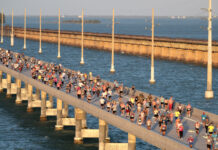







Driving along the Overseas Highway, vehicles roll over islands and past islands. Crossing over the Seven Mile Bridge offers a rare opportunity to pass over an island. Well, it used to.
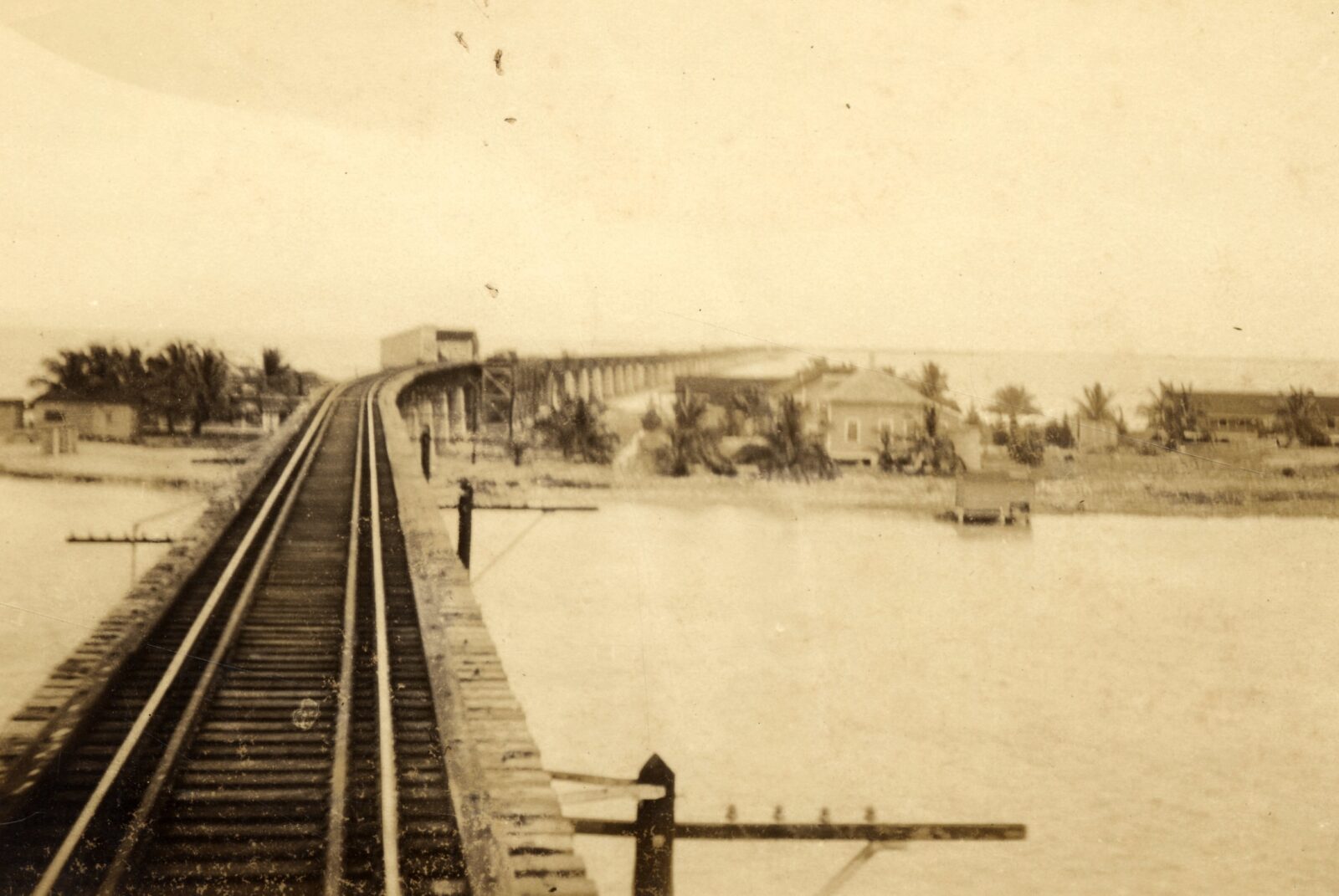
Railroad piers supporting the Key West Extension of Henry Flagler’s Florida East Coast Railway were erected on Pigeon Key, allowing the train to roar 22 feet above it. The Jan. 21, 1912, edition of the Indianapolis Sunday Star printed a story mentioning Pigeon Key: “The camps are in charge of a resident or division engineer with the one at Pigeon Key presently the most active. At high tide, Pigeon Key is about two acres in extent and perhaps three acres at low tide. There are four bunkhouses, each designed to hold 64 men; one of them for the foremen, who are housed apart from the laborers. Each has a reading room with good lights. Good mattresses are provided on standard double-decked bunks, with plenty of clean bedclothes; all laundry work being done by the company. Once a week all beds are washed and thoroughly disinfected to keep any parasites from getting a start.”
The following day, Henry Flagler rode his train from the mainland to Key West for the very first time. When the train rambled over Pigeon Key, passengers were given a bird’s eye view of Pigeon Key and the little community calling it home.
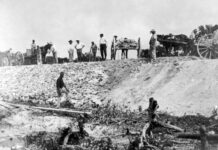
The island was surveyed in 1908, and a construction camp was established for railroad workers, including dormitories, a mess hall and a cement warehouse. Tents were also erected to house as many as 400 workers, assigned to build the bridges linking Knights Key to Pigeon Key and Little Duck Key.
While the train reached Key West in 1912, daily railroad service was established through the Upper Keys and the Middle Keys in 1908. Essentially, the railroad was delivered in two parts. The first part ended at a temporary terminus just offshore off Knights Key, the small island at the foot of what is today the Seven Mile Bridge. It took several additional years to complete the section stretching between Knights Key and Key West.
One of the most ambitious railroad projects was bridging the roughly 7-mile gap separating Knights Key and Little Duck Key. The feat was accomplished by constructing a series of bridges to cross the watery span where the Atlantic Ocean and the Gulf of Mexico mix. Four spans were constructed; one of them was not like the others. The Knights Key Bridge, Pigeon Key Bridge, and the Moser Channel Bridge were built on piers like those erected on Pigeon Key. The Pacet Channel Viaduct used formed arches as its support system.
The train chugged over Pigeon Key for 23 years, until Sept. 1, 1935. Sept. 2 brought the Labor Day Hurricane, which destroyed 40 miles of track and officially ended the railroad’s operation. With the railroad finished, the state purchased the right of way. In 1938, when the second version of the Overseas Highway opened, some of Flagler’s abandoned railroad bridges were widened to accommodate automobile traffic, including the four bridges linking Knights Key to Little Duck Key.
When they were incorporated into the highway, the pass became known as the Seven Mile Bridge. It cost a great deal of money to convert them. In 1937, the Public Works Commission approved a $3.6 million loan for the project. To recoup the costs associated with the highway improvements, the new section was established as a toll road. Two toll booths were erected, one near the old automobile ferry landing at Lower Matecumbe Key and one at Big Pine Key. The toll was $1 for drivers and an additional quarter for each passenger. It was not cheap. That $1 price in 1938 would equal almost $22 in 2025.
Included in the purchase of the F.E.C. right of way was Pigeon Key. The island became the headquarters for the Overseas Road and Toll Bridge District. All of the toll booth money collected was counted at the Pigeon Key headquarters until 1954, when the Overseas Road and Toll Bridge District closed. On April 15, 1954, all tolls were lifted, and the booths were picked up and hauled away. Signs popped up along the side of the road that declared the highway was now the “Florida Freeway.” The communities in the Florida Keys protested the “renaming” of their road. Their voices were heard, the signs removed and the road once again became known as the Overseas Highway.
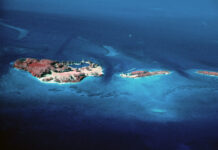
Eventually, Monroe County was given possession of Pigeon Key where, today, the old wooden railroad buildings stand like a sort of ghost town – but a kind of living ghost town. When the modern Seven Mile Bridge opened in 1982, it skirted the island. However, when driving over it and passing Pigeon Key, you can still look down on the island and see some of the oldest buildings in the Florida Keys outside of Key West.
The Seven Mile Bridge still offers a bird’s eye view of the island, but also the old railroad bridges, including the Pacet Channel Viaduct that ends at Little Duck Key. The viaduct is where Fred the Tree resiliently grows. For anyone who doesn’t know Fred’s story, his Australian pine roots, which had dug into the asphalt and concrete sometime after 1982, took hold and grew because, when given the chance, life will fight to survive.
In 1990, Pigeon Key was listed as a National Historic Landmark. Two years later, the Pigeon Key Foundation was formed to “protect the island’s long-standing history from the Henry Flagler era.”
It is still possible to get that same view of Pigeon Key that Henry Flagler saw when he was riding his train. The old bridges stretching between Knights Key and Pigeon Key are still open to pedestrians and bicyclists. You can also ride the tram operated by the Pigeon Key Foundation that goes out to the island. Be prepared: visiting the island can feel a bit like stepping back in time.