






I was sitting at my desk signing books, filling orders placed by Shell World, the Kayak Shack at Robbie’s, the Oldest House Museum and the Key West Island Bookstore. My wife put her hand on my shoulder. “That must feel good,” she said. “Signing your books.”
The idea of it is everything. When I left Southern California in 1989, the only plan was to live on an island and write. Except for six years in the middle, when I went back to school, it has been a successful adventure. I’m signing books, and the column I’ve been writing for the last decade is currently in front of you.
I love the idea of signing books, but not the physical act of moving the pen across the page. For those of you who have not had the pleasure of deciphering my handwriting, sometimes I even have a hard time reading what I’ve written. As someone taking notes about history, it is a horrible trait. Fortunately, those notes were taken from the historical record and have, at the very least, a secondary verification.
Back in my days taking lunch and dinner orders at the restaurant, there were times when I could not read what I had chicken-scratched onto my waiter’s pad (blessed by the keyboard and computer screen). More than once, my interpretation of what I thought I wrote proved not to be what the customer ordered.
Michelle is right. It does feel good. I love having books to sign, knowing people buy them and receiving orders from the wonderful shops and museums up and down the Keys that support my work. However, the actual signing comes with a bit of trepidation because I have the penmanship of a 4-year-old.
What I love most of all is telling the stories that fill those books. My introduction to the island chain was Joy Williams’ excellent work “The Florida Keys.” It was my first course: Florida Keys 101. I was hooked, not just by the brilliance of the island chain but by the stories she told about it. There has been no greater influence on my work than Joy Williams.
When I was introduced to Williams’ book, I was working on my master’s in creative writing at the University of Miami, and driving down to the Keys from my SW 92nd Avenue apartment for day trips and the occasional weekend. I didn’t see the same things then that I do now, 24 years later. The longer I live here and the more I learn about the history, the more I see — even from the seat of the Jeep while traveling a little over 45 mph along the Jimmy Buffett Memorial Highway.
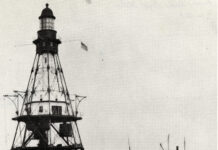
Some things are obvious and stand out like the world-famous Caribbean Club, the old Bahia Honda railroad bridge (especially when the sun is sinking behind it) and the Alligator Reef and Sombrero Key Lighthouses standing up against the horizon. There are six iron reef lighthouses; two are visible from some of the highway bridges.
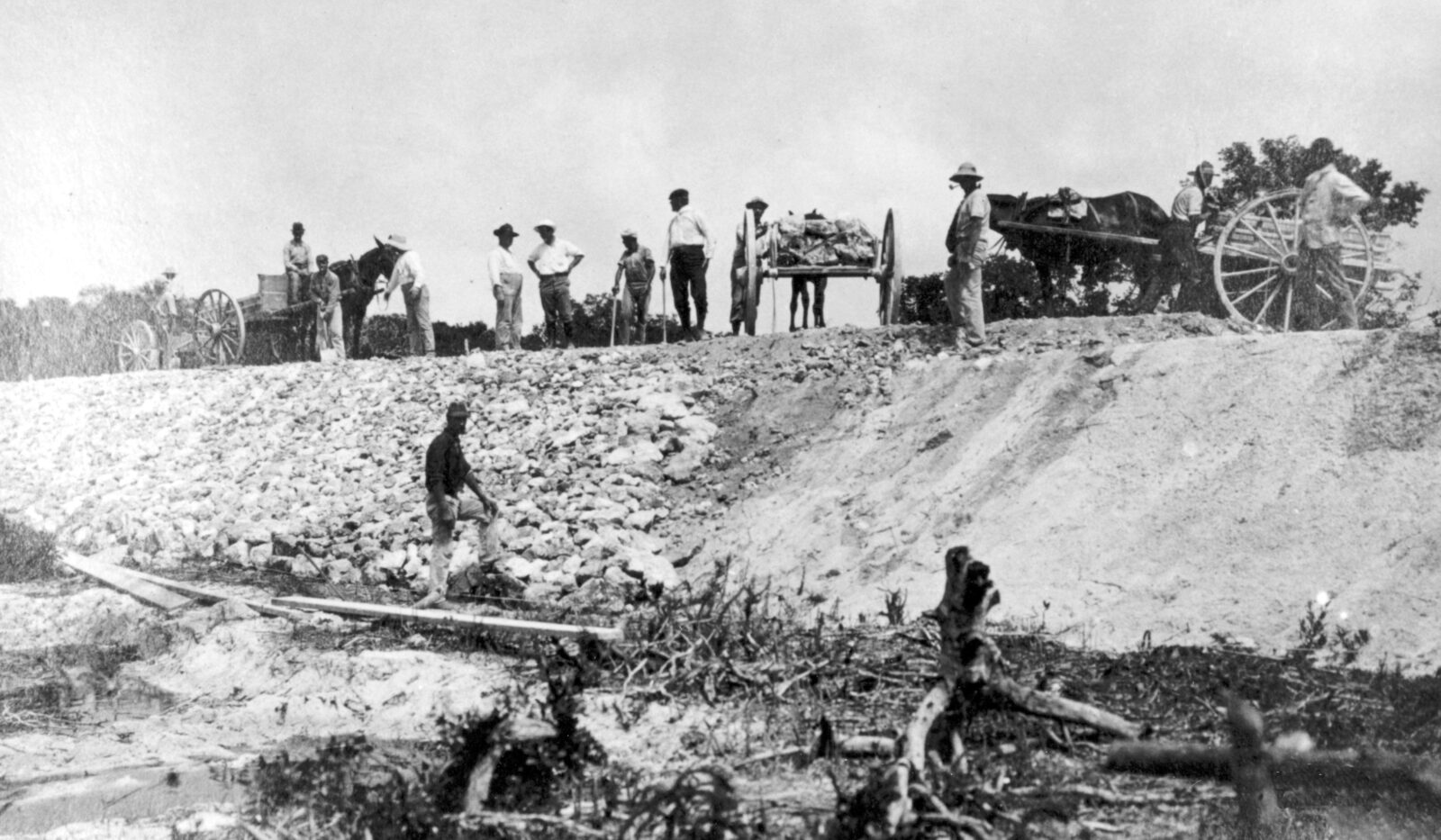
Other history reveals itself with more subtlety. One of my favorites is the remnants of the right-of-way of the Key West Extension of Henry Flagler’s East Coast Railway. It took years of hard labor and dynamite to clear the land and build a path down which the train would steam, rock and roll across the island chain. Their efforts and much of the bed on which Flagler’s right-of-way was built are hiding in plain sight beneath the asphalt of the highway.
It is easiest to see from the southbound lane of the modern highway, which roughly follows the route the train used to take over most of the Keys. There are a couple of obvious exceptions, like Bahia Honda, where the original line traveled through what is now Bahia Honda State Park. There is a good reason the bed is raised and ditches have formed along most of what is today the highway, and increasingly so as the line approaches the bridges connecting one island to the next. The locomotive required a gradual grade over which to pull the train cars between the mainland and Key West.
Once you start to see it, the railroad right-of-way materializes. I love what studying the local history has revealed to my curious eyes. Because I have worked so hard to understand how and why the Keys are what they are today, I probably see more than most people. Also, I am actively seeking landmarks and historical evidence, and for the last 10 years, I’ve been sharing my observations in this history column.
This will be the last one for 2025. It requires a tremendous amount of time and commitment, and I need to take a break. It might be that I need a month off to catch up on other projects and not feel the heat of a deadline. It might be that I need longer. Also, it is becoming increasingly apparent that Volumes 4 and 5 of my history series have no plans to finish all by themselves, and until they get done, I can’t get back to the project I really want to dive into.
I’m not sure what 2026 has in store. I love sharing this column, and from what I’ve been told, there are people out there who like to read it. Thank you to everyone who has reached out to tell me so. That part is super cool. In the meantime, enjoy the festivities of this last stretch of 2025. This Thanksgiving, I’ll be thankful for everything that I have. I hope you are, too. Happy Holidays.