






There is an island in the Upper Keys that is home to a ghost town.
It is not a classic ghost town in the sense that empty structures give the island a haunted vibe. However, while walking along the pathways crisscrossing the island’s limestone bedrock, there are brick and coral rock ruins that hint at the structures that once stood.
What is haunting about Indian Key is its history. If ghosts are real, they would undoubtedly find the island homey. Juan Liguera identified it as Cayuelo de las Matanzas on his 1742 chart – mantanzas is the Spanish word for slaughter. The area’s first comprehensive English chart, drawn by William Gerard De Brahm in 1772, identified the island as Matanca. The 1774 Romans chart called it Matanca, too, but also included an explanation: “This key is called Matanca i.e. Murder from the catastrophe of a French crew said to have amounted to near three hundred men, who were unfortunate enough to fall into the hands of the Coloosas, which savages destroyed them to a man on this spot.”
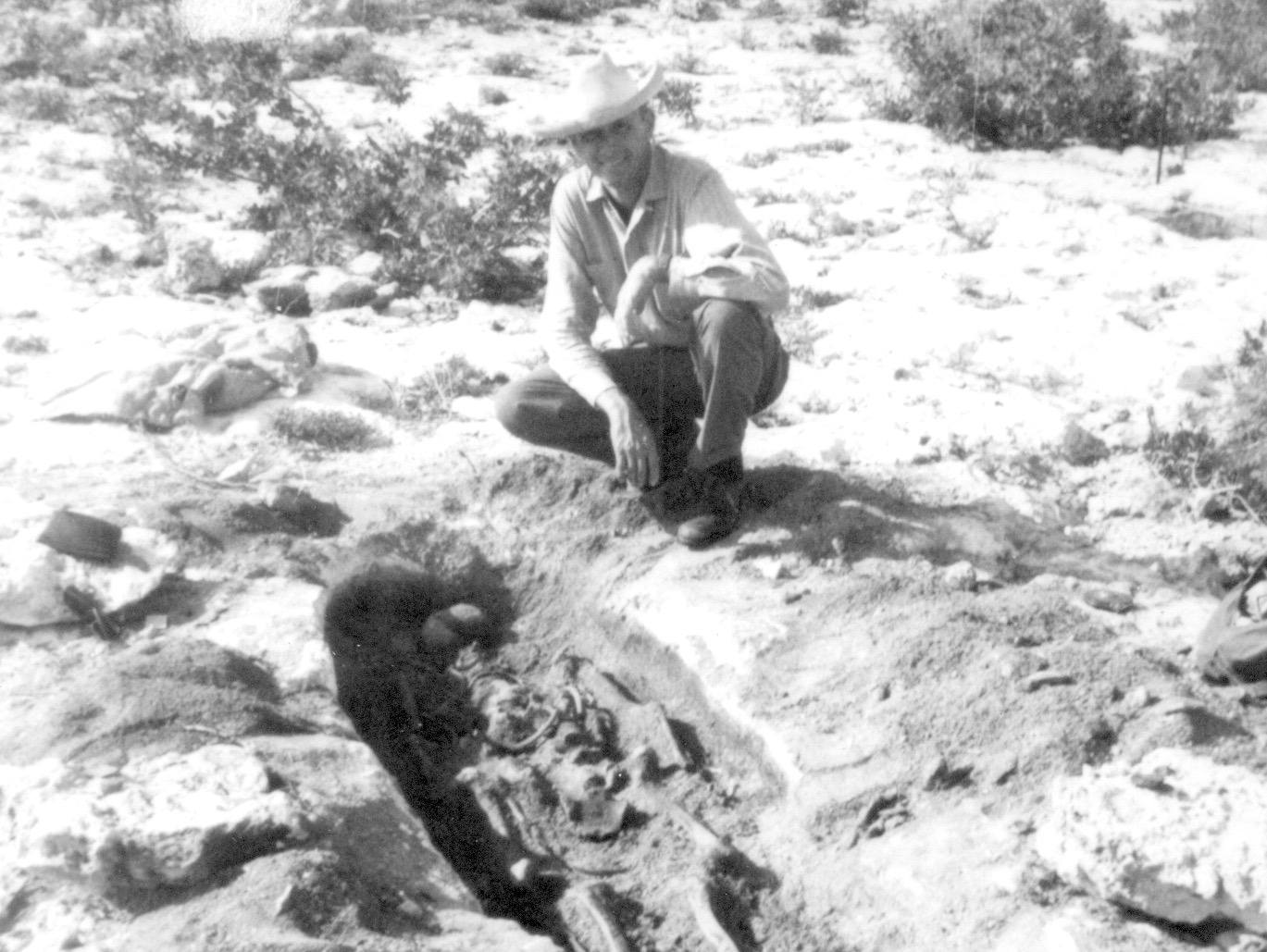
Beyond a sailor’s secondhand story, the historical record seems to offer no further evidence of the alleged attack. This is not to say that people have not been murdered on the island, because they have. People killed elsewhere have been buried there, too. Now home to Indian Key Historic State Park, one of the island’s unique features is an open grave.
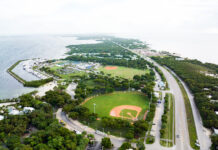
Since 1966, at least two skeletons have been discovered on the island. At least twice, the bones have disappeared. Someone, or more than a single someone, has Indian Key skeletons in their closet. Who the bones once belonged to poses an excellent question. The roughly 11-acre island was a thriving community in the early 1830s, home to as many as 140 people.
One candidate was William Emroy. A Key West Register and Commercial Advertiser story printed on April 9, 1829, read: “On board the boat ‘Saucy Jack,’ Cooley from Key West bound to New River off Key Vacas, at 12 O’clock at night, 22nd ult. Mr. Wm. Emroy fell from the stern of the boat and was drowned. Every exertion was made to save his life, but in vain. The body was taken to Indian Key and decently interred.”
A second possibility is Captain John Whalton, who was in command of the lightship Florida stationed at Turtle Harbor, just off Carysfort Reef. Whalton kept a fruit and vegetable garden on nearby Key Largo – an area known as Garden Cove. On July 25, 1837, Whalton and four of his men came ashore at Garden Cove. Indians were waiting for them. Whalton and one of the crew would not survive the encounter.
Reports indicate that two wreckers, one being William English from the ship Brilliant, approached the Key Largo site, came ashore, and retrieved the bodies. They were taken to Indian Key, where Whalton, according to some sources, was buried. A third possibility is the Wrecker King of Indian Key, Jacob Housman. Though he didn’t die on the island, it is said his body was brought to the island and buried there in May 1841. A tombstone inscribed with an epitaph honoring Housman was placed on the island.
In a letter dated May 30, 1966, Lower Matecumbe resident Terry Starck wrote a letter describing a skeleton he discovered on the island.
“I found the grave as I was walking along the shore and happened to see what seemed to be the part of a human skull lying on the ground. My wife and (I)‘excavated’ it with our hands, being careful not to displace anything. The skeleton was complete but appeared to be somewhat disarranged (One of the legs was out of place, for instance.). There were fragments of what appeared to be wood and some metal pieces in the grave, but the skeleton was the only identifiable item.
The skeleton was only two or three inches beneath the surface. We did not move any of the bones, except the piece of the skull which we had originally seen above the ground. When we left, we replaced as much of the dirt as possible.
I did not get a chance to return for several weeks, and sometime in that interval the grave had been re-excavated and all the skeleton removed. There were several teeth left, which I took. However, that day I was caught in a severe squall, and in trying to get my boat back home, I ripped the pocket containing the teeth and they fell into the water. Therefore, I am sorry to say, nothing remains of the skeleton, unless the people who dug it up the second time have saved it.
Since we are not positive at all this is Housman’s grave (it seems likely, since the skeleton was so close to the place where the original marker was found.), I am afraid I am not much help. The only concrete information is the picture of the grave site (also enclosed) which I took on my return trip.”
It was not the last skeleton to disappear. After the state purchased the island in 1970, archaeologist Henry Baker was assigned the job of surveying the island. Baker identified evidence of a prehistoric Indian presence on the island. In addition to a small Indian mound containing pottery sherds, buttons and a one-cent piece dated 1819, he uncovered human bones. Baker decided to collect the pottery sherds, buttons and the coin, but left the skeletal remains in situ, or where he had found them. They would not remain long. Upon Baker’s return visit to the island, the bones had been dug up and taken.
It is hard to say how many ghosts call Indian Key home. Emory, Whalton and Housman are certainly contenders. Others have been interred on the island, including six who died during the August 7, 1840, attack during the second escalation of the Seminole War. Those stories, and more, will have to wait until next week.