



My biggest day-to-day challenge is sleep. It used to come easily, and I could sleep for hours at a time.
Circa 2012, the long nights and occasionally late mornings spent softly snoring seemed to come to an end. Now, five hours, not necessarily consecutively but in total, is a good night. After the cat-alarm starts meowing at 5:30 a.m. and Bijou is fed, I usually manage an hour or so of good sleep. Michelle sometimes says, “You were snoring. It was good to hear.”
At 7:30 on Friday morning, my phone rang. I didn’t answer. It was 7:30 in the morning. I was in bed, underneath the covers, but I was awake and looked to see who was calling and what was so important. I didn’t recognize the number. When I listened to the message, a reader had called to disagree with something that I had written in my last column.
Good morning to you, sir.
As I had planned to continue writing about the Northern Keys this week, I decided to address the geological makeup of Key Biscayne and Virginia Key, and why they are not considered part of the Florida Keys archipelago. Unlike the Florida Keys, which are based on Key Largo Limestone between Soldier Key and Big Pine Key, and Miami Limestone from the Lower Keys to the Dry Tortugas, Key Biscayne and Virginia Key are sandier in nature.
A paper issued by Florida International University’s Department of Earth Sciences summarizes the geology of the barrier islands of Virginia Key and Key Biscayne: “Sediments were carried by longshore currents, and consisted of a mixture of carbonate (shell fragments, coral fragments, etc.) and quartz sand. Progressive accumulation of sands slowly built up the structure of the islands as they exist today.”
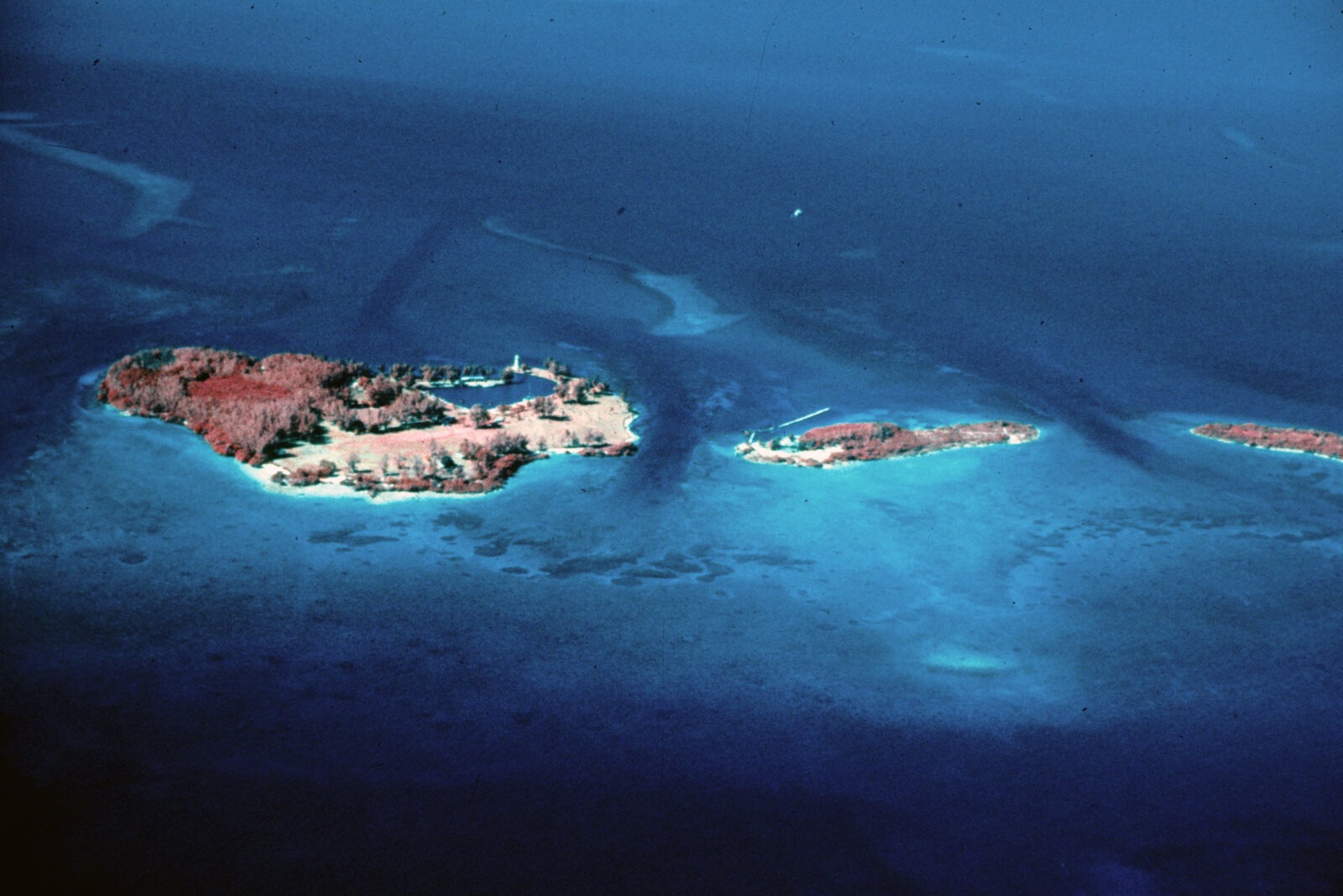
Soldier Key, located south of Key Biscayne, is the first of the islands built atop Key Largo Limestone. Having addressed the island, the first of the true Florida Keys, last week, this is an excellent time to explore the next islands in the chain: the Ragged Keys, Boca Chita and Sands Key. While not as exciting as islands like Key West or No Name Key, every island has a story to tell.
The Ragged Keys are a small collection of islands south of Soldier Key. At low tide, it can be possible to walk between them. Juan de Liguera called them Mascaras on his 1742 chart.
In 1743, the Father Alana chart agreed. Mascaras is Spanish for mask. Variations of the spelling appeared on later charts. For instance, William Roberts’ 1763 work “First Discovery and Natural History” identified the group as the Mycaras. In 1772, DeBrahm identified them individually on his chart (north to south): Los Paradizos, Soldiers (though not the aforementioned Soldier Key), Knox and Pollock.
Two years later, Bernard Romans wrote about the islands on his 1774 chart: “Seven rocks called Mascaras.” He also noted that on some English charts the name had been “ill copied” as Mucares. In 1861, the Coast Survey conducted by Bache identified them as the Ragged Keys, and that is what the islands are called today.
In the early 1900s, they were owned by a man identified as Captain B.T. Ball. According to a 1910 newspaper story, three of the islands were soon to be purchased by Henry Safford. In 1927, all that could be found on the islands were “coconut trees and a small fisherman’s house.” The Ragged Keys are now managed and owned by the government and are part of Biscayne National Park. One of the Ragged Keys, identified as Number 3, is home to two guest houses, a storage room, an equipment room, an above-ground swimming pool and dockage owned by a Miami man named Tomasetti.
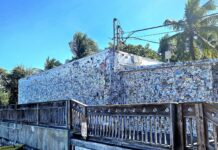
Between the Ragged Keys and Sands Key is Boca Chita Key. Boca Chita Key was privately owned by Mark C. Honeywell, president of the Minneapolis Honeywell Company from 1937 to 1945. It was Honeywell who had a 65-foot mock lighthouse built from native coral rock, which is still standing on the island. He wanted the island to have a beacon that would make it easier for his boat captain to navigate out to the island. For a brief period, it was lit. When the government took notice, the light was ordered to be deactivated, as it was not an official beacon and therefore a navigational hazard.
The island was bought and sold numerous times before it became part of the National Park Service. Today, the island is home to a primitive campground with tent sites, tables and grills. Immediately south of Boca Chita is Sands Key. On early Spanish charts, the island is recorded as Las Tetas. A 1743 chart identifies it as Restinga de las Tetas, which, in English, basically translates to something along the lines of “coastal forest of the breasts.” William Roberts’ 1763 “First Discovery and Natural History of Florida” used the simplified moniker Las Tetas.
The cartographer Bernard Romans confirmed the island was called Las Tetas (and also the Paps) on his 1774 chart. Romans noted that there were two hills on the island. Because hills are not a common feature associated with the hundreds of islands making up the archipelago, the “hills” were probably mounds associated with a former indigenous presence. In J.W. Norie’s “Piloting Directions for the Gulf of Florida, Bahama Banks, & Islands,” published in 1828, he noted: “Next to the northward of Elliot’s Kay is a little island, having two small hills on it, whence the Spaniards have called it Las Tetas, or the Paps.”
Today, the island is known as Sands Key. The next island south is the largest of the Northern Keys, Elliott Key, a legendary island harboring stories of alleged pirates and juicy pineapples. I explore the piratical aspect of the island’s story in Volume 2 of my “Florida Keys History with Brad Bertelli” book series. I delve into the subject of pineapples in Volume 1. I will say this. The holidays are nearly upon us, and these books make fantastic gifts for the history lover in your family.