









2025 was a busy year in the southernmost county and at the state capital in Tallahassee. From budget cuts to development, county commissioners and state legislators had some big decisions to make throughout the year.
Monroe County government
Approvals garnered for Publix project
County commissioners supported various measures to advance Blackstone Group Tavernier 925 LLC’s Publix and workforce housing project at MM 92.5 oceanside. In April, commissioners voted in favor of a development agreement, which spells out the details and commitment for the development. In June, a major conditional use permit was approved for developers to build a 47,240-square-foot Publix supermarket and 2,100-square-foot liquor store at the front of the property. Toward the back, 86 units of workforce housing will be constructed.
U.S. 1 widening rejected
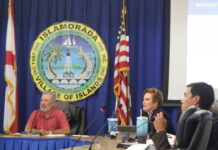
At a Sept. 10 meeting, Monroe County commissioners unanimously rejected a draft proposal to give the Florida Department of Transportation authority to potentially enlarge segments of U.S. 1 to four lanes of traffic. The proposal strictly involved unincorporated areas of Monroe County.
County budget axes employees, nonprofit funds
Monroe County Commissioners voted 4-1 for a tentative $674 million spending plan with funding cuts to Florida Keys nonprofits serving the most vulnerable populations. Agencies in social services and health saw funds through the county’s Human Services Advisory Board reduced by 50%, or $1.1 million in all. Additional county budget cuts included layoffs, eliminating 20 vacant positions and forgoing Freebee rideshare service.
County nixes downstairs enclosures
Maximum size requirements and required inspections during home sales for downstairs enclosures in unincorporated Monroe County are no longer, following the county commission’s unanimous vote on Oct. 15. The changes come via an ordinance to amend the floodplain management chapter of Monroe County’s land development code as the county shakes off a 23-year stint on, in staff’s own words from 2023, “FEMA’s naughty list.”
Florida state government
Florida assists ICE
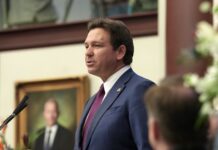
Earlier this year, Gov. Ron DeSantis and the state Legislature passed some of the strictest immigration laws in the country. One provision, known as the 287(g) Program, requires all local, county and state law enforcement agencies in Florida to sign agreements stating they will assist ICE with immigration enforcement. Any police chief or sheriff who refuses to do so can be removed from office by the governor.
The Monroe County Sheriff’s Office, Key West Police Department and Key Colony Beach Police Department signed the required 287(g) agreements with ICE, which expand a local department’s authority to:
- Identify and process removable aliens with pending or active criminal charges.
- Enforce limited immigration authorities with ICE oversight during routine duties.
- “Serve and execute administrative warrants on removable aliens in your jail,” states the ICE website.
Governor vetoes nonprofit funds
On June 30, Gov. Ron DeSantis vetoed more than $560 million from a legislatively-approved $115 billion budget. Nearly $1 million was tossed out of the budget by DeSantis for Keys AHEC, which provides comprehensive medical and dental care for local school-age children. Keys AHEC initially submitted a request to the state Legislature for $975,000 to continue its work providing dental services, including cleanings, sealings and X-rays, as well as health services, including physicals ahead of the school year for children in the Keys.
“He eliminated budget sections which were very interesting. … It’s the first time I had seen that,” Keys AHEC CEO Michael Cunningham said. “I don’t know whether he really understood the project or gave it a fair shake.”
ROGO rodeo
First, it was a squabble over how many to ask for. Next, it was whether or not the Legislature would allow them. And finally, it was a waiting game to learn how to accept them. The Keys Weekly lost count of how many times we wrote about the fate of new building rights (ROGOs) throughout the island chain in 2025. Worried governments faced the threat of takings cases – multimillion-dollar lawsuits from owners of otherwise buildable land that were denied the chance to do so – once they exhausted their dwindling supplies of allocations.
Bills with separate asks for new building rights – 500 from state Rep. Jim Mooney and 3,500 from Sen. Ana Maria Rodriguez – were eventually amended to reflect a unified request: a change to the hurricane evacuation clearance time for the Keys from 24 to 24.5 hours, paving the way for up to 825 new rights.
At one point in the 2025 legislative session, four separate bills provided a path for new building rights, including proposals of up to 26 hours for hurricane evacuations. Ultimately, a specific carve-out in Pinellas County-based Sen. Nick DiCeglie’s Senate Bill 180, a disaster preparedness bill, allowed for up to 900 new building rights with a 24.5-hour evacuation clearance. The rights are designed for one unit per vacant buildable lot, prioritizing owner-occupied affordable and workforce housing.
But for months, Keys governments remained in limbo with little guidance from state leadership over when these rights would actually be handed over for distribution. The uncertainty was finally answered in a Dec. 17 meeting of DeSantis and his Cabinet, during which the Administration Commission approved a recommendation for distributing the new rights by Florida Secretary of Commerce Alex Kelly. An initial batch of 300 will be available for distribution by Keys governments starting Jan. 1, split proportionally among jurisdictions based on their number of vacant buildable lots. Following the 10-year timeline set forth in the bill, a new group of 150 units will then be released every two years, reaching the full quota by 2035.