






Bill Goodwin is retiring on Wednesday, Dec. 31, closing out a 33-year NOAA science career that spanned six United States presidents.
When he came aboard in January 1992, the Florida Keys National Marine Sanctuary was in its nascent stages — designated but not yet fully operational— and Goodwin held the title of assistant manager of Key Largo National Marine Sanctuary, established in 1975.
“I supervised the boat mechanics, a couple of education folks, and four law enforcement officers who got me out on the water regularly and gave me the lowdown on how to get around and how not to run aground,” said Goodwin, now 66. “It gave me a lot of freedom to do a variety of things, so I also worked on permit applications and helped John Halas with mooring buoys. It was a good, broad education of the Keys.”
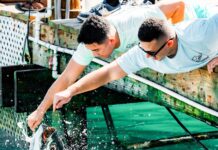
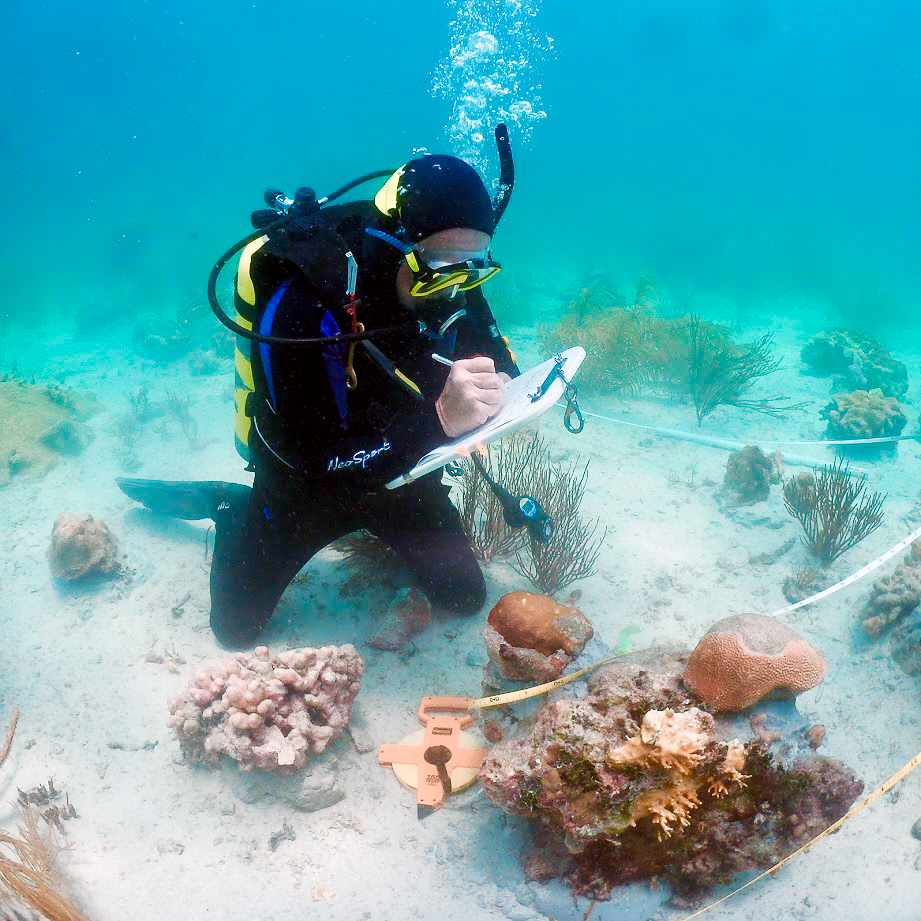
Once the full sanctuary became operational, Goodwin transitioned into damage assessment — a role that would define his NOAA career. After a vessel grounding in the Keys, Goodwin and Dr. Harold Hudson, then the damage assessment and restoration team lead, were typically the first on site to evaluate the impact and design plans to mitigate the damage.
“Bill Goodwin is the ‘cement chef,'” said Dr. Andy Bruckner, the sanctuary’s chief scientist. “Throughout his career, he designed, redesigned, and ultimately transformed our restoration program, developing new innovations to repair injuries to the reef framework and always mixing up the perfect cement mix to reattach dislodged corals.”

In the early days, almost all groundings occurred on live coral. Today, more often than not, the impact is on rubble or nonliving coral-reef framework.
“It’s no secret that the most obvious, glaring change has been in the coral cover of the reefs,” Goodwin said. “When I came to the Keys in the early 1990s, people who had been here a while were saying, ‘Gosh, the reefs are so horrible, in such bad shape. You should have seen it 20 years ago.’ And I’m thinking, wow — it looks pretty good to me.”
Rather than giving up on what some view as a lost cause, Goodwin doubles down on NOAA’s work, underscoring the importance of saving what’s left and investing in restoration projects that show promise for turning the tide.
“It’s been proven time and time again that when you actively protect these places — not just designate them on paper but actively manage the sites — there are benefits. You see increases in diversity and in the numbers of organisms,” he explains. “Typically, commercial fishermen don’t want regulation. They’re usually vehemently opposed to it, but then they see the spillover effect from these protected areas and start asking for more because it actually increases their catches.”
Goodwin traveled the world in his role, training workers in marine protected areas from Jordan to American Samoa, and learning techniques he could bring back home.
“The thing I’ve enjoyed the most is having the opportunity to experience not just the reefs but the seagrasses and pretty much all the marine environments and sub-environments of the Keys,” he said. “And to be able to do that from the Dry Tortugas all the way up to Fowey Rocks — I don’t think there are many jobs with that wide a range of experience. And the people I’ve worked with have made the job the best decision I’ve ever made.”
In retirement, Goodwin plans to establish a homestead somewhere between the Keys and his native Birmingham, Alabama — an ideal setting for the Old West reenactment hobby he took up a quarter century ago. Along with fellow history buffs, he has been cast as an extra in movies and competes in cowboy action shooting events that use period firearms.

As he rides into the sunset, Goodwin reflects on early NOAA battles that resemble those staged Old West shootouts. When sanctuary regulations were being formulated through public meetings in the mid-1990s, a Marathon Realtor regularly peppered each event with blistering rebukes of the planned sanctuary. Her remarks bordered on incendiary. Decades later, after Goodwin was featured in a magazine article, the Realtor reached out to apologize.
“She admitted how wrong she was, how none of her fears came to fruition, and how she now realized what a great thing the sanctuary is.”
And that, as they say in Hollywood, is a happy ending.