












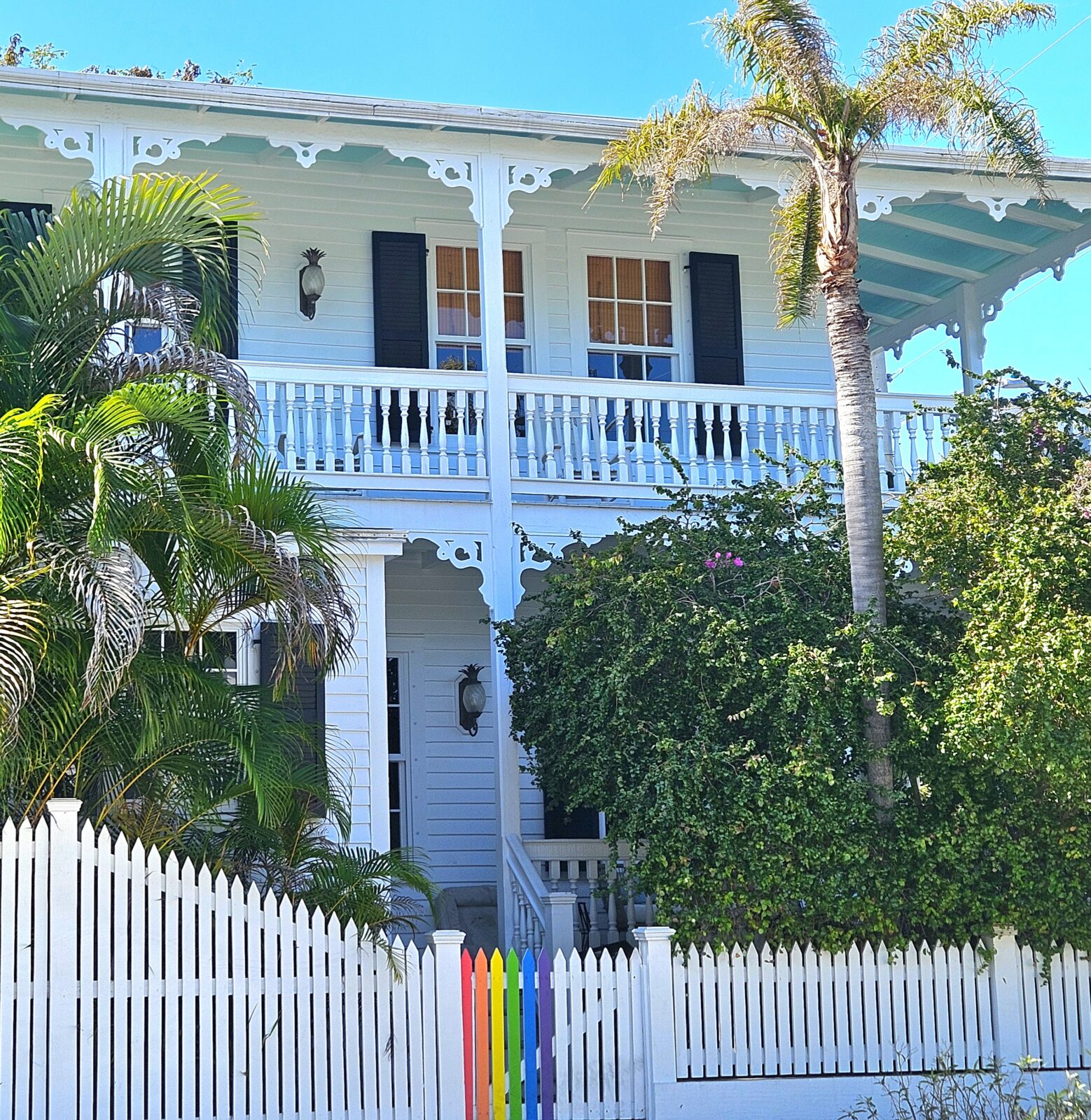
Two Key West households have filed a total of 35 complaints against Old Town homeowners who have painted seven or so of their fenceposts rainbow colors — colors not specifically permitted under the historic preservation guidelines that regulate the exterior appearance of buildings in the city’s historic district.
Because Key West’s Old Town area is a designated historic district, boasting one of the largest collections of historic wooden buildings in the country, homeowners there are bound by preservation guidelines.
Key West’s preservation board is formally the Historic Architecture Review Commission, or HARC, whose members each are appointed by a city commissioner. The board has been trying since November to find a way to allow homeowners in the historic district to paint seven of their fence pickets, or a pedestrian-sized gate, the colors of the rainbow. But so far, the HARC commissioners have been getting pushback from the city’s legal staff.
The rainbow fence trend began last summer, after state officials forced Key West and other cities to remove their rainbow-painted crosswalks or lose state transportation funding. Key West residents, with support from some, but not all, city officials, began brainstorming alternative ways to express the island’s official motto of One Human Family and its history as an accepting place for the LGBT community.
After the city commission voted not to stand up to the state’s crosswalk removal mandate, several homeowners began painting seven or so pickets of their fences in rainbow colors. The rainbow renaissance appeared on fences from Bahama Village to Flagler Avenue.
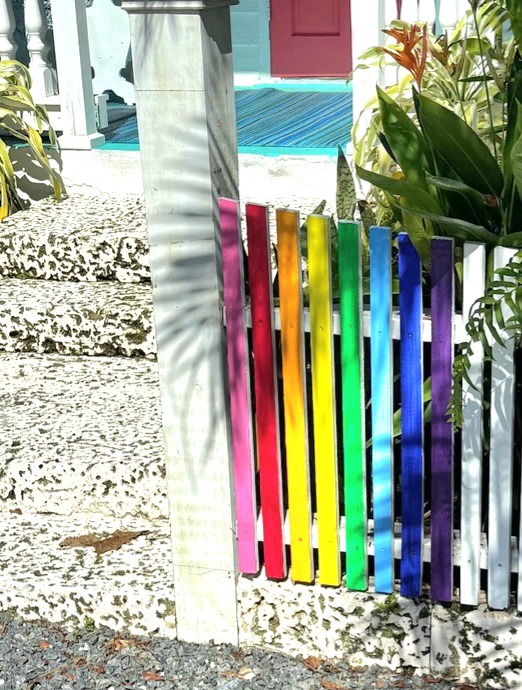
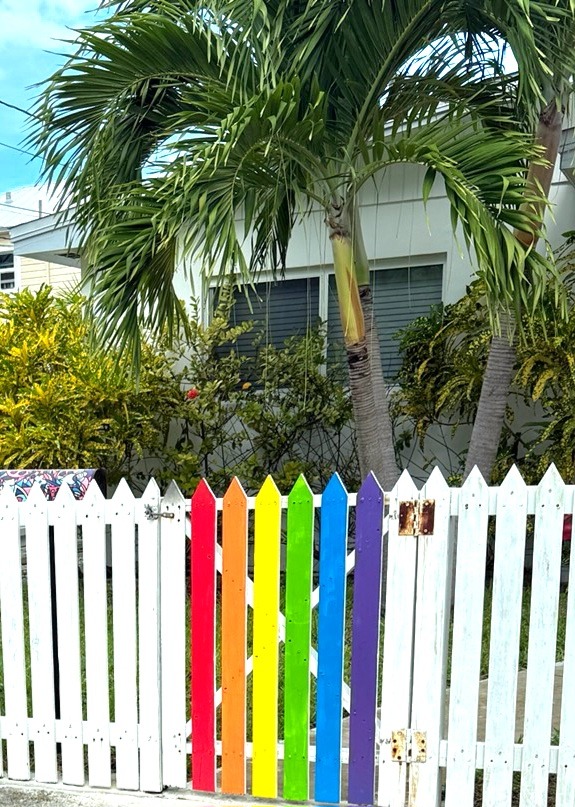
Then the complaints started.
Of the 35 complaints that have been filed against rainbow-painted fence posts in the historic district, 20 have come from Daniel Sujak, who lives on Georgia Street. The other 15 were filed by a couple who lives on Windsor Lane, Penny Walker Pourciau and her husband Jules Pourciau, whose social media pages include anti-gay posts.
Penny Walker Pourciau spoke at the December HARC meeting, and emphasized her love of the historic district and her commitment to the historic guidelines, asking, “If we’re not going to enforce the rules, then why even have a historic commission?”
Sujak was reached for comment after print deadlines for the print version of the paper.
But he returned a message from the Keys Weekly Wednesday afternoon, emphasizing his complaints to code enforcement are “about the preservation of the historic district and maintaining the historic guidelines, which are very clear.”
Sujak added, “I have a brother and a sister who are gay, and I know everyone waws hurt when they removed our crosswalks and I agree that’s an issue. But we’ve all always been allowed to show our support for our beliefs with a flag, and HARC has no jurisdiction over flags, and they enable everyone to enjoy the historic district, which was designated to maintain the sense of place and time from the late 19th and early 20th centuries in Key West.”
Sujak acknowledged that he has not submitted any complaints to the code enforcement office about any historic guideline violations other than rainbow-painted fence posts, and pointed to page 35 of the historic guidelines that call for wooden fences to be white or unpainted.
Sujak said he has been “vilified and threatened on social media” because of his complaints, which can no longer be submitted anonymously as they were in the past. He said a neighbor recently had thrown a bag of dog feces at his front porch.
“But this is about the preservation of our historic district, which has more than 2,500 historic wooden structures,” Sujak said.
At the November and December HARC meetings, the members each supported a limited number of painted fence posts in the historic district and discussed at length potential methods to make it allowable. They want to change the historic guidelines to allow owners to express themselves on up to seven fence posts or a gate. HARC chair Haven Burkee emphasized the new rules will allow all homeowners to paint anything on up to seven fence posts, or a pedestrian-wide gate, given free-speech rights.
“I’m all for preservation, but it’s not about freezing a city in time. Key West’s history of inclusion is worth preserving as much as the architecture,” resident Nicole Sohn said at the December HARC meeting.
On the HARC commission, Burkee, along with commissioners Joseph Moody and Bryan Green, were outspoken in their support for the painted fence posts. The commission initially agreed in December to have homeowners simply apply for a HARC fence-painting permit that the board would grant. But interim city attorney Mayanne Downs had concerns.
City Commissioner Sam Kaufman is hoping his fellow commissioners will join him in supporting their appointed HARC board members by finding a way to allow the fence painting.
“This was an opportunity for the city to carefully and proactively handle a sensitive matter of great public interest, and to support a part of our community that felt genuinely let down,” Kaufman wrote in a Jan. 27 email to city attorneys, the city manager and the HARC director. “Instead, the absence of clear and timely guidance has understandably created public confusion and risks further frustration and hurt feelings. I raise this not to cast blame, but to underscore the need for clarity, transparency and thoughtful handling going forward.”
Kaufman will raise the issue at the Feb. 3 city commission meeting, and wants to put a pause on enforcement of the code violations related to painted fence posts until officials can finalize the change in the guidelines.