











Really? Key West residents, especially ones who live in Old Town, did NOT immediately embrace the construction of a new, multi-level parking garage? Shocking.
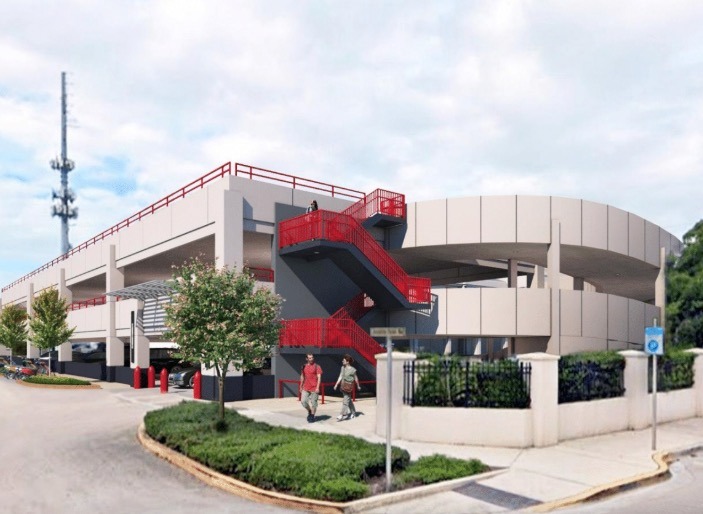
Thirty or so residents attended a Jan. 27 meeting about a parking structure being proposed for the existing paid public parking lot that’s behind the fire station at the corner of Angela and Simonton streets.
The proposed $4.2 million structure would offer three levels of parking, including the ground level, with a total of 150 spots, more than doubling the 64 spaces there now.
Hosting the Jan. 27 public meeting, City Manager Brian L. Barroso, city engineer Doug Bradshaw and parking director John Wilkins emphasized that the proposed structure is shorter than the fire station located on the same lot that faces Simonton Street. They also assured the attendees that the city commission has not yet approved any version of the new parking structure and emphasized that there will be plenty of opportunity for public input.
But there was no shortage of such input at the initial meeting this week. Parking structures are rarely popular, standing, as they do, as a stark reminder of space we no longer have for cars we can’t seem to live without.
Residents suggested adding solar panels to the plans to help offset electricity costs.
When other residents in the neighborhood complained about flooding issues at that corner, Bradshaw and Barroso acknowledged that they know flooding is an issue in that area and it will be addressed, but by a different department and at different meetings.
“When? Why not fix the flooding first, before spending $4 to $6 million on a giant parking garage in a flood-prone area?” several residents asked.
Kate Miano, who owns the luxury Gardens Hotel directly across the street from the proposed parking structure, also opposes the construction, and suggested longer-term planning by city officials, as well as a potential parking garage on Stock Island rather than Old Town.
Part of the city officials’ presentation outlined the need for the proposed structure, which Barroso described as “the best option.”
The city’s presentation states small shops need more parking for customers, employees must pay a regular price to park near their place of employment, revenue is needed to fund loss of grants for transit and for affordable housing, and electric charging stations are needed to support the city’s sustainability goals.
The presentation also examines potential business impacts in the area, saying that a larger parking structure would increase foot traffic to local retail shops, and that Key West’s parking price of $6 an hour is the highest in Florida and more expensive than New York City, which charges $5 an hour. More parking supply could slow the rate of inflation that keeps driving parking prices up, the presentation said, also noting the central downtown location is ideal.
Additional benefits, according to city staff, include:
• Reduced congestion in the area caused by vehicles searching for parking. Customers would choose this location because it is well known and offers almost guaranteed available parking including permit parking for locals and employees.
• Revenue could be earmarked to support the city’s transit goals of improving and increasing public transit to encourage less trips by private vehicle. This additional revenue could provide a funding source for transit.
• If employee parking permits are expanded to this new parking structure, fewer employees will park in the blocks surrounding the commercial core and the demand for parking spaces in the historic neighborhoods will be reduced.
• The city could dedicate some spaces in the new parking structure for the Employee Lot permit program, as there is at Truman Waterfront Park and the Old Town Garage.