









As coral restoration practitioners work to repair the Keys’ most treasured reef sites, a first-of-its-kind sea urchin release hopes to keep those reefs in tip-top shape for new corals to grow.
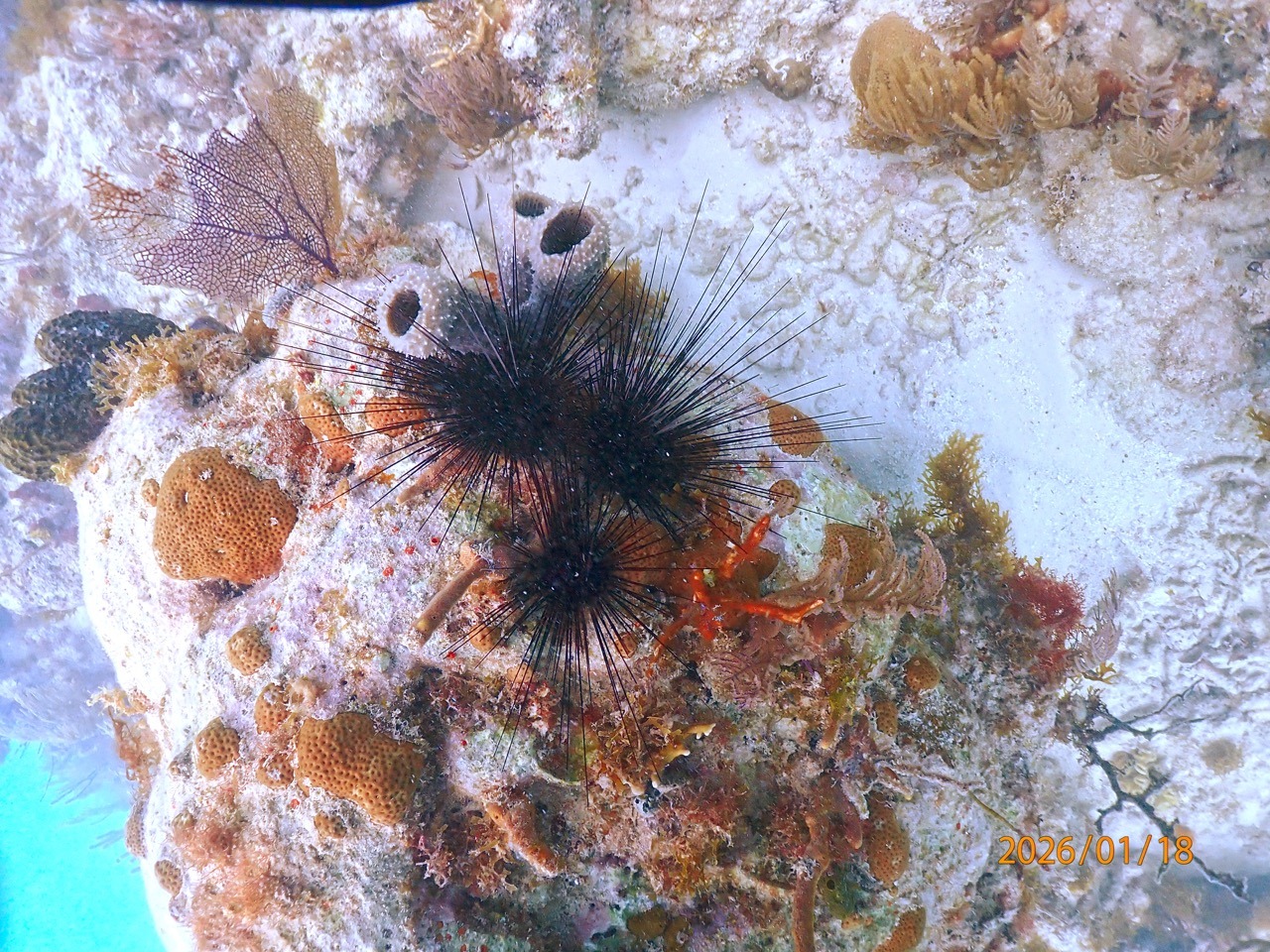
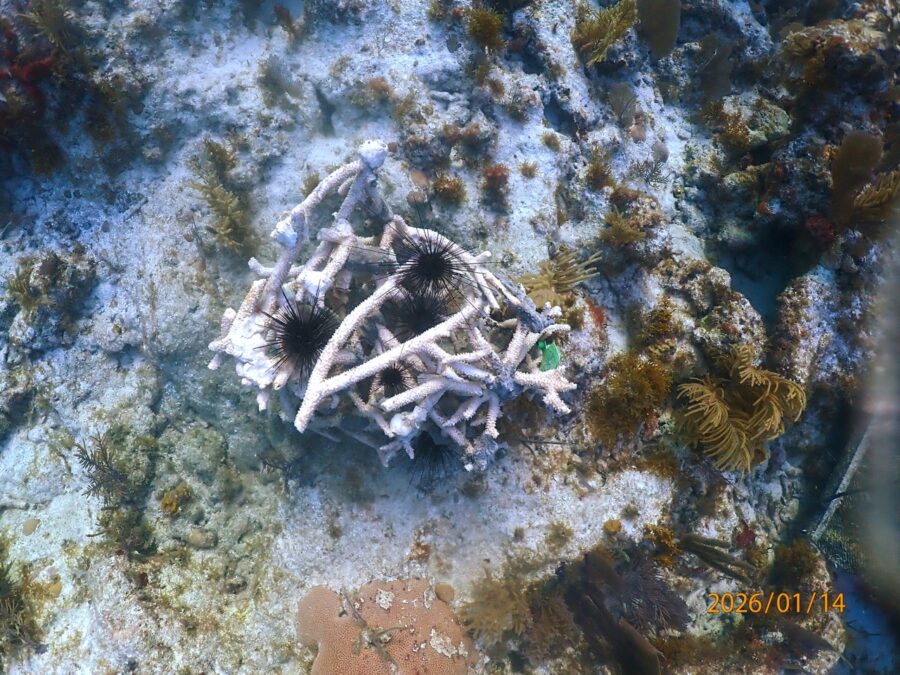
On Jan. 14, divers from Sustainable Ocean and Reefs (SOAR) brought a total of 101 long-spined sea urchins, Diadema antillarum, to Horseshoe Reef off Key Largo, helping the spiny newcomers settle into their Upper Keys home. They worked with partners from the Florida Keys National Marine Sanctuary, Amoray Dive Resort, Reef Renewal USA, Mote Marine Laboratory and Junior Scientists in the Sea.
SOAR founder Jim Brittsan told the Weekly it’s the first time that grazers – herbivorous fish and invertebrates – have been restocked at any of the seven Mission: Iconic Reefs sites established by the Florida Keys National Marine Sanctuary. And it’s all part of his nonprofit’s newest study, aiming to see whether urchins that are “familiar” with their surroundings before their release – specifically, the structures of the reefs and the living tissues they might encounter – will help the critical organisms stick around for the long haul.
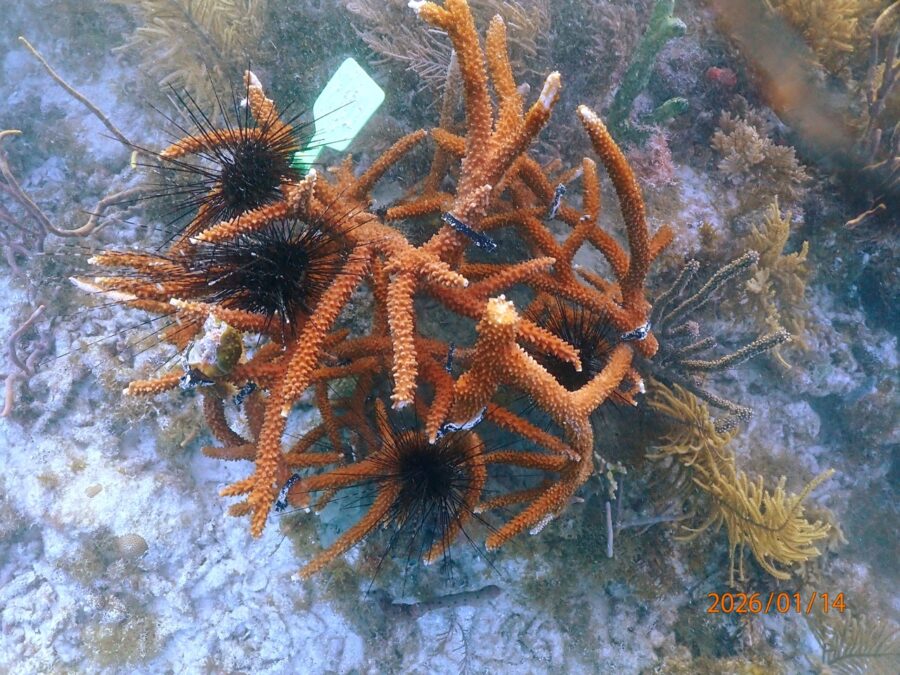
As grazing herbivores, the spiny organisms are partially to thank for ensuring that coral reefs don’t become blanketed with a suffocating coat of algae. The “clean floor,” so to speak, becomes critical when coral larvae look to settle out of the water column.
If their landing site is covered in algae, the coral polyps will fight a constant battle to avoid being overgrown. On the other hand, healthy reefs with sexually-reproducing corals allows for increased genetic diversity, clearing a path for new heat- and disease-resistant corals to flourish.
“The analogy I like to use is that the urchins are weeders in a garden,” said Brittsan. “If your fruits and vegetables are your corals, you’re weeding constantly around them to promote their growth.”
Grown in a nursery off Tavernier, the 1- and 2-year-old urchins were moved to their final Upper Keys destination and released onto structures built from both living and dead staghorn corals, some of which perished during a deadly 2023 marine heat wave across the Keys.
Unlike those corals, the urchins weren’t as directly affected by the 2023 heat wave. But their populations are still recovering, after a mass mortality event in the early 1980s wiped out an estimated 93-99% of the population. Another attack by a single-celled parasite in 2022 killed off more than 95% of urchins at affected sites – making the helping hands of SOAR all the more important.
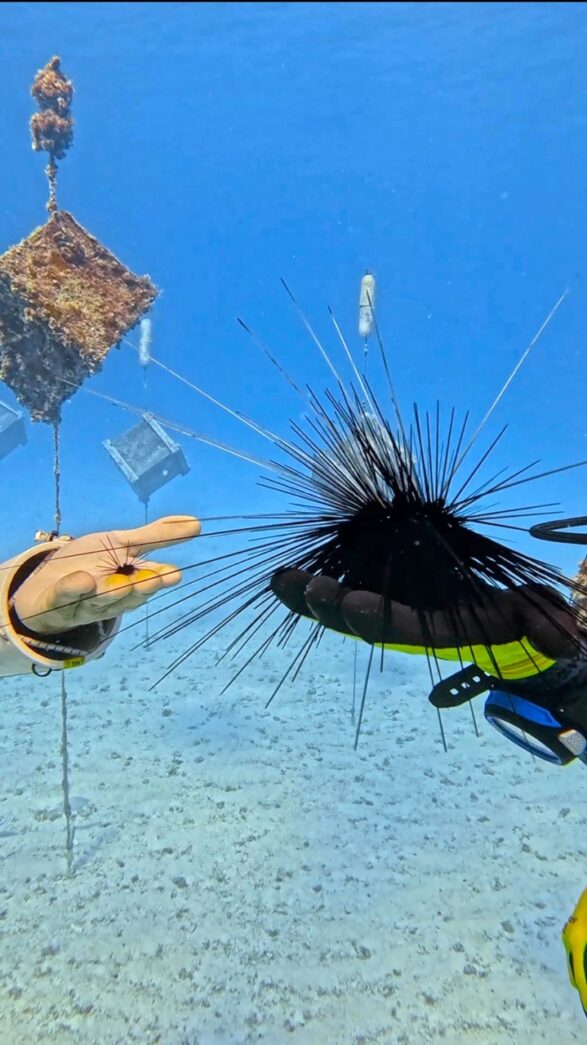
“You quickly saw people describe it as a change from a coral-dominated reef to an algae-dominated reef, and with that, the corals that are left are being slowly choked out by that algae,” Brittsan said.
So far, he said, the early signs of SOAR’s work are encouraging. Ocean-based nurseries could allow urchins to grow at a commercial scale with a decent survival rate – and without the hefty costs of the land-based systems required to raise them. And many of the urchins the nonprofit released are staying put, which Brittsan called “exactly what we were going for.”
“A lot of the research done right now doesn’t have really crazy amounts of long-term retention or survivorship, so we’re trying to see if we can increase that,” Brittsan said. “But as we’ve been doing the monitoring, we’ve had some interesting results, with the majority of the urchins staying within 10 feet of where we put them, which is great.”
For work that began less than six years ago, and a nonprofit officially founded in 2024, it’s a leap forward.
“It’s a really big step towards that holistic reef restoration approach,” Brittsan said. “The sanctuary has been very supportive, and we’re really excited to keep putting them out there.”
Activities were conducted under permit FKNMS-2024-043-A3 and FKNMS-2025-008.