











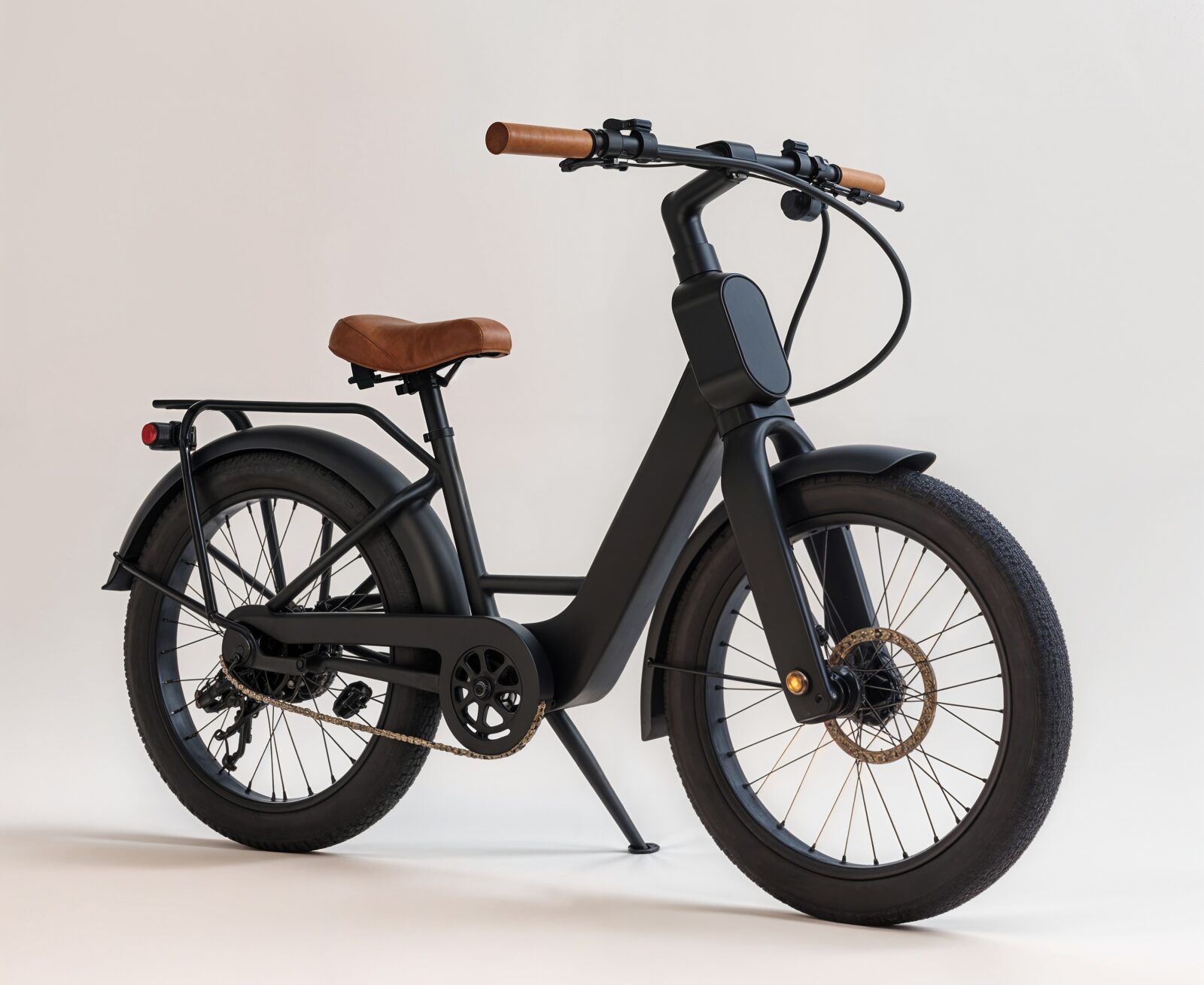
Florida lawmakers could soon vote to put the brakes on an exploding – and controversial – mode of transportation. But even if approved, the crackdown may not be as severe as initially proposed.
Recent years have seen an explosion in the popularity of electric bikes and scooters as a cost-efficient, eco-friendly mode of transportation. But in some cases, the concept of a high-powered bike hurtling down a sidewalk at speeds of nearly 30 mph is more of a hazard than help.
If passed during the 2026 Florida legislative session, House Bill 243 and its companion Senate Bill 382 would look to slow the bikes around pedestrians and create a task force responsible for recommending more regulations in the future.
As currently defined, e-bikes fall into one of three classes: Class 1 bikes, which provide assistance only while pedaling and stop helping when the bike reaches 20 miles per hour; Class 2, reaching speeds of up to 20 mph by using the throttle and electric motor alone; and Class 3, providing assistance while pedaling up to speeds of 28 mph. Vehicles exceeding these capabilities are classified as motorcycles – but modifying a lower-powered stock scooter to boost its top speed is a simple matter for the mechanically inclined.
In its originally-filed form, the new bill would have created a statutory definition for an “electric motorcycle” (“e-moto”): an electric vehicle powered by a motor of 750 watts or more, with max speeds above 28 miles per hour. It would require all operators of the high-powered bikes to be 16 years old with a driver’s license, and the special designation would limit the faster models to ordinary vehicle lanes, not sidewalks or mixed-use pathways where other e-bikes are still permitted.
But a revised version of the bill from late January nixed the restrictions on higher-powered bikes, instead adding general safety precautions while proposing an electric bicycle safety task force to recommend further improvements to state e-bike laws.
In its current form, the bill would require e-bikes on shared pathways not adjacent to roadways to yield to pedestrians, slowing to a top speed of 10 mph when within 50 feet of someone on foot. Breaking the rule would be punishable as a noncriminal nonmoving traffic violation.
Along with creating the task force, composed of Highway Safety and Motor Vehicles employees and representatives from law enforcement, the electric bicycle industry, elected officials and medical professionals, the bill would require local law enforcement to maintain logs of all traffic crashes involving e-bikes. The results would form the basis of reports delivered to FLHSMV and in turn to Gov. Ron DeSantis, the House and Senate by October 2026.
Though spiking numbers of crashes are discussed anecdotally as municipalities across the U.S. look to adopt their own e-bike laws, crashes in Florida directly attributed to electric bicycles are difficult to track – a problem potentially addressed by the task force and new reporting requirements. State crash reports count e-bike fatalities like bicyclists, while others classify e-bike crashes as motorcycle accidents – an apt description in many cases for the high-speed wreckage. Even the definition of an e-bike varies according to separate laws and state agencies.
Nevertheless, the spike is clear nationwide. According to a July 2024 Forbes article, researchers in the medical journal JAMA Network Open found that the number of injuries from e-bikes doubled every year from 2017 (751 injuries) to 2022 (23,493). Over the same span, electric scooter injuries rose by 45%, and a recent Tampa Bay Times report quoted emergency room physicians who called the bikes “the biggest emerging risk for traumatic injury.”
The bikes are cause for resident concern in local government meetings from Key Largo to Key West – and the court of social media. Several Keys municipalities have passed their own basic framework for e-bike laws, but questions of enforcement and education still exist.
Last month, a dashcam video of a driver slamming on the brakes as an e-bike-riding child swerved directly across her path on Sombrero Beach Road without so much as a warning glance made the rounds in local Facebook groups – and a few weeks later, the Marathon City Council’s workshop session found a local business owner and resident begging for clear signs and education to direct e-bike riders.
At press time, HB 243 was reported favorably by the House State Affairs Committee, Transportation and Economic Development Budget Subcommittee and Government Operations Subcommittee. It is waiting to go before legislators on the Senate and House floor.
The Keys Weekly submitted a request for recent records of e-bike crashes in the Keys from the Monroe County Sheriff’s Office, but was not able to obtain the data before press time.