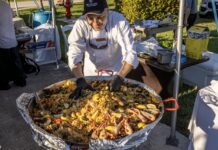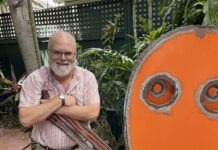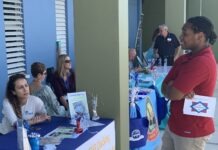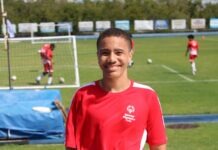






Contemporary Key West is full of fascinating people and quirky characters. Everyone, it seems, has a story. There’s the man who abandoned a thriving corporate empire to become a “trop-rock” singer/songwriter — and the journalist who devotes as much energy to small-town stories as she did the big-city devastation that earned her team a Pulitzer Prize.
While these people contribute immeasurably to Key West’s colorful spirit and culture, so too do unique individuals who are gone. Some of them, like the late Al Kee, have earned an unforgettable place in local history.
A smiling presence and a longtime “ambassador” for the island, Kee sold fluted, pink-lined conch shells beside the Southernmost Point for decades. Over the years, he welcomed countless visitors to the iconic marker at Whitehead and South streets — giving them a taste of the warmhearted hospitality and authentic culture that helps define Key West.
Kee wasn’t the first member of his family to work beside the marker at the continental United States’ southernmost spot. His father spent much of his lifetime selling sponges, fish, coconuts and shells in the same place.

After his father died in 1993, Kee and his family carried on the tradition — serenading Conch Train riders with enthusiastic blasts on the conch shell, posing for photos shot by visitors from around the globe, and cracking open coconuts to demonstrate the sweetness of the “water” inside.
A bishop of his church, Kee was involved in other aspects of the community as well. Before his death in 2003, he was also a beloved presence at the Conch Shell Blowing Contest that takes place each spring.
“He and his father before him left a 50-year legacy of welcoming all who visited the Southernmost Point, popularized conch shell blowing and were emissaries of the multicultural, multi-ethnic community that has made Key West unique since its inception,” said Bruce Neff, an expert on the island’s past, during a 2015 interview.
In March 2015, people who remembered Kee, and appreciated the “old Key West” heritage he embodied, gathered at the Southernmost Point. There they witnessed the unveiling of a life-size bronze sculpture of the “conch ambassador” in the spot where he worked for many years.
“Each day Bishop Kee, a preacher and a leader of Key West’s Bahama Village neighborhood, could be seen at the Southernmost Point greeting visitors with a cheerful wave and toot on a conch shell,” said Neff, whose Historic Markers Inc. spearheaded community support for the sculpture.
For decades the marker, a larger-than-life buoy, overlooked the Atlantic Ocean at the corner of Whitehead and South streets — its painted body adorned with lettering that proclaimed its location just 90 miles from Cuba. Most Key West visitors made a pilgrimage to the famed landmark, taking turns snapping a photo or selfie with it.

According to Neff, before the marker was originally installed, the island’s Afro-Bahamian fishermen anchored their boats and sold their catch at the waterfront corner.
“Over the years, Bishop Kee and his father watched the Southernmost Point evolve into a spot to which thousands of tourists flock for their photos,” Neff said in 2015.
Crafted by local sculptor Tom Joris, the large bronze of Kee depicts him blowing a conch shell and waving a greeting. The sculpture project was undertaken in collaboration with the City of Key West and its Art in Public Places board.
While it was designed to remain permanently at the Southernmost Point, the sculpture was removed — and the marker boarded up for protection — while the seawall and plaza area at Whitehead and South streets undergo vital repairs and renovation. In addition, a new base must be constructed for the sculpture to replace the weather-damaged original.
A temporary Southernmost Point marker now stands in the Duval Street Pocket Park at 1400 Duval St., and it’s more popular than ever for photo stops. The sculpture of Al Kee will be placed in the park once the new base is completed — so Key West’s “conch ambassador” can continue welcoming visitors just as he did in his lifetime.