












Two months after one South Florida seafood wholesaler pleaded guilty to price-fixing charges on spiny lobster and stone crab, class-action lawsuits are targeting his alleged co-conspirators in the Keys.
In September, a U.S. Department of Justice (DOJ) press release announced that Dennis Dopico, vice president of wholesaler D&D Seafood, pleaded guilty in U.S. Southern District Court to conspiring with his competitors in order to artificially fix and suppress the prices paid by his company for lobster and crab claws between 2023 and 2025, affecting around $8 million in commerce. As part of the plea agreement, Dopico agreed to fully cooperate with investigators in exchange for a reduced offense level and sentence.
According to court documents, Dopico and other co-conspirators communicated via texts and calls to agree on prices offered to fishermen at the docks for their catch, altering the prices in lockstep as various harvest seasons progressed.
“For example, on Sept. 28, 2023, following communications with a co-conspirator about spiny lobster prices, Dopico replied ‘don’t show text to anyone. Confidential,’ to which the co-conspirator responded, ‘I give you my word. We’re working together now not against each other,’” the DOJ press release stated.
After the same co-conspirator texted Dopico new prices for each of the four sizes of stone crab claws in Everglades City a few weeks later, Dopico replied, “Let me know what you do. I am matching your prices. It’s the one we like the most.”
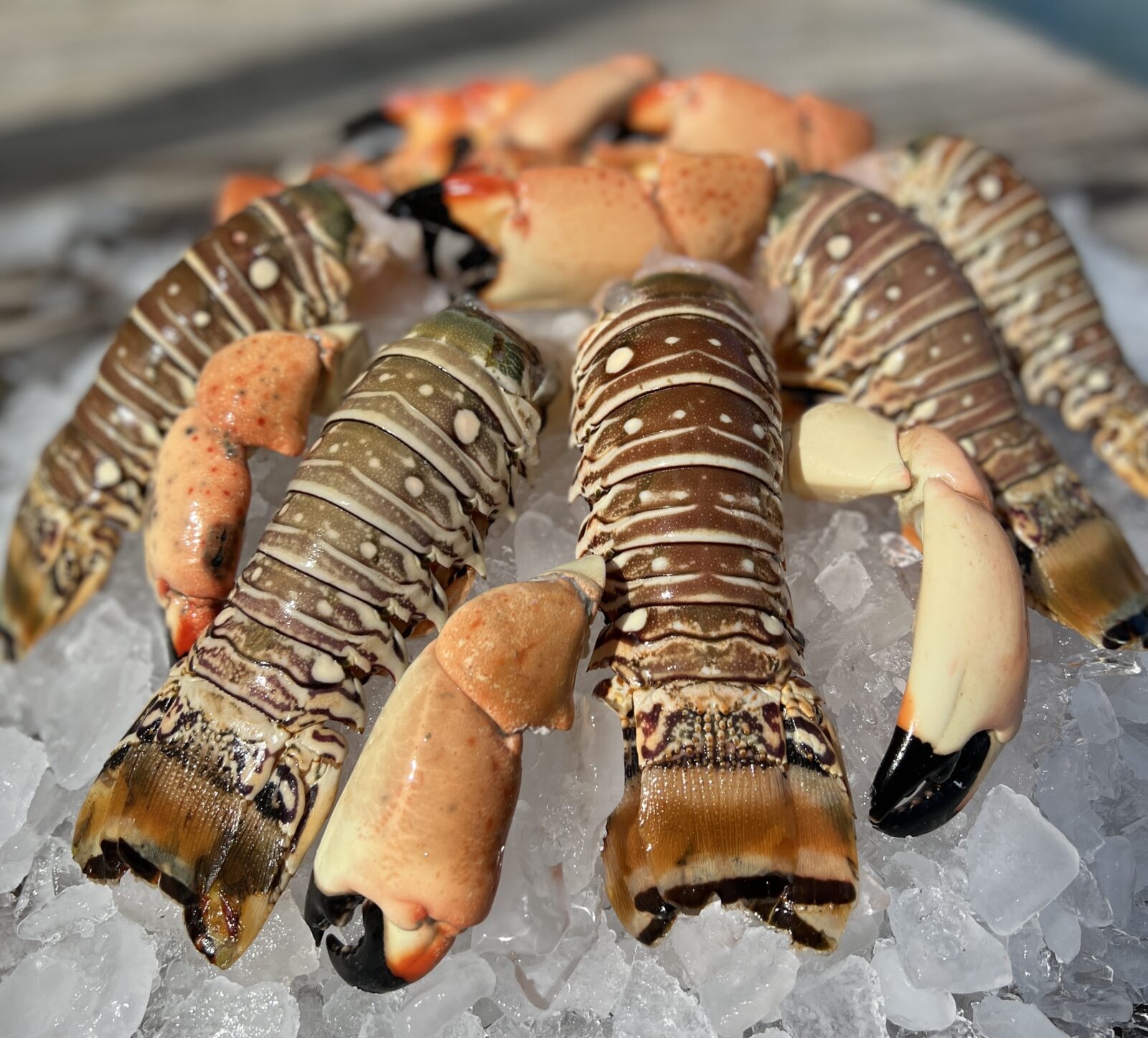
Harvests from Keys waters account for about half of Florida’s statewide stone crab catch, while Keys lobsters make up roughly 90% of the fishery. The two shellfish are some of the state’s most vital commercial species, together accounting for $76.3 million of the $240.5 million in wholesale value of catches throughout the state in 2024, according to the Florida Department of Agriculture.
Prices for spiny lobster, in particular, are critical in the early stage of a season that runs from August through March, as more than 50% of the annual harvest occurs during the front-loaded months of August and September.
While Dopico pleaded guilty to one felony count of restraining trade by conspiring to fix prices – carrying a maximum penalty of 10 years in prison and a $1 million fine for individuals or $100 million for corporations – his federal complaint referenced, but did not name, four other South Florida seafood wholesalers as conspirators.
But in October, two additional civil suits filed by Keys fishermen sought damages against several Monroe County-based wholesalers in addition to Dopico and D&D, whose Marathon location on Coco Plum Drive is now listed as permanently closed.

The first, filed by Marathon’s Paradise Tails Inc., Key West’s Reel Faith Fishing LLC, and Marathon fishermen Erick Bravo and Jose Hernandez, takes aim at Marathon-based Keys Fisheries and former vice president Gary Graves. A second, filed by Islamorada’s The Gourmet Crab, includes wholesaler, retailer and restaurant operator Billy’s Stone Crabs Inc., its president Brian Hershey and its Marathon- and Summerland Key-based affiliate BSC Fisheries LLC, along with D&D Seafood president Mario Dopico and secretary George Teruel.
While not named as defendants, the suits list numerous other Keys-based operators as alleged “known co-conspirators,” including Marathon-based Golden Dragon Seafood and Key Largo Fisheries in the Upper Keys.
The new suits stretch back further than Dopico’s federal charges, alleging that conspirators began meeting at least as early as June 2017 to set initial prices per pound before the opening of lobster and stone crab seasons.
“The defendants would then coordinate throughout the season to adjust prices in lockstep,” the suit states. “If any purchasers offered fishermen prices above the agreed-upon fixed prices, those purchasers faced various repercussions.”
Fishermen who sought higher prices, or fish houses that paid them, were allegedly blacklisted by the price-fixing group, boycotted by other buyers and harassed with frivolous law enforcement complaints.
The price-fixing practices, the suit claims, were especially damaging as the Keys experienced a decade-long drop in stone crab landings beginning in 2012 – one that should have caused dockside prices to spike in a properly competitive market.
The decline was significant enough that in 2020, Florida’s Fish and Wildlife Conservation Commission sought to address it by increasing the minimum legal claw length by ⅛ of an inch and shortening the season by two weeks.

“This well-documented supply shortage should have resulted in record-high dockside prices for fishermen as a basic function of supply and demand,” the suit states. “(When) competitive forces briefly prevailed, the scarcity drove prices to unprecedented levels, with wholesale prices for the most desirable claws soaring to as much as $50 per pound. This demonstrates the substantial prices a competitive market could bear and stands in stark contrast to the suppressed prices paid by the cartel.”
Instead, one local fisherman told the Weekly, prices were held to anywhere between $10 and $20 per pound.
While Dopico pleaded guilty to affecting $8 million in sales, Paradise Tails’ civil suit alleges underpayments totaling “at least tens of millions” and seeks three times that amount in damages.
“Price fixing cheats fishermen, squeezes restaurants, and makes families pay more at the table,” said U.S. Attorney Jason A. Reding Quiñones in the release announcing Dopico’s plea. “We will protect honest competition from the boat to the dinner table.”
“These fishermen trusted these companies because they had a relationship for a long time. This lawsuit is not just about antitrust in purely legal terms, it is actually about the violation of our local fishermen’s trust,” said Marathon attorney Richard Malafy, who will work with personal injury firm Levin Pappantonio to represent affected fishermen. “The lawsuit seeks to recover monies for our fishermen, which was and always has been rightfully theirs.”
Dopico’s sentencing is set for Jan. 5 in Miami before Judge Cecilia M. Altonaga. Existing civil suits are expected to be combined into a larger class action suit throughout 2026, with additional parties signing on.
Speaking to the Weekly on Dec. 2, Paradise Tails owner Morgan Gotti declined to comment on the pending case and investigation. Attorneys for multiple defendants did not return calls seeking comment before press time, while others declined to comment on the pending case.