
By Allison Morgan
More than a century ago, before there were roads and back when just a handful of families lived in the Keys, William Allen Parrish Sr. made his first of what would be many trips from Dania Beach to Marathon on the Florida East Coast Railway. It was 1912, the same year Henry Flagler rode the train on its maiden voyage to Key West.
At the time, much of the Keys was wooded and desolate, but Parrish, who had dreams of opening a fish house, saw potential in paradise. He made frequent visits to Marathon before permanently moving his family down to Marathon in 1927. In the years that followed, his wife and six children had front-row seats to watch Parrish’s impact on the area unfold. Now, nearly 100 years later, his great-granddaughter Tracy Collins Myers is ensuring his legacy is remembered.
“He had a vision to really grow Marathon,” said Myers, who was born in the heart of the Keys and is a Marathon High School graduate. “After establishing Parrish Fish Company, the first commercial fish packing plant in the Florida Keys, his interest turned to real estate. He shared his vision of growing Marathon by offering great deals on property to people that he thought would contribute to the town. One example, which is typical of his kindness, is that he sold 100 feet of highway frontage extending to the Florida Bay for $300, which was a good price for that much land in those days.”
Those around Parrish looked up to him for the tremendous contributions he made in the community, in both business and civic activities, as well as real estate development. Parrish paved the way in property development and leadership roles. He built the first general store, was the first deputy sheriff, and was recognized as the first real estate developer and broker in Marathon. He was the founder and first president of the Marathon Chamber of Commerce, and led countless other community boards and commissions.
Despite being a pioneer and among the likes of Flagler, Stanley Switlik and Phil Sadowski, Myers said, Parrish’s name and legacy has less familiarity; she has been at the forefront to change this. With the help of local real estate agent Sam Williams, whose daughter Mia is Parrish’s great-great-granddaughter, Myers has succeeded in placing plaques and portraits around town in Parrish’s honor. Williams leveraged his community connections to help Myers initiate conversations.
“Tracy and I first started talking about bringing more public awareness to him just a few years ago, and it has really turned into something,” Williams said. “His name wasn’t really anywhere, except for in the book ‘Marathon 1906-1960’ by Dan Gallagher. Being a Realtor myself and involved with the Marathon Rotary Club, I appreciate the history and the purpose intertwined into giving back. It’s important that he’s remembered – he had a lot to do with most of the land that our iconic stuff sits on.”


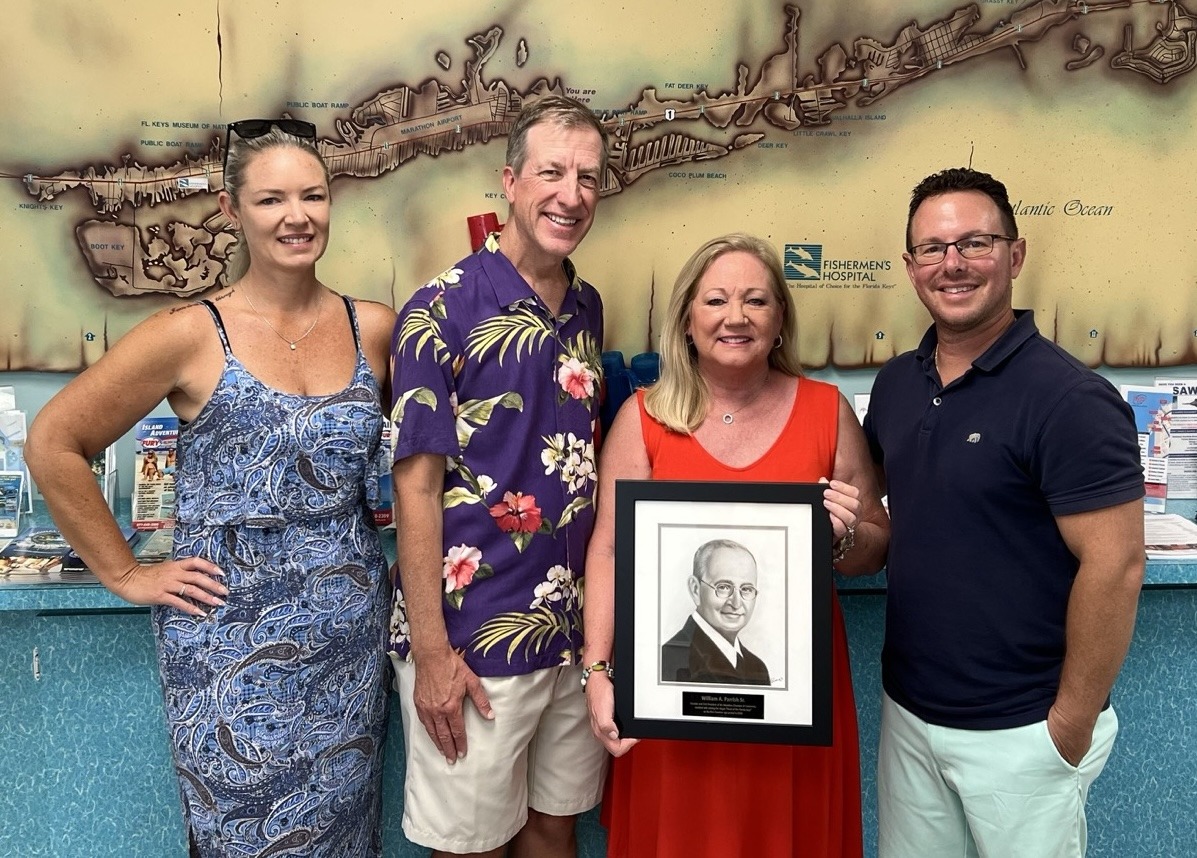
Myers received approval to place plaques and portraits at several locations around town, including the Marathon Chamber of Commerce, Crane Point Hammock Museum, the old Parrish family home at Faro Blanco Resort, Bank of America (formerly the Marathon State Bank, where he was elected the first chairman of the board) and the St. Paul A.M.E. Church, where he donated land.
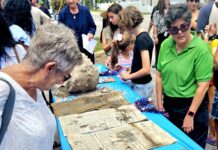
Myers said she is grateful for the support of Williams, her husband Derrick Myers and Brennan Bye, another of Parrish’s great-great-granddaughters. She also credits her friend and local historian Bettye Chaplin, who has been instrumental in helping her bring awareness to the impact Parrish had on Marathon. Bye was present when a bronze sign highlighting Parrish’s extraordinary life was placed on a coral rock monument in front of the Crane Point Museum and Nature Center train about a year ago.
“His hard work, dedication and commitment to establish Marathon were truly amazing,” said Bye, who also attended Marathon High School and lives in Marathon. “His achievements and contributions he made were to help create a thriving community in Marathon, while also helping those in need. I am so thankful to call this lovely island my hometown.”
Something Myers is especially excited about is the recent launch of the William A. Parrish Scholarship, which was established in October 2024 to provide financial assistance to students obtaining a degree or apprenticeship at the College of the Florida Keys. According to Myers, in 1928, Parrish was the first person to initiate a school by providing a building in cooperation with the Monroe County school board.
The scholarship, which can be found on keysschools.com, also plays a crucial role in highlighting Parrish’s local contributions and the impact he had on Marathon. In order to apply for the scholarship, students must create a video showcasing the impact Parrish had on the growth of Marathon and include one location that has a plaque or portrait of him.
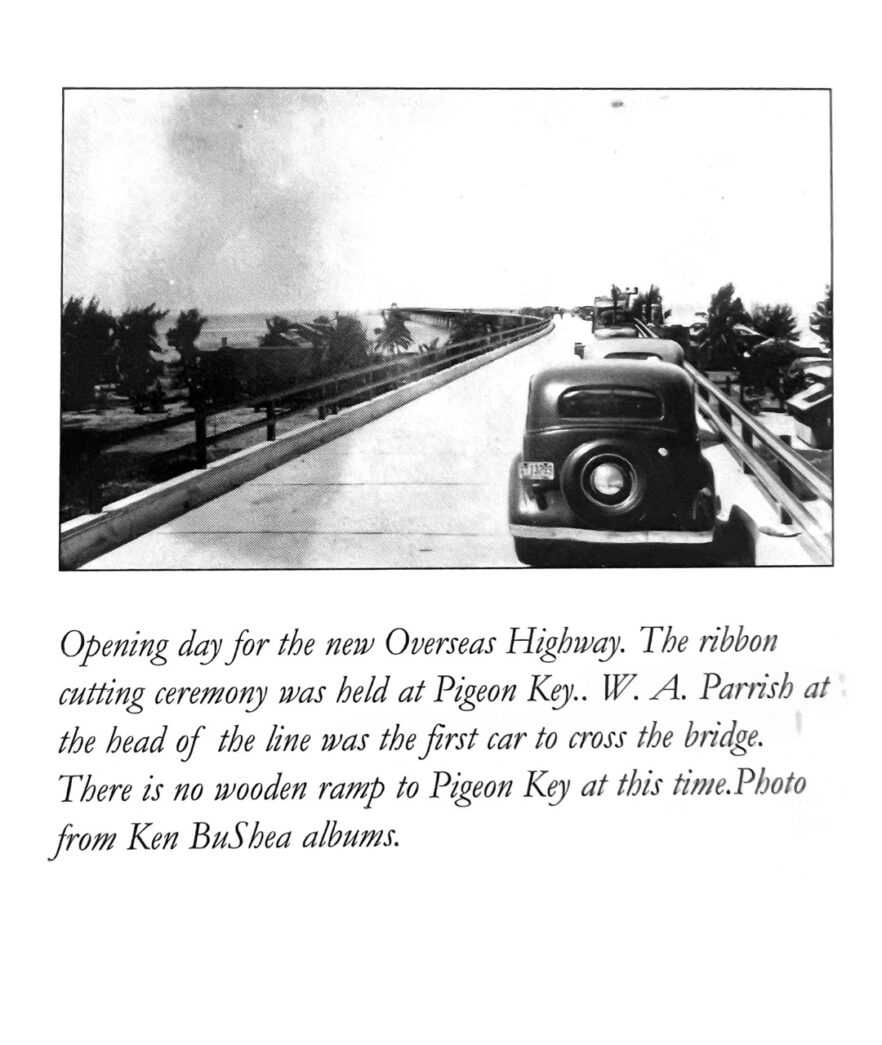
Myers hopes to place more monuments in his honor this year. In the works are a portrait in the American Legion Post 154, which sits on land donated by Parrish; a portrait for the Marathon Community Church, where he donated his time and talent while a member of the financial committee; and a coral rock with a bronze sign at the entrance of Old Seven Mile Bridge, as he was the first person to drive a car across it.
“He was a real humble man that wanted to see Marathon grow; he died not having a lot of money, as he gave it all away,” Myers said. “Known as the ‘Father of Marathon,’ he ensured the prosperity of Marathon and an opportunity for all. I will continue to make sure all that he has done is not forgotten.”