










By Jim McCarthy, Alex Rickert and Mandy Miles
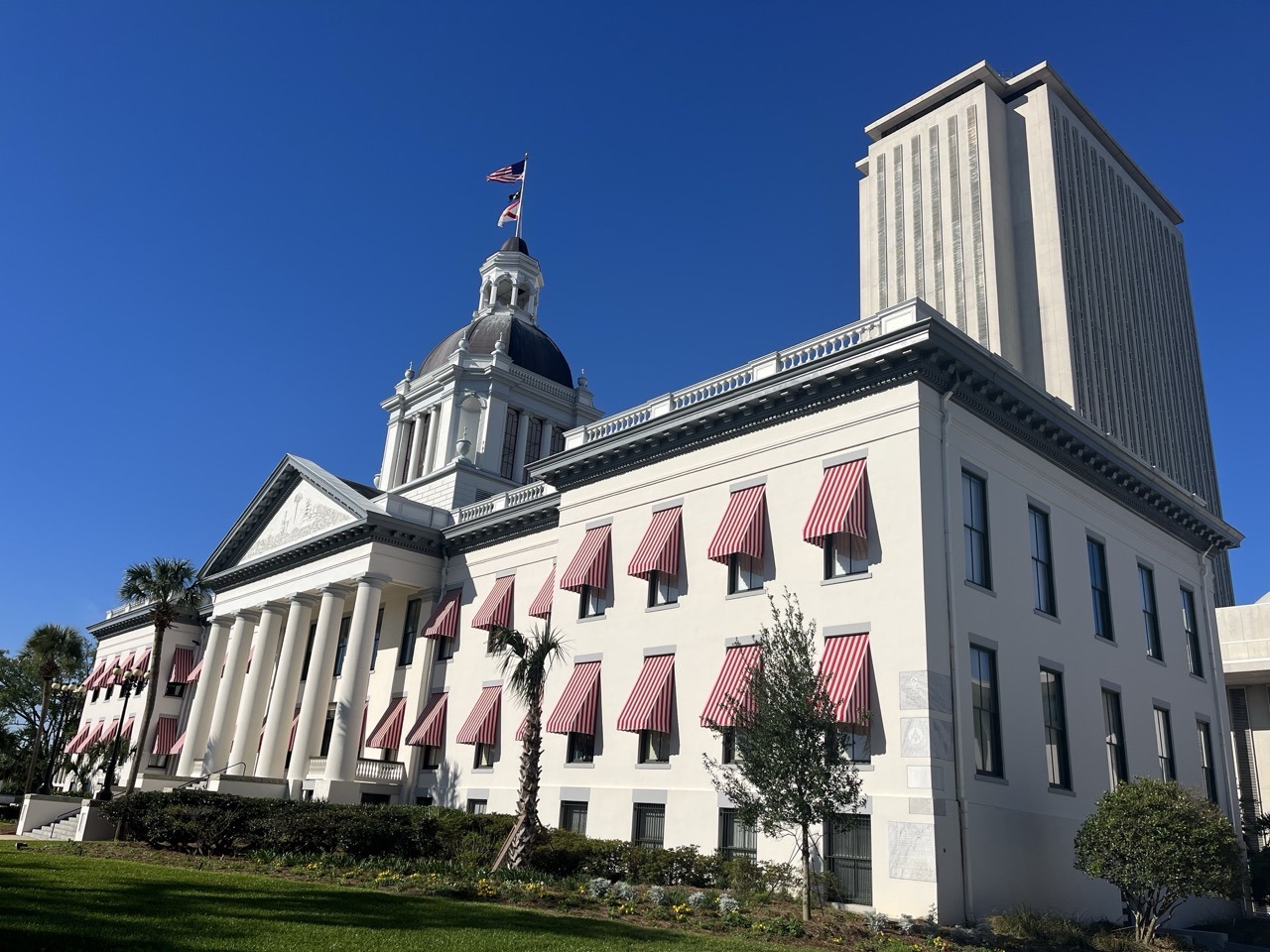
A large contingent of Florida Keys officials will make the trek to Tallahassee to advocate on key issues and priorities for the island chain.
Dubbed Florida Keys Day, local leaders will visit the state capital Feb. 4-5 as they meet with department heads and legislators. There, they will sit down and explain their reasons for funding and policy change in areas such as water quality, transportation and affordable housing, among others.
“Historically, it’s the most popular advocacy day in Tallahassee,” said Kate DeLoach, lobbyist with the Southern Group, which helps organize Florida Keys Day alongside state Rep. Jim Mooney’s office. “It’s really our chance to get everybody thinking about us and our issues, hopefully right around the time they’re making budget and policy decisions.”
Erin Muir, who recently joined the Southern Group as a lobbyist, said the day is an opportunity to remind the state how vital the Keys are from an economic standpoint.
“A big driver is our tourism industry and the unique environmental resources we possess,” she said. “It’s really wonderful when the Keys community from Key West to Key Largo can all come together and show a united front.”
The Monroe County officials have a packed schedule as they meet with several departments, including FloridaCommerce, Florida Fish & Wildlife Commission and Department of Environmental Protection. They’ll also talk to state legislators who make discretionary decisions related to the budget.
Lisa Tennyson, county legislative affairs director, said county officials will be advocating on a number of priorities, including the perennial $20 million for water quality projects via the Florida Keys Stewardship Act.
“Even though we’ve been successful annually, it’s never something we can take for granted, it requires significant advocacy every year,” Tennyson said.
On the policy side, Tennyson said they’ll be talking to state leaders about extending a special authorization in the Stewardship Act which sets aside $5 million for land acquisition. The provision within the act detailed a 10-year term that expires this year.
“We’re looking to extend authorization another 10 years. It’s a successful partnership between the state and entities in the Keys,” Tennyson said. “Land buying in the Keys is part of an important formula with the limited allocations, and taking properties off private rolls works to limit liability takings claims. It also obviously helps to protect our natural resources.”
‘Historically, it’s the most popular advocacy day in Tallahassee.’ — Kate DeLoach, lobbyist for the Southern Group
Fixing relationships and funding transportation projects are two priorities for the Key West contingent while in Tallahassee. Key West Mayor Dee Dee Henriquez said she’s flying to Tallahassee with City Commissioner Aaron Castillo and City Manager Brian L. Barroso. Assistant city manager Rod Delostrinos will already be up there, she said. Delostrinos was previously head of the city’s transit department and as such has contacts and familiarity with the Florida Department of Transportation, which drew the island city’s ire last year when it forced Key West and other cities to remove rainbow-painted crosswalks.
“We had no choice when faced with the loss of state transportation funding if we didn’t remove it,” Henriquez said.
The FDOT funds the majority of most road and utility projects in Key West, with the city contributing a required local amount.
“We would have been on the hook for about $6.2 million, and that was just one project on Jose Marti Drive,” the mayor. “So we need to build those relationships and move forward.”
Transportation grants are another topic to be discussed, as the city recently had to discontinue the popular Duval Loop downtown bus service due to its financial losses and is paring back bus routes, cuts that typically affect low-income workers and senior citizens.
“So we’ll have our walking shoes on and will be heading to several meetings that we have scheduled with various state departments, agencies, elected officials and lobbyists,” Henriquez said. “And beyond Tallahassee, we’re also looking to strengthen our ties with our federal representatives and lobbyists.”
Islamorada officials will meet with several state departments during their visit. Among the village contingent traveling to Tallahassee are Village Manager Ron Saunders, Mayor Don Horton, councilwoman Anna Richards and planning director Jennifer DeBoisbriand.
The village has several requests for state funding on projects such as the North Plantation Key Pump Station. Islamorada officials are currently working through a consent order from the Department of Environmental Protection after the station experienced six sanitary sewer overflows and discharges, from May 2021 to March 2025. The incidents were in violation of state regulations which prohibit sewage, wastewater or biosolids from being disposed of without treatment. The village is in the process of remediating the issue with its engineering firm, Wade Trim, and the Key Largo Wastewater Treatment District by constructing an inline booster pump station.
Funding for a federally-mandated deep wastewater injection well sits firmly atop Marathon’s list of priorities. City Manager George Garrett and Mayor Lynny Del Gaizo said they will pursue a portion of the $20 million Florida Keys Stewardship Act, along with a $5 million special appropriation request to back the project.
In December, city officials said that even if pending grants are fully funded, at least $10 million of the deep well’s $60 million cost remains unfunded – a number that could wind up on tax rolls as Marathon works to meet its 2028 installation deadline.
Portions of 2025’s Senate Bill 180, already under the microscope, will also merit attention for Marathon and the Keys as a whole – in particular, a provision in the bill that restricts a crop of 900 new building rights to one right per buildable lot, handicapping future multifamily affordable housing developments.
“(Rep. Mooney) recognizes that you can’t do affordable housing with one unit per lot, and he said he has a fix in the works,” said Garrett. Thankfully, he said, the threat of takings cases won’t loom over proceedings the way it did last year, as a December meeting of Gov. Ron DeSantis’ Cabinet fully greenlit the new batch of building allocations for distribution.
Finally, with relationships on the mend between Marathon and the Florida Department of Commerce, the city will look to rebalance its Memorandum of Understanding (MOU), which determines the types of building permits that must be sent up to Tallahassee for review before the city may issue them.
In February 2022, following a highly-publicized building rights case in Marathon, the state revoked a previous agreement that allowed the city to independently review and issue permits within the Florida Keys Area of Critical State Concern. The city approved a revised MOU two months later, but city officials told the Weekly the current scope of reviews causes unnecessary delays and extra work for city staff and local contractors and property owners.
“I’ve got a pickleball court where we’re basically doing nothing but putting in a concrete pad, and we have to send that permit up there,” Garrett said. “There are relatively simple permits that have no environmental impact, relatively little stormwater impact, no habitat impact, and we’re still sending that up. We think we can reduce that significantly.”