









On Jan 6, the Village of Islamorada became the latest governmental body in the Monroe County to unanimously pass a resolution objecting to the Bureau of Offshore Energy Management’s (BOEM’s) five-year Offshore Oil Drilling Leasing Plan expanding into the eastern Gulf and within 80 miles of the Dry Tortugas. A plan that threatens the $127 billion per year economic engine that our shorelines and marine ecosystems represent. The plan, which also threatens to interfere with long established USAF testing areas over the Gulf.
All Monroe County governments have responded in a wave of unanimity that began in early December with the City of Layton, then the Board of County Commissioners, Key Colony Beach and Key West. On Jan 13, the City of Marathon, City Commissioners, will consider and are expected to certify 100% unity across all of Monroe County, by approving their version of the same resolution, rejecting the BOEM plan.
These events are a celebration of unity and a proud moment for our elected officials to participate in. Please join in if you can for this rare and inspiring moment of unity at the Marathon City Hall or via online participation. Details of Resolution 2026-10 and the City Council meeting are available on the City of Marathon website (https://www.ci.marathon.fl.us/citycouncil/page/city-council-meeting-106).
These symbols of unity are being expressed across our entire state with all federally elected officials signing onto the same letter of objection, demonstrating our ecosystems and environment are not political. We move forward with confidence that our objections will be respected and the 31,000-square-mile expansion area removed from the plan. We encourage each individual or group who can, to participate by reading the plan and submitting comments to the BOEM via this link https://www.regulations.gov/document/BOEM-2025-0483-0001. The deadline is Jan. 23.
The BOEM’s offshore oil drilling expansion plan is the latest in water quality threats to Florida and more concerningly to the Florida Keys. It has inspired an awareness and a conversation about water quality and the plight of our ecosystems in the Florida Keys, a conversation that is far overdue.
The Keys ecosystems are the proverbial “Canary in the Coal” mine gasping for air on the bottom of the cage. The Keys are downstream to everything that flows from western Florida estuaries and the vast river basins between the Appalachian and the Rock Mountains that flow into the Gulf. It is clear the BOEM, and others who should, do not realize the value, the fragility and highly impaired status of the Keys. It is time we use our unity and voices to change that!
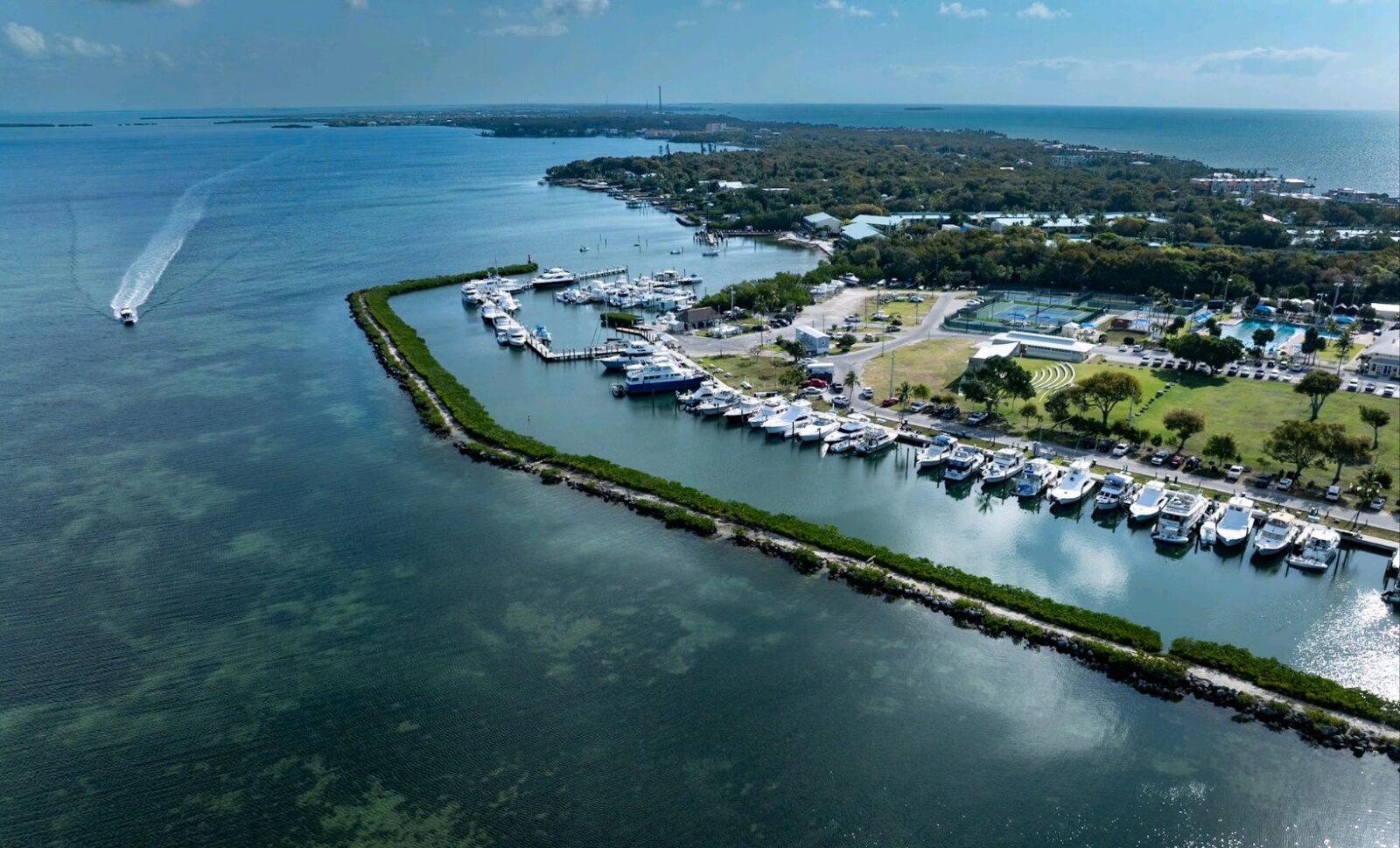
Ours is the only barrier reef in the northern hemisphere, home to roughly 25% of all marine biodiversity, approximately 6,000 species. The Keys, with roughly 800 islands, includes 1.4 million acres of seagrass and some of the largest seagrass beds on the planet and over 1800 miles of mangrove shoreline. The Keys are technically a wilderness where people are permitted to live, nowhere else does this exist in the U.S. Over 5 million tourists per year chose to visit to enjoy world renowned offshore sport fishing, diving and ecotourism. The commercial fishery for lobster in the Keys represents over 90% of the entire harvest in Florida. We simply call it home.
Each year, over the last four to five decades we have seen our ecosystems continue in a slow but accelerating death spiral due to increasing amounts of eutrophic water coming from nearly 3 million septic systems upstream in mainland Florida. This is scientifically proven, by Brian Lapointe, with over 30 years of data collected at Looe Key and radio isotope analysis tying coral weakening to the array of septic systems spanning Florida. Cyanobacteria explosions in the fresh waterway systems, Lake Okeechobee being declared dead, Indian River Lagoon void of seagrass causing mass manatee starvation die-offs, pharmaceutical contaminated nearshore fish throughout the Keys, spinning fish and the green algal ring around the south end of Florida, that has replaced the crystal clear blue water of the Keys present just 30 years ago, are all visual symptoms of this problem. The coral cover on the reef is less than 3% of what should be and the size of the reef now shrinks each year, disabling the prospects of corals recovering without assistance, and in fact, our local staghorn and elkhorn corals have been declared functionally extinct.
The Keys are designated as a “Sanctuary,” this designation has proved feckless in terms of care, concern or protection. The critical ecosystems of the Keys have been permitted to be sacrificed for a frenzied effort to usher in rapid, low-cost development across Florida over the last 50 years. The state, often boasting of the over 900 people per day moving to Florida, issued septic system permits that were a cheaper and expedient alternative to proper wastewater treatment systems; all while knowing that septic systems do not work in porous soil and that nutrient pollution would rapidly enter the ground water system. Human fecal matter has been found in every single moving waterway tested in Florida in recent studies, beaches are regularly impaired and bathing designated as a hazard.
In the spring of 2024, a University of Florida portable water study showed the Keys has the highest PFAS levels of all 67 counties in Florida, and no one knows the source responsible; however, our County and FKAA joined in a class action law-suit in 2022 in this regard. We deserve to know who caused this and when a solution will be implemented to remove the bioaccumulating carcinogen. As with similar invisible threats to our ecosystems, there seems to be little urgency to identify or resolve this ground water pollution. The lack of concern for water quality has persisted far too long, it surrounds us and threatens our livelihood and health with increasing risk and severity of consequences. It threatens the entire State of Florida, but again, the Keys is the “canary in the coal mine” that dies first.
The Keys took responsibility to remove septic systems and adopt centralized wastewater treatment in the mid 2000s–2010s timeframes. Fully remediating wastewater treatment systems must replace septic systems across our state and all future permits for septic systems terminated. A hybrid set of solutions with small and large scale centralized and household solutions where centralized solutions impractical will be required. Existing centralized systems in Florida were never designed to clean pharmaceuticals and PFAS from the effluent and reinjected effluent deep into the ground with little understanding if it can resurface or reach other water supplies. A prudent plan would consider waste to potable where possible, given projections on future fresh water supply shortages. Undoubtedly both Federal and State governments need to take responsibility to repair engineering negligence, with funding, expedited planning, permitting and implementation.
The good news is that technology exists for each part of the hybrid solution and in the case of a centralized system, may cost taxpayers nothing. New technology for centralized treatment, proposed at the federal level includes private corporate funding of all capital costs, then running profitable wastewater operations from the processed products that result.
Your voice is important! Join us in Marathon, object to the BOEM expansion offshore drilling expansion and help lead our decision makers to good solutions, with active support for local officials on this environmental mission and urging our state and federal officials to expedite solutions including any required funding and accountable timelines. We deserve clean water now!
Barry Wray
Executive Director, Florida Keys Environmental Coalition (FKEC.org)