















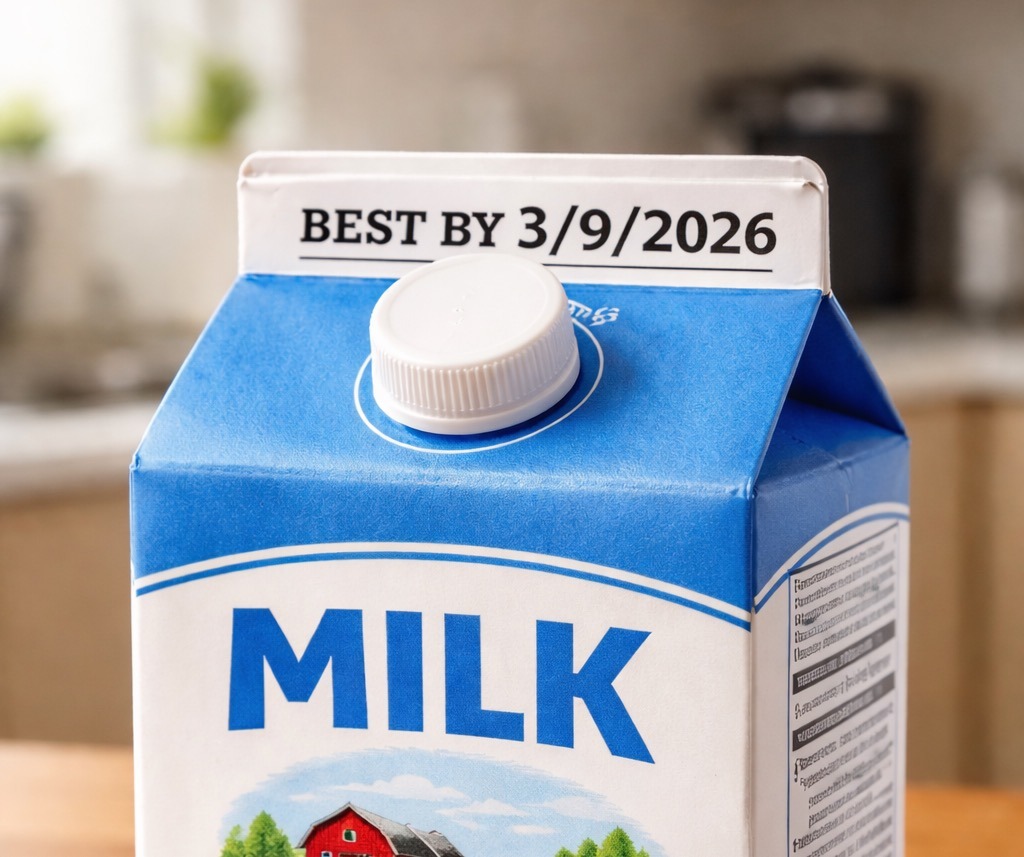
Saving money on groceries can start with understanding food packaging dates. Have you ever stood in your kitchen holding a carton of milk or a box of cereal, squinting at the date and wondering, “Is this still okay to eat?”
If so, you’re not alone. Confusing food package dates cause many households to toss perfectly good food every week — and that adds up to real money in the trash. Once you understand what those dates actually mean, you can shop smarter, stretch your grocery budget and cut down on food waste without risking food safety.
First, an important fact: Except for infant formula, food package dating is not federally regulated. That means manufacturers set those dates, and they’re often about quality, not safety.
What do those dates really mean?
Sell By: This date is for the store, not your kitchen. It tells retailers how long to display a product for sale. If stored properly, many foods are still safe to eat days or even weeks after the sell-by date.
Best if used by / best before: This is a quality guideline, not a safety warning. It’s the manufacturer’s estimate of when the product tastes or performs best. Foods like cereal, pasta, canned goods and snacks are fine well beyond this date.
Use by: This date indicates peak quality as determined by the manufacturer. While it sounds strict, it is not a safety cutoff — again, with the important exception of infant formula.
Expiration date: This is the closest thing to a true safety deadline. If a product clearly states “expires on,” it’s best not to consume it after that date.
Here are some suggestions to help save money:
Buy discounted items: Stores often mark down food that’s close to its sell-by or best-by date. If you plan to use it soon — or freeze it — you can score real savings.
Use your senses: Dates don’t tell the whole story. If a food looks fine, smells normal and tastes okay (when it’s safe to sample), it’s often still good.
Let your freezer work for you: Freezing meat, bread, shredded cheese and even milk before the date on the package can extend their life for months.
Practice FIFO: first in, first out: Move older items to the front of your fridge and pantry, so they’re used first. This simple habit prevents forgotten food from going to waste.
Know which foods last longer: Dry pasta, rice and canned goods can last for years when stored properly. A “best by” date doesn’t mean it’s time to toss them.
According to the USDA, Americans waste 30% to 40% of the food supply each year, much of it due to confusion over date labels. That’s lost money for households and unnecessary strain on the food system. By understanding food packaging dates, you’re not just avoiding waste. You’re making your grocery dollars go further and taking a simple step toward smarter, more sustainable living.