






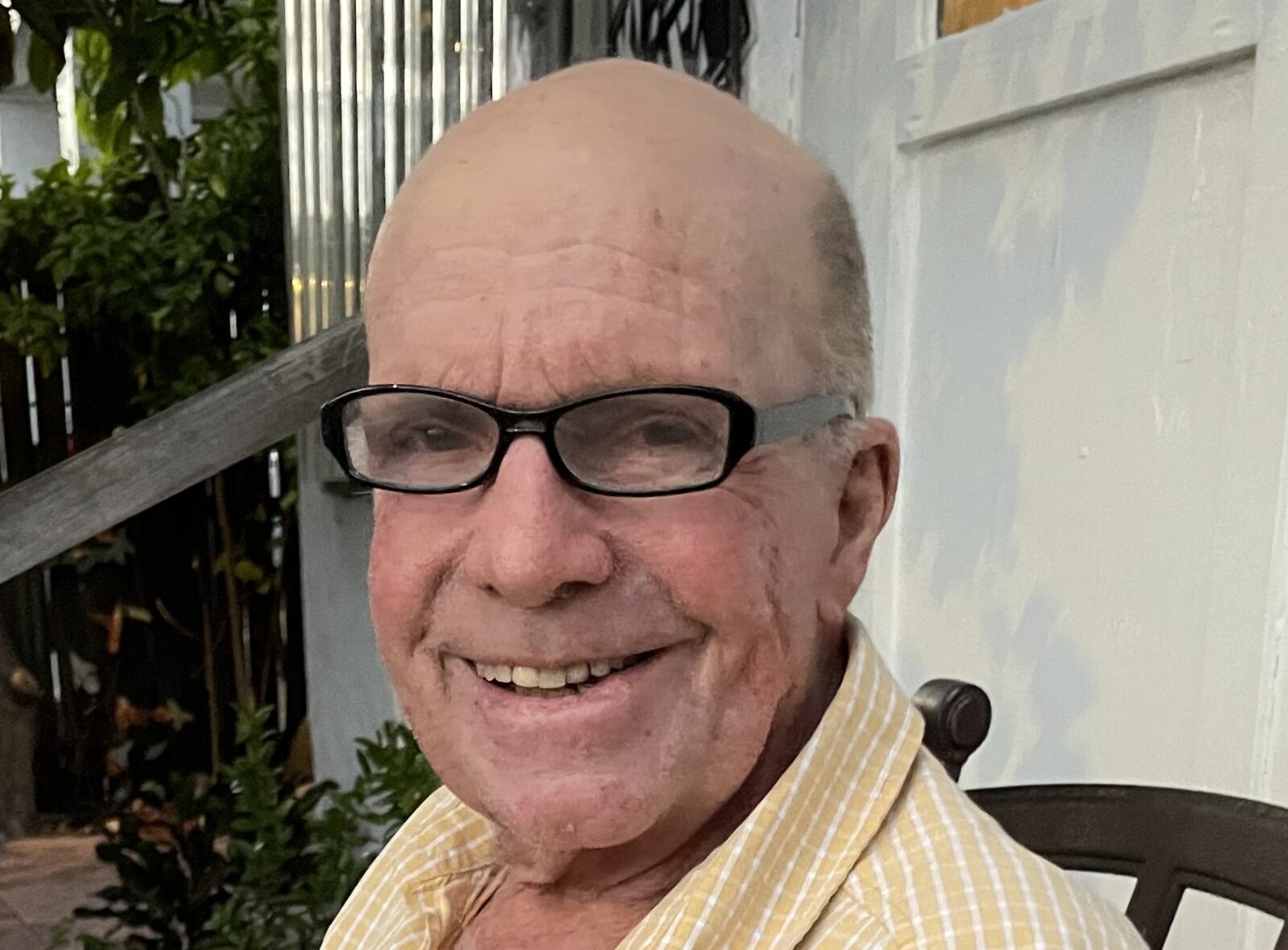
When John Lewis worked for treasure hunter Mel Fisher in the 1970s, living at sea on a bare-bones salvage boat for weeks while seeking the shipwrecked 1622 Spanish galleon Atocha, he learned to make do with the resources at hand — even if that meant bartering lobster for a much humbler commodity.
“We’d spear our food or catch lobster, so we’d always have something to eat,” said Lewis, a man of self-effacing dignity who lives on Stock Island with his cherished soulmate Mary.
“I remember people coming by in a sailboat, and we had a boatload of lobsters, but we didn’t have any toilet paper — so we’d trade lobster for toilet paper,” he said. “They thought we were fools, and we were like, ‘Yeah, stay out here for a month and see how YOU feel about toilet paper.’”
Lewis, who came from Michigan, arrived in Key West around Christmas 1972. After a series of misadventures, he wound up in a Stock Island boatyard where one of Fisher’s salvage boats was getting outfitted.
Within days Lewis was the night watchman on the replica galleon Golden Doubloon, which became the early headquarters for Fisher’s Treasure Salvors enterprise. He lived in a shed at the vessel’s Key West dock, but didn’t view his spartan existence as a hardship.
“At that time the bakery was open at 4 a.m. and a quarter would get you a loaf of Cuban bread,” recalled Lewis. “And you could wander the streets and find sapodilla and avocado — fruit falling off the trees, so you could get fed.”
Eventually he got his dive certification and joined the crew that manned Fisher’s ragtag fleet of salvage boats, diving to investigate clues to the shipwrecked Atocha’s elusive resting place. The group nicknamed him “Bouncy John” or “BJ” after a colleague noticed a “bounce” in his walk.
Lewis’s experiences in those days were the stuff of adventure films: discovering pottery shards, musket balls and other 17th-century artifacts on the ocean floor; escaping a sinking salvage vessel moments before it went under; enduring lean times with fellow crew members by sharing whatever resources they could scrounge; surviving the countless dangers faced by treasure divers at sea.
“We had good times, and we had bad times, but the biggest lesson I learned working for Mel was how to make do with whatever you have because it could save your life,” Lewis observed. “We used to call it ‘cheating death’ — just living another day out there.”
He was searching for a targeted area underwater when he made the discovery of a lifetime: a priceless gold and red coral rosary that had been lost with its owner in the 1622 hurricane that sank the Atocha.
“You couldn’t pay me money for that experience,” he recalled, his voice still carrying remembered wonder. “The joy of finding something was really all the reward that I wanted.”
Yet in spite of those magical moments, in 1977 Lewis realized it was time to leave the Fisher crew. He took with him unparalleled memories, close friendships that still remain strong and the “make do” attitude that proved invaluable in his next career.
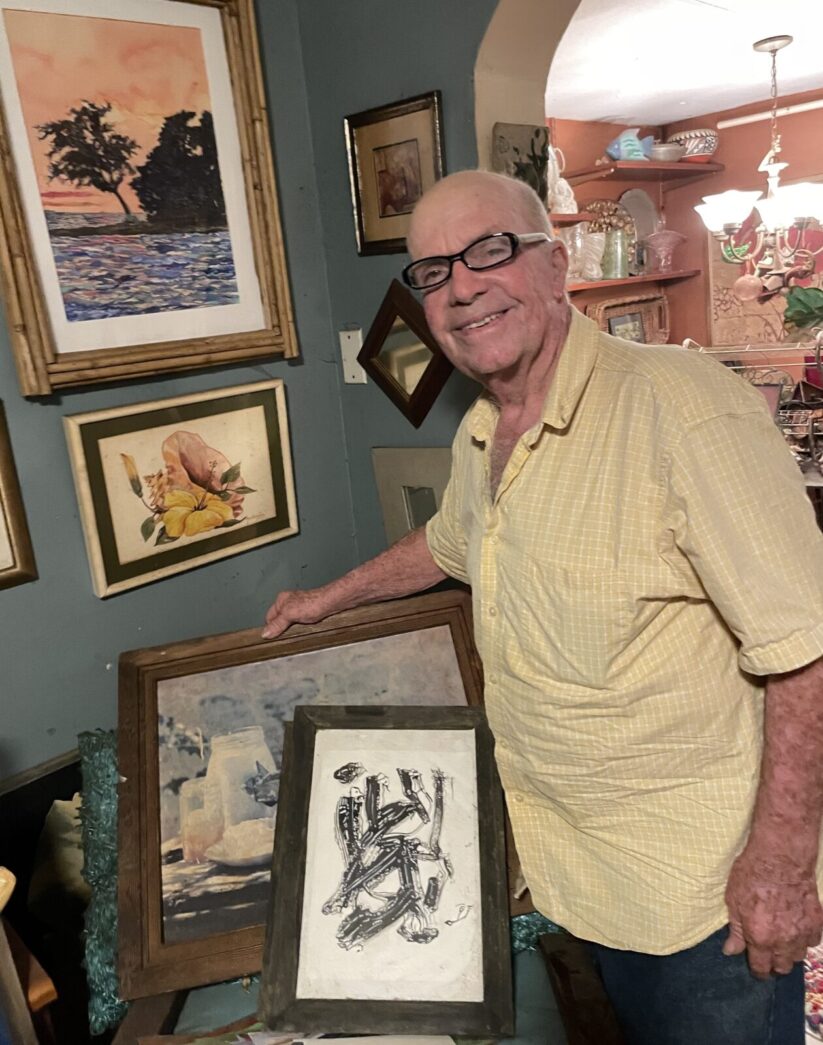
For nearly 50 years, Lewis has worked with Key West’s Southernmost Resorts as a “go-to” engineer and maintenance man, fixing whatever needs fixing and devising inventive solutions for construction challenges and other property issues. His loyalty to his employers is immense and reciprocated; when he and Mary got married, the resort owners hosted accommodations for his entire visiting family.
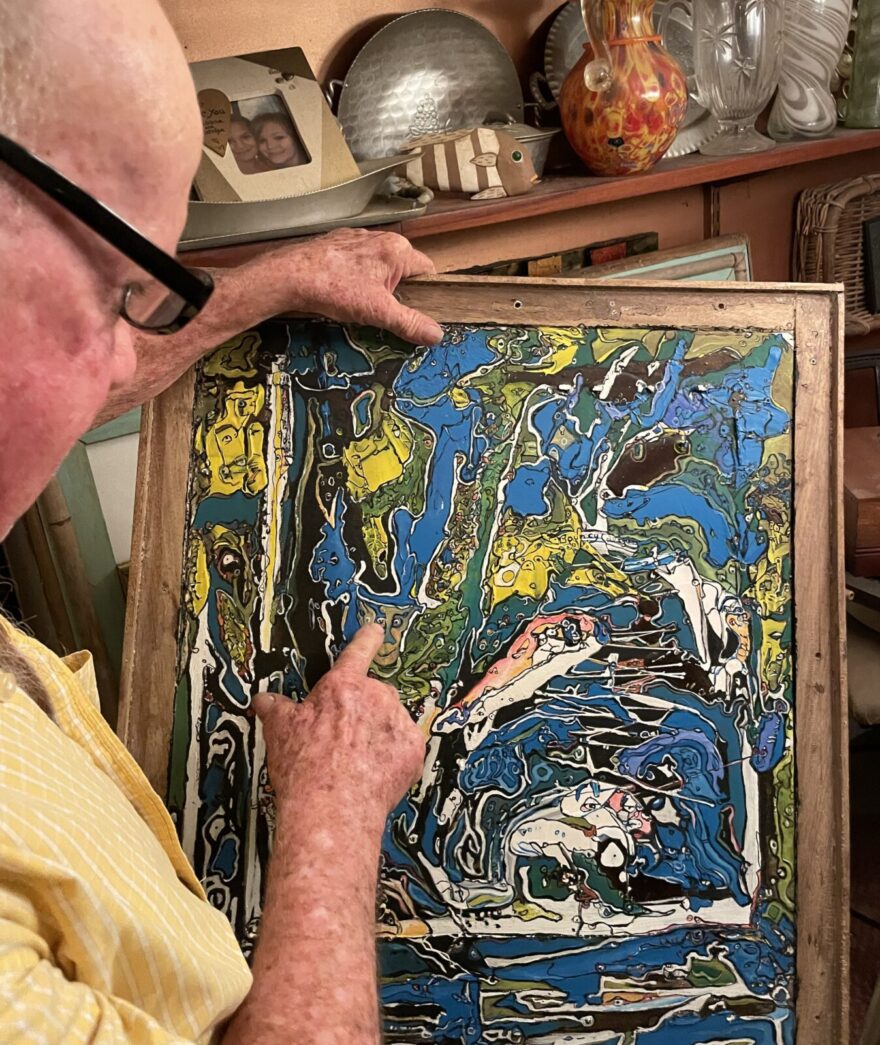
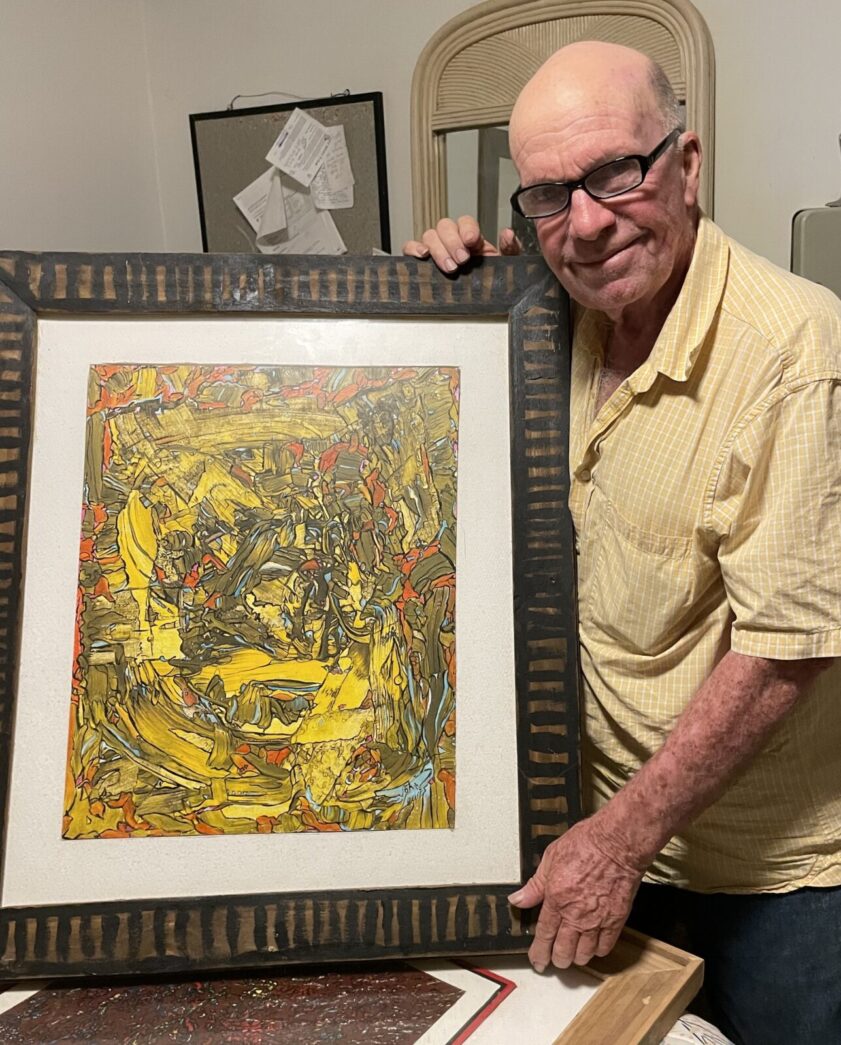
Despite his straightforward nature, Lewis has a hidden side. Unbeknownst to most people, he’s an extraordinary artist whose vibrant, evocative paintings fill the Stock Island home he shares with Mary.
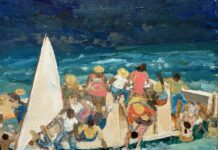
His abstracts are rich in color and flowing motion, usually featuring small hidden faces that add an otherworldly appeal. He calls many of them fire paintings, because the technique involves pouring paint, lighting up the canvases with a lighter, and then embellishing them.
“If I’m doing a painting, I feel it,” Lewis explained. “It starts off with color — sometimes you get its color and its texture, and then it’s accentuated with outlining — and that’s how a painting comes together.”
Some are double, with images on both sides of a canvas, and each can take 100 or even 200 hours to complete, depending on the detail. Lewis also handcrafts unique frames to complement his pieces, often using reclaimed wood in keeping with his “make do” spirit.
Though he began painting as a young child, the unassuming artist has never exhibited or marketed his work. Instead, he gives canvases away.
“To me, paintings are visceral — a piece of me,” said the man who found treasure undersea and in his art, his resilience and his life. “If you’re a special friend, then you get a piece.”