







An endangered turtle hatchling in the Middle Keys got a second chance at life on the eve of the holiday weekend, thanks to the combined efforts of Marathon’s Turtle Hospital, caring neighbors – and a dog named Sailor.
When Rick Lee took his four-legged family member for an evening walk on July 3 near Coco Plum Beach, he wasn’t expecting it to turn into a rare save.
But when Sailor drew his attention to a crevice next to the sidewalk in their condo complex, it was for good reason: trapped in the crack, covered in ants and not moving, was a freshly-hatched baby leatherback turtle.
“We thought it was dead at first,” said Lee’s wife, Candice.
Responding to the Lees’ calls, staff from the Turtle Hospital took the hatchling in for evaluation. Blood tests revealed normal levels in the active youngling, and just hours after its discovery, the hatchling – named “Sailor” after its rescuer – was ready for a sunset release off the beach, just yards away from where it was found.


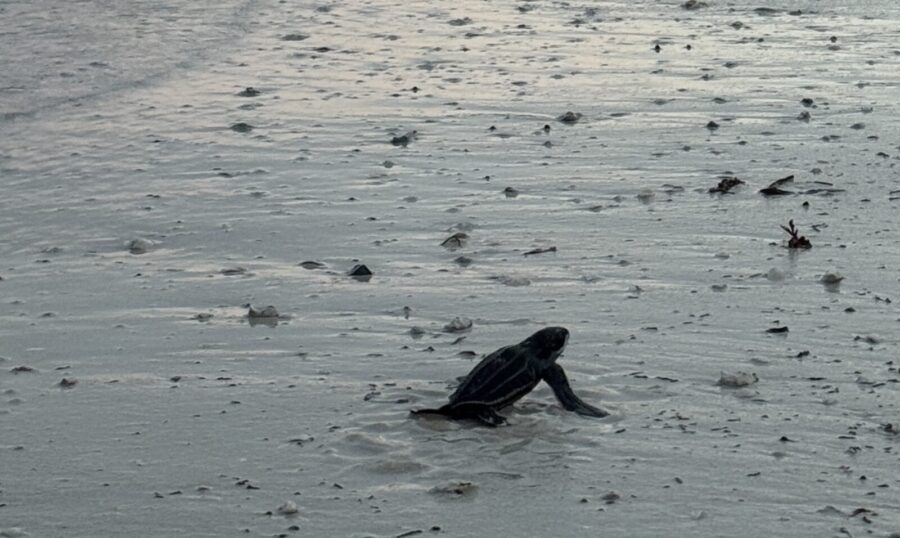
The largest of all living sea turtle species, a leatherback nest in the Keys is an exceedingly rare occurrence – just her second in 20 years of work with the hospital, manager Bette Zirkelbach told the Weekly.
Two months before the rescue, staff had documented marks from what was believed to be a “false crawl” – tracks on land without a corresponding nest – on the beach. But with tracks from other hatchlings leading toward the water near where Sailor was found, at press time, the location of the nest was still unknown.
“The hatchling most likely followed artificial light away from the ocean – a reminder to please keep your lights off at night during nesting season,” the hospital wrote in a social media post announcing the rescue.
Sea turtle nesting season in the Florida Keys runs from April 15 through Oct. 31. During these months, bright, artificial lights can disorient hatchlings, which rely on moonlight to find their way to the ocean after hatching.
“It’s important for people during nesting season, when they see something, say something,” said Zirkelbach. “Call the hotline at 305-481-7669 if you’re unsure of what you are seeing. It gives the babies a chance.”
For more information on ways to protect sea turtles with residential lighting, scan the QR code.
Photos by ALEX RICKERT/Keys Weekly