












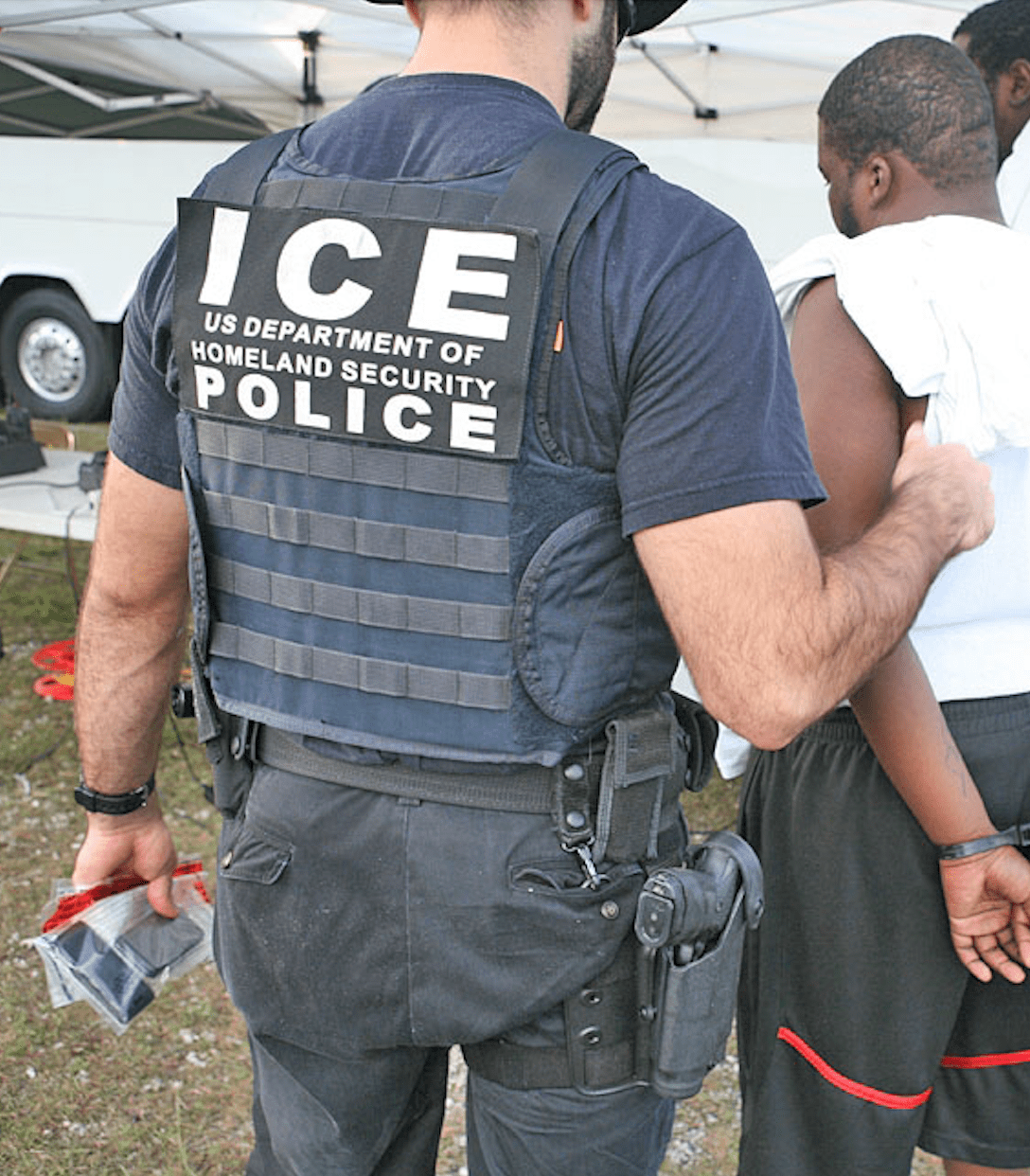
The federal government is preparing to send more than 300,000 Haitian immigrants back to a country it deems too dangerous to visit, and so violent that it urges insistent travelers to leave behind a will and DNA samples so their remains can be identified.

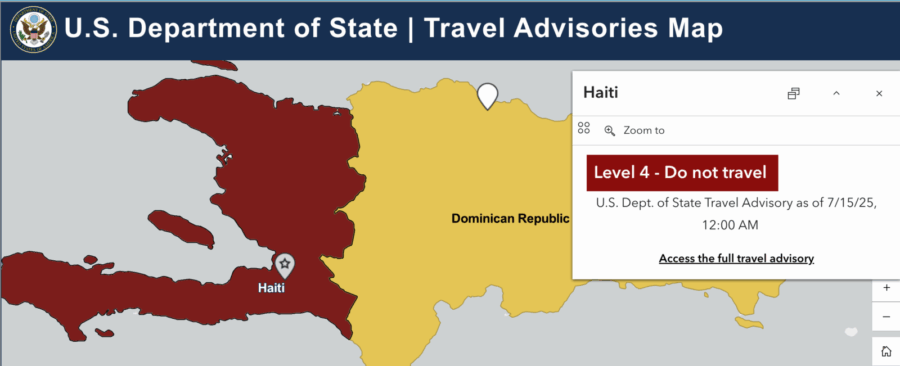
“Do not travel to Haiti for any reason….due to kidnapping, crime, terrorist activity, civil unrest and limited health care….Mob killings and public assaults are on the rise. … Violent crime is rampant in Haiti. … The expansion of gang, organized crime and terrorist activity has led to widespread violence, kidnappings and sexual assault. … There is a substantial risk of being struck by stray bullets…..There is a risk of terrorist violence. … There are gangs that are designated as terrorist organizations present in Haiti….,” states a U.S. Department of State, Level 4 Travel Advisory — Haiti — Do Not Travel.
The same advisory, which was issued in July 2025, urges Americans who must travel to Haiti to: “Draft a will and put your financial affairs in order. Discuss a plan for care and custody of children and pets. Leave DNA samples with your doctor so your family can identify your remains. Establish a proof-of-life protocol with questions (and answers) to ask hostage takers.”
Haitians to lose protected status on Feb. 3
The same month that the Department of State issued its “Level 4 Travel Advisory” for Haiti, a different federal agency, the Department of Homeland Security (DHS), announced that immigration and deportation protections would end on Feb. 3, 2026 for the estimated 330,000 Haitian immigrants living in the United States.
That protection, known as Temporary Protected Status, or TPS, prevents immigrants, for a period of time, from being deported back to countries that the United States deems unsafe for reasons such as ongoing armed conflict, an environmental disaster, an epidemic or other extraordinary and temporary conditions. Temporary Protected Status is often extended, usually by six or 12 months per extension, “unless the Attorney General finds that permitting the aliens to remain temporarily in the United States is contrary to the national interest of the United States,” states federal immigration law.
In July, Department of Homeland Security Secretary Kristi Noem, “determined that there are no extraordinary and temporary conditions in Haiti that prevent Haitian nationals from returning in safety,” states an official notice filed in the Federal Register. “Moreover, even if the Department found that there existed conditions that were extraordinary and temporary that prevented Haitian nationals from returning in safety, termination of Temporary Protected Status of Haiti is still required because it is contrary to the national interest of the United States to permit Haitian nationals to remain temporarily in the United States.”
South Florida braces for impacts
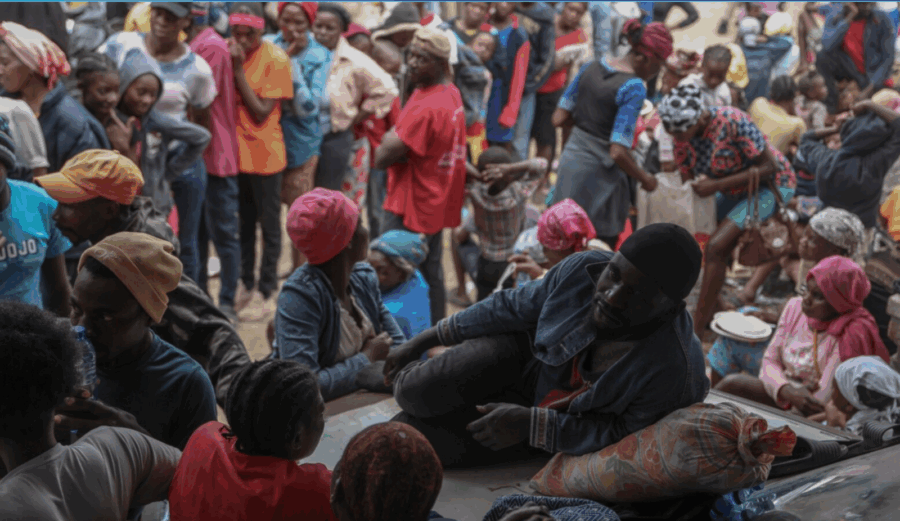
The ending of TPS for Haitian people living in the United States on Feb. 3 is expected to have an outsized impact on South Florida communities, including Key West, where several industries depend on Haitian workers. Locally, Haitian immigrants work for Waste Management, the city of Key West, as hotel housekeepers, restaurant kitchen staff, ride-share drivers, hospital nursing assistants, janitors, home health aides, retail cashiers, child care workers and more.
Of the estimated 330,000 Haitians with TPS in the United States, according to the National Immigration Forum, about 113,000 of them live and work in Florida, with the highest concentrations in South Florida.
Keys sheriff says ICE & Border agents deny rumors of Key West immigration raid
Rumors erupted on social media last week about a federal agency having booked a block of 40 hotel rooms, starting Feb. 2, at a North Roosevelt Boulevard hotel whose website touts its military and government group rates and amenities. The rumors stoked fears within the Haitian community, fueling unconfirmed reports of Haitian immigrants being afraid to go to work and of high absences of Haitian students from local schools.
But on Jan. 27, Monroe County Sheriff Rick Ramsay called the Keys Weekly from a conference in Jacksonville. He said he had heard the rumors of an influx of immigration agents, and had read this story in the Keys Weekly.
“I wanted to be proactive, and ensure we were prepared down here for anything that could possibly happen with any protests or other events,” Ramsay said. “So I called and spoke directly with my contacts at ICE, Border Patrol, DHS and Customs & Border Protection. I sent them your story, and they all told me they have not booked hotel rooms in Key West and have no operations planned in Key West. I would hope these guys don’t have any reason to lie to me, and if it turns out that they did, that will not be good.”
The Keys Weekly did not receive a return phone call last week seeking comment from hotel management about a block of rooms potentially having been booked. But a longtime lodging industry professional had told the Keys Weekly about the reservation on Jan. 22. (Without confirmation, the Keys Weekly has chosen not to identify the hotel, although it has been named amid widespread social media speculation.)
Similar rumors of such reservations have circulated on local social media for more than a month, said Lucy Hawk, a local artist and activist who heads the Key West Immigrant Support Network on Facebook with resident Heather Shivo-Baptist, both of whom spoke with the Keys Weekly on Jan. 23.
“We have thus far been unable to confirm any of these rumors,” Hawk and Shivo-Baptist said on Friday, Jan 23. “Almost every hotel on the island has been the subject of a similar rumor at some point in these past months. But in our view, we don’t care where agents are staying. We just want everyone to be prepared as if immigration agents are definitely coming, and to know their rights when something happens.”
Helping immigrants prepare
Hawk and Shivo-Baptist were speaking with the Keys Weekly while waiting outside a Haitian church, whose pastor had invited them to speak to his congregation about their rights and advance preparations they should have in place.
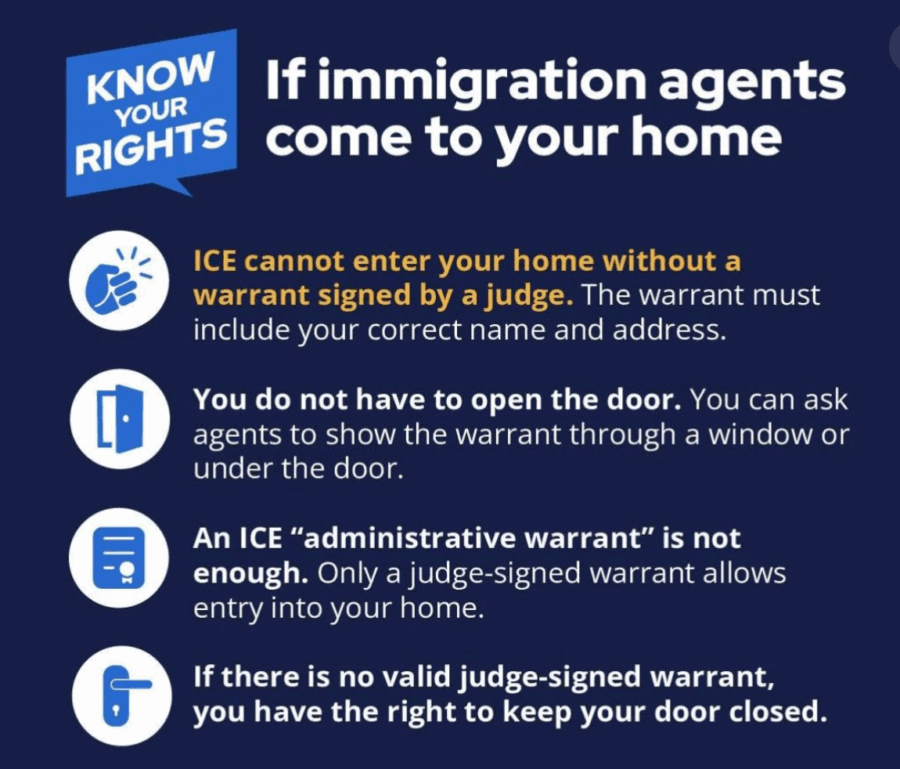
For more than eight months, the Key West Immigrant Support Network has been assembling and distributing ICE Family Preparedness packets and ICE Business Preparedness packets that are available for residents and business owners in English, Spanish and Creole.
Since June, Hawk said, nearly 500 immigrants have been removed from Key West and Stock Island, with many more targeted in the Middle and Upper Keys.
Many of the people removed from Key West remain in detention centers while others have already been deported. Most are Hispanic people from various Latin American countries. And most of them had asylum cases pending with the federal government, meaning they were reporting for regular immigration hearings. The vast majority of detainees and deportees had no criminal history; were authorized to work; had gotten jobs; were paying taxes; opened bank accounts; bought cars, and were on a path to a green card, which grants an immigrant permanent legal residency.
“But the fact that they were following the requirements of the law, pursuing their asylum case, showing up to hearings and checking in with the government means their compliance was used against them, because agents can more easily target them knowing exactly where they live and work,” Shivo-Baptist said.
The situation could be more dire for Haitian immigrants when TPS ends for them on Feb. 3.
“Starting Feb. 3, everything that’s been happening to Hispanic people will start happening to our Haitian community,” Hawk said. “But unlike most Hispanic residents, who have pending asylum cases, most Haitians only have TPS. So they don’t have any asylum hearings. They can’t apply for a monetary bond or ankle monitor. They have never been in contact with immigration attorneys or anything.
“We want people to be as prepared as possible, and we’d love to hear from anyone who is a citizen or who has permanent legal status and is able to help,” Hawk said, adding that preparation for immigrants involves planning and paperwork, especially legal documentation known as power of attorney that lets a person legally designate another individual to do things on their behalf.
For example, Hawk said, immigration agents are running license plates with software platforms that can discern the immigration status of the vehicle’s registered owner. If an immigrant owner of a car gets pulled over and detained, “no one else can get that car out of impound without a power of attorney — not the person’s spouse, child or parent.”
Also, Shivo-Baptist said, many young Latino couples have had a child in the United States, which makes the child a U.S. citizen. But if the husband gets detained and is facing deportation, many of the mothers want to leave and plan to join their husband back in their home country.
“But most of these mothers haven’t yet obtained a U.S. passport for their infant, toddler or elementary-aged child,” Hawk said. “And to get a passport for a child, if both parents are listed on the birth certificate, then both parents have to be present to sign the passport paperwork. If one parent is detained in Alligator Alcatraz or somewhere in Broward County, it’s nearly impossible for their spouse to get to them to get that document signed.
“So much of this preparedness involves family law, assets, access to bank accounts, child custody, designating someone to pick up a child from school and guardianship issues.”
Know your rights
The Key West Immigrant Support Network’s Facebook page, and their assembled Preparedness Packets outline the legal rights of immigrants when confronted by federal immigration officers.
A Key West attorney who also owns a local mobile home park with a large number of Haitian tenants recently distributed letters, printed in English and Creole, to their tenants outlining their rights.
The notice from Browning, as owner of Roy’s Trailer Park, states, “Our understanding of the law is as follows:
- You have the right to remain silent. You do not have to answer any questions about where you were born, your immigration status or how you entered the United States.
- You do not have to open your door unless officers have a valid warrant signed by a judge. A valid warrant must be signed by a judge and list your correct name and address. You may ask officers to slide the warrant under the door or show it through a window.
- You do not have to sign anything without speaking to a lawyer. Do not sign papers you do not understand.
- You have the right to speak with an attorney. You may say, “I choose to remain silent and I want to speak to a lawyer.”
- Management will not allow entry into private residences without a proper warrant. Management does not share tenant information unless legally required
Important Notes
- You are not required to answer questions from officers in common areas.
- Staying calm and respectful is important.
- Do not provide false documents or false information.
- If you have questions about your legal rights, you may wish to speak with a qualified immigration attorney or a recognized legal aid organization.
- We want all residents to feel safe and informed in their homes.
Additionally, there is a local anonymous hotline at 305-771-4248 where you may call to report the location or presence of ICE agents or other law enforcement officials. There are also several Facebook pages and groups, such as Keys Immigrant Coalition and Key West Immigrant Support Network, that share information and resources for immigrants who may have questions or concerns about their status. — Roy’s Trailer Park, Inc.”
Lawmakers seek extension
Congresswoman Ayanna Pressley, co-chair of the House Haiti Caucus, on Thursday, Jan. 22, announced a “discharge petition” that could compel the House of Representatives to vote on a bill requiring the Trump Administration to extend TPS for Haiti for three years. The discharge petition will need 218 signatures in the House to move forward.
Pressley’s petition is supported by Florida Congressman Maxwell Frost, whose district includes Orlando; Congresswoman Yvette D. Clarke of New York, co-chair of the House Haiti Caucus, and other Democratic representatives.
“To send vulnerable families back to a country that is plagued with violence and a horrific humanitarian crisis is unconscionable. It is shameful, and again, it is dangerous,” Clarke said. “The effort to end TPS is a cruelty that this administration is leveling against those who have come to our shores, seeking refuge, seeking support, seeking protection.”
Frost said at a Thursday press conference, “Haiti is facing extraordinary instability, and forcing people back into crisis is indefensible. This petition focuses on protecting people who have built their lives here and contribute in meaningful ways to our communities, and I hope our Republican colleagues who speak often about public safety choose to support it.”