












A lack of rainfall and increased water demand have led the South Florida Water Management District to issue a water shortage warning for the Florida Keys and neighboring counties.
Drought conditions have led to low water levels in the underground Biscayne Aquifer, located in Miami-Dade County. The aquifer serves southern Palm Beach, Broward, Miami-Dade and Monroe counties. Since last November, Miami-Dade has reported 3.72 inches of rain, about half the normal amount.
The SFWMD says groundwater levels are low at most monitoring stations, and current water levels in several wells are in the lower 10th percentile of historic levels — and lower than water shortages in 2007, 2009 and 2011.
“Without an increase in aquifer recharge, further decline in groundwater levels is anticipated due to water issues. It is important that conservation of groundwater sources from the Biscayne Aquifer within Miami-Dade and Monroe counties be implemented,” reads the SFWMD’s order.
Despite declining water levels in the Biscayne Aquifer, the Florida Keys Aqueduct Authority is still pumping the regular 20 million to 22 million gallons per day to consumers throughout the island chain.
Daily, the Florida Keys pumps 17.75 million to 18 million gallons of freshwater from the Biscayne Aquifer. Water produced from the FKAA’s primary supply in the Biscayne Aquifer is treated through a lime softening process.
FKAA also pulls from Floridan Aquifer, a massive and productive underground reservoir of freshwater spanning 100,000 square miles beneath all of Florida and parts of Alabama, Georgia and South Carolina. Greg Veliz, FKAA executive director, said the Floridan Aquifer is more brackish, so the cleaning process is more stringent. Water obtained from the Floridan Aquifer is treated through a low-pressure reverse osmosis system.
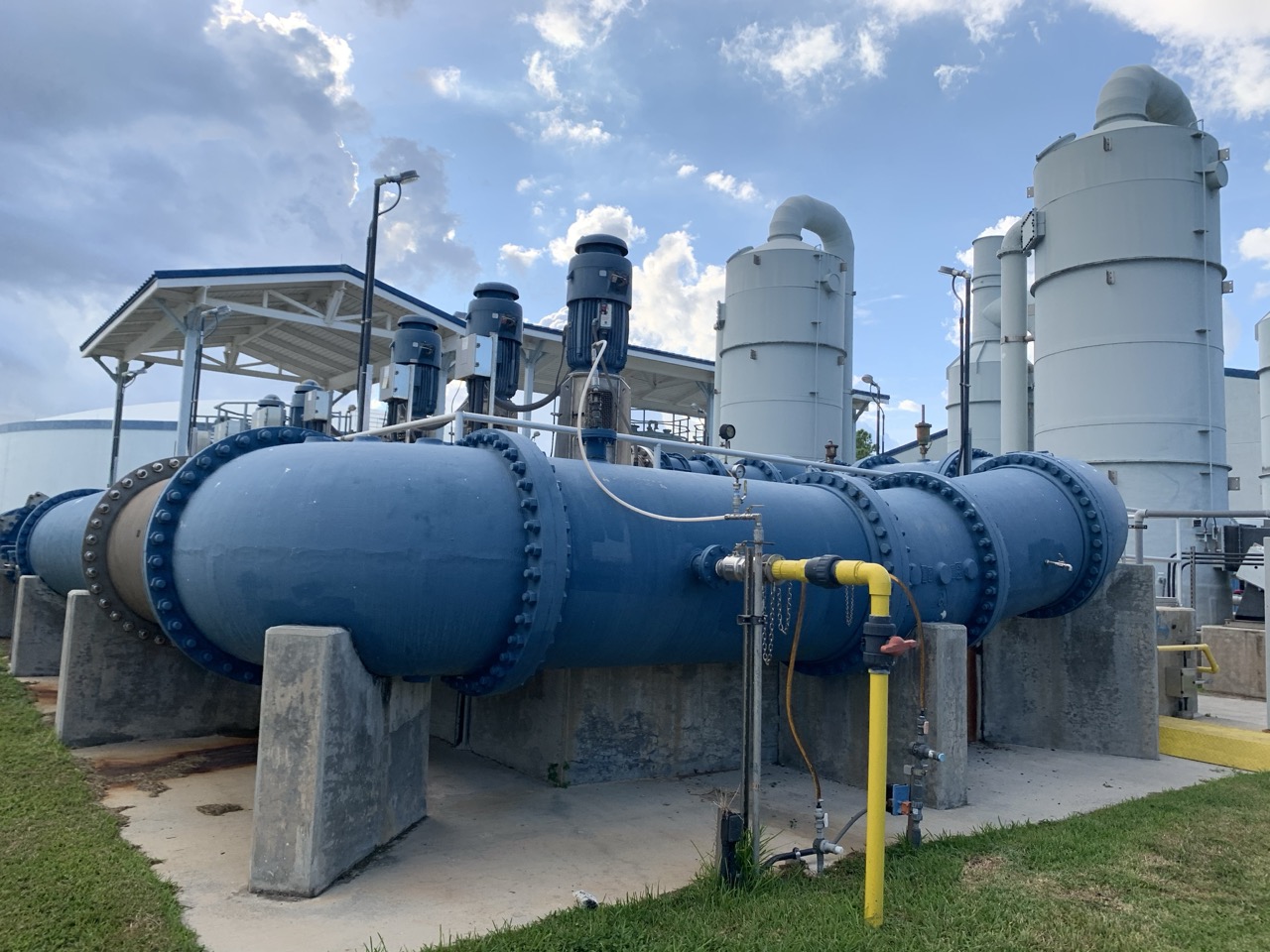
In addition, FKAA fired up the new reverse osmosis plant on Stock Island. Veliz said the facility pumps 2 million gallons a day — with the ability to pump 4 million gallons daily.
“As far as the consumer goes, we are still pumping the same amount of water to the Florida Keys that we were a month ago, six months ago. … We have not changed the amount of water,” Veliz said. “The service is not interrupted or reduced at all.”
If needed, the Floridan and reserve osmosis plant could supply half of the daily freshwater demand for the Florida Keys.
In this instance, Veliz said, FKAA reduced the amount of freshwater pumped from the Biscayne Aquifer to the Florida Keys by one million gallons a day.
“We have to make that up somewhere, so we pulled more from the Floridan, which we’re taking about 2 millions gallons and can take up to 6,” he said. “The extreme measures of drought and water is a critical issue. We’ll continue to run the reverse osmosis 24/7 if we have to.”
The Biscayne Aquifer is mainly recharged by the Everglades. South Florida usually receives 50 to 60 inches of rain annually.
Per the Everglades Foundation and hydrogeologist Anteneh Abiy, “When this water from the Everglades percolates underground, the large pores in the limestone serve as an “underground river” allowing it to travel south and southeast to the coastal regions. This subsurface flow from the Everglades to the aquifer is its main source of recharge.”
Drought conditions aren’t only affecting the Biscayne Aquifer. A water shortage warning was also issued in several counties, like Collier, Glades, Highlands and Lee, which receive freshwater from the Lower Tamiami Aquifer and Indian Prairie Basin. Without significant rainfall, further decline in groundwater and surface water levels is anticipated over the remainder of the dry season, which typically lasts until May.
SFWMD’s water shortage warning calls for voluntary reductions in water use, like reducing irrigation of landscaping. SFWMD staff will continue to monitor water usage and levels to assess the effectiveness of voluntary conservation measures and will keep the public informed if conditions continue to worsen.
If the voluntary conservation efforts are not enough, the SFWMD may declare a water shortage and invoke mandatory water use restrictions in critical areas.