










By Liah Continentino
As the holiday season arrives, so does a surge in food waste.
A 2020 study by Penn State found that U.S. households waste an estimated 31% of the food purchased annually. This amounts to an estimated $240 billion worth of food, enough to feed as many as 2 billion people each year.
Between Thanksgiving and New Year’s Eve, Americans generate 25% more waste. According to the Ecology Center, 21% of this uptick is food waste.
Most food waste ends up in landfills, where it decomposes anaerobically, meaning without oxygen, due to the compacted layers of waste, the high quantity of non-biodegradable materials, and the lack of mixing. Once food is buried under a foot or more of waste, aerobic decomposition stops, and anaerobic bacteria take over. These bacteria work slowly and produce methane, a potent greenhouse gas. The EPA reports that municipal solid waste landfills are the third-largest source of human-driven methane emissions in the U.S., with 58% of those emissions coming from food waste.
Take a head of lettuce. In a compost pile, decomposed by aerobic microbes, one head of lettuce breaks down in two to three weeks. In an anaerobic landfill, it can take over 25 years. In some cases, excavations have revealed 40-year-old newspapers in readable condition.
What can we do?
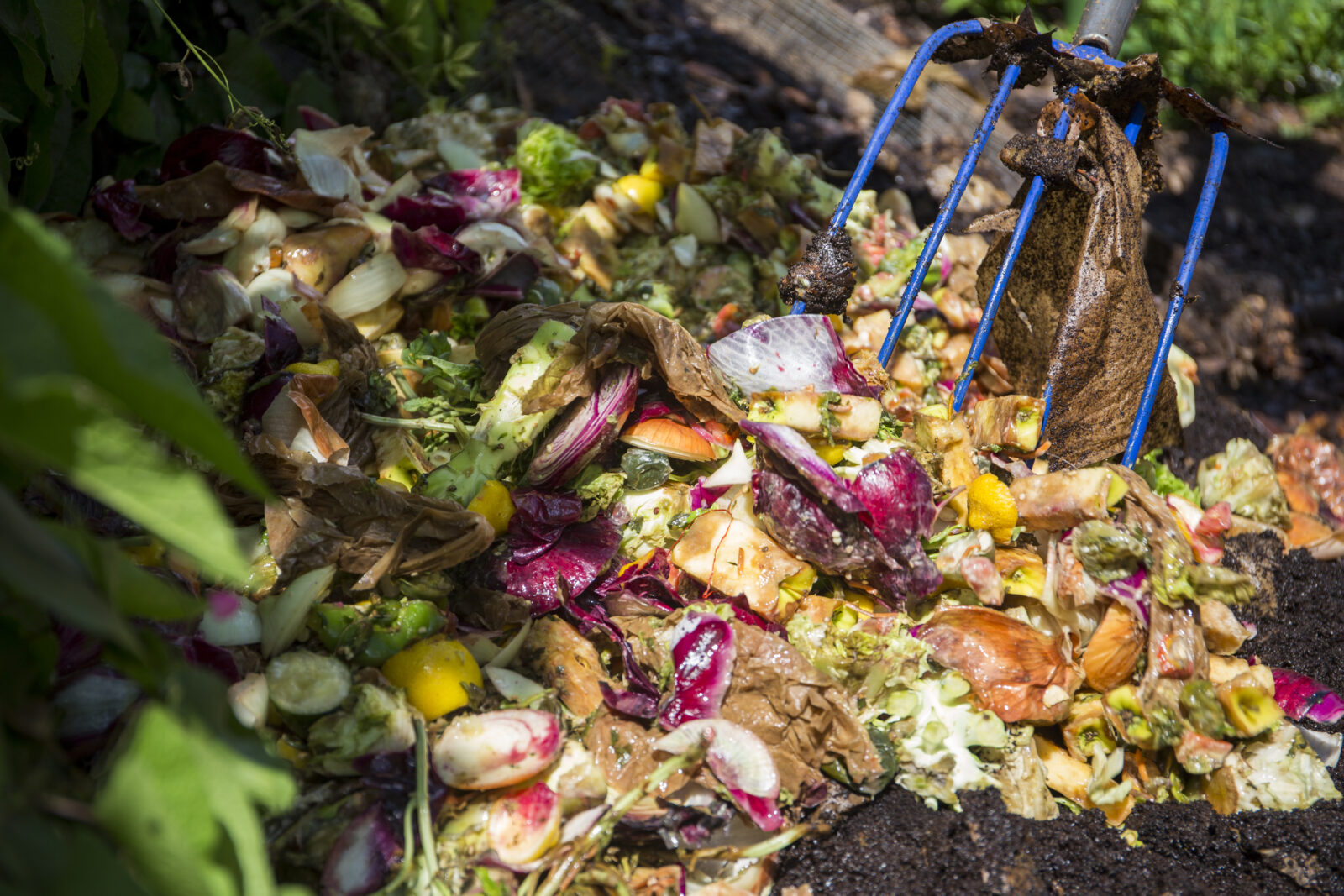
Composting is an excellent way to reduce food waste at home while providing additional environmental benefits. Finished compost is fantastic for your landscape or garden. Compost improves soil structure, increases water retention, moderates soil pH, reduces the need for fertilizers and saves money on fertilizers and yard waste disposal.
The best method depends on your space, lifestyle and goals. If you prefer a low-maintenance method and have sufficient yard space, consider composting in a simple bin or pile. If you aren’t a fan of a fixed pile, tumblers are an excellent option. Tumblers allow for easy turning, and their closed, raised design keeps critters out of your compost. Trench composting is perhaps the most straightforward method. Simply dig a hole and bury your scraps under at least 6 inches of soil. Rotating between trench spots is recommended. For quick results, consider hot composting; although this method requires more maintenance, it produces the fastest results.
You can even compost with no outdoor space at all. Vermicomposting employs earthworms to do the work and can be set up indoors in a plastic storage container. Another option is to participate in community composting by sharing a bin with your friends or by bringing your scraps to compost drop-off areas.
Scraps can be stored in special countertop bins, frozen or refrigerated until they are added to your compost.
What to compost
A healthy compost pile needs a balance of nitrogen-rich “greens” and carbon-rich “browns”:
Nitrogen (greens) include fruit and vegetable scraps, coffee grounds and green yard waste.
Carbon (browns) include dried leaves and yard scraps, cardboard, sawdust, paper products.
Avoid composting animal products, diseased plant material, produce stickers, large branches and animal waste.
This holiday season, consider composting as your gift to the planet. By diverting food waste, you’ll help reduce greenhouse gas emissions, enrich your landscape and save money, making your celebrations more sustainable.
Food scrap drop-offs
- “Compost Village” Demonstration area at the Key West Botanical Garden Nursery: Every third Saturday from 9 a.m. to noon. This project is a partnership between UF/IFAS Extension, Monroe County Solid Waste and the Key West Botanical Garden.
- Monroe County Solid Waste launched a three-month pilot program, where residents can drop off food waste at three Upper Keys locations. Participants must register at www.your-soilmate.com/pages/monroe
More information is available from Liah Continentino at Continentino-liah@monroecounty-fl.gov or 305-998-9580.