





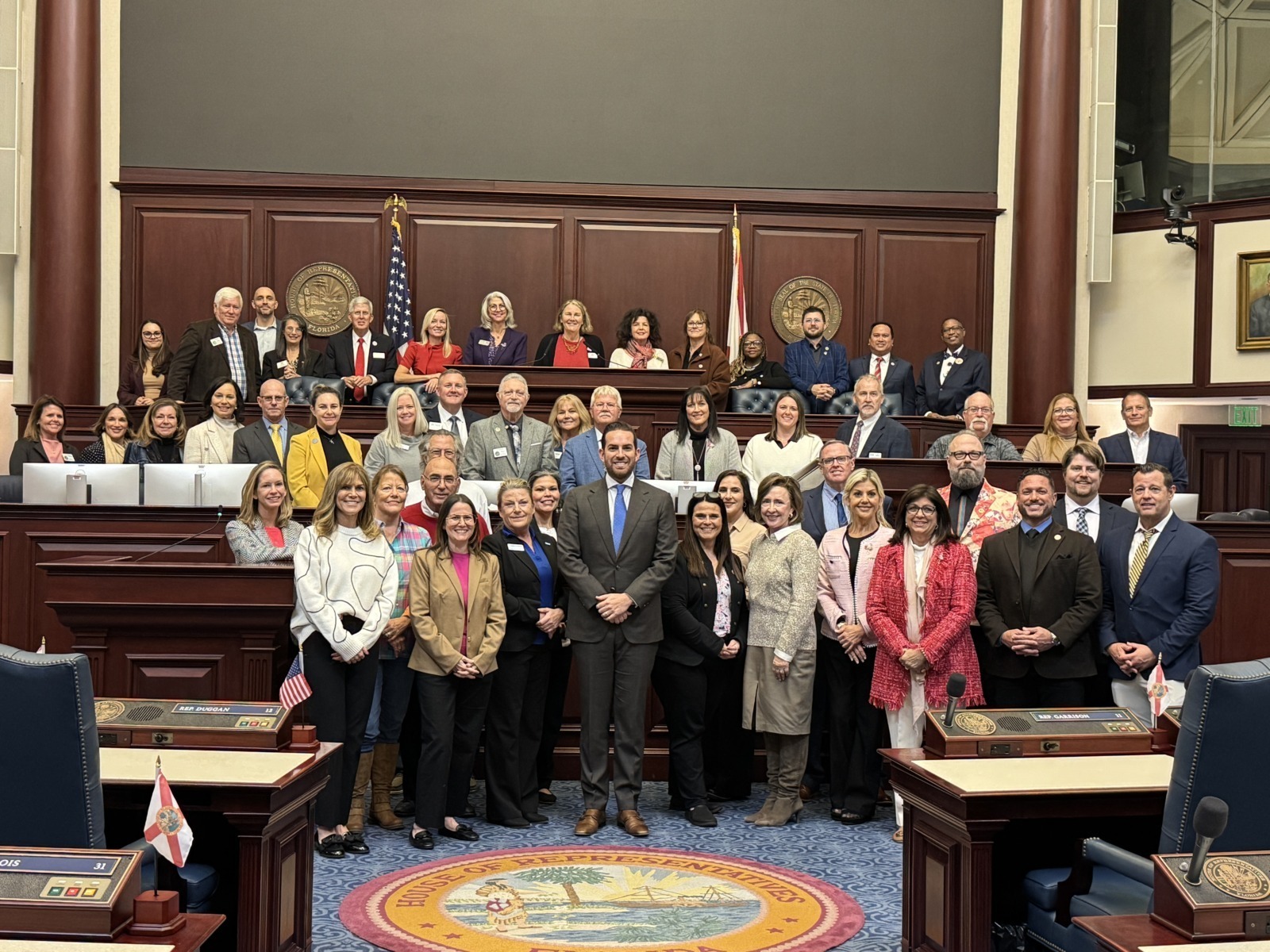
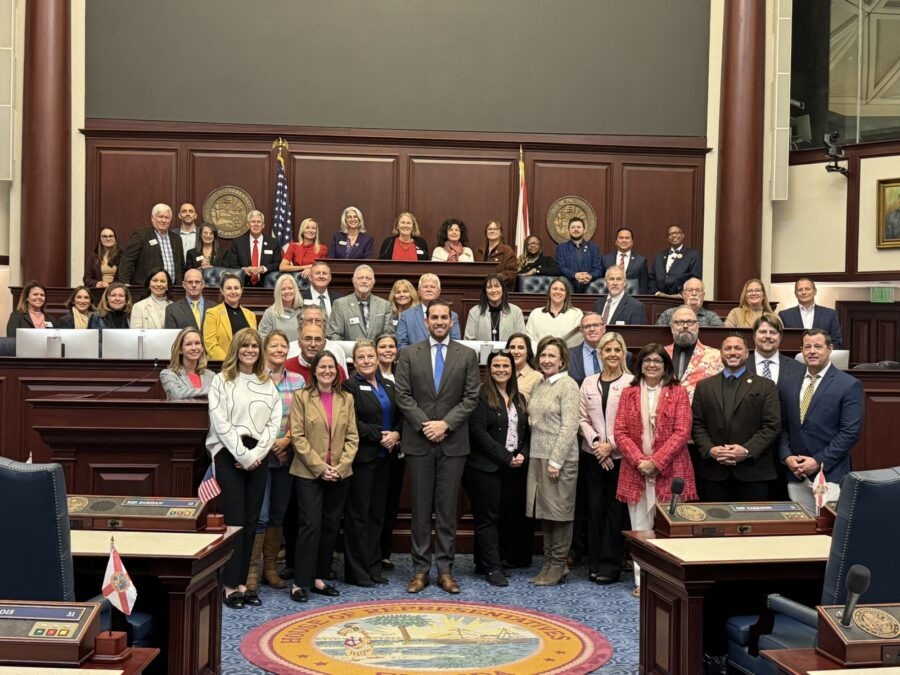
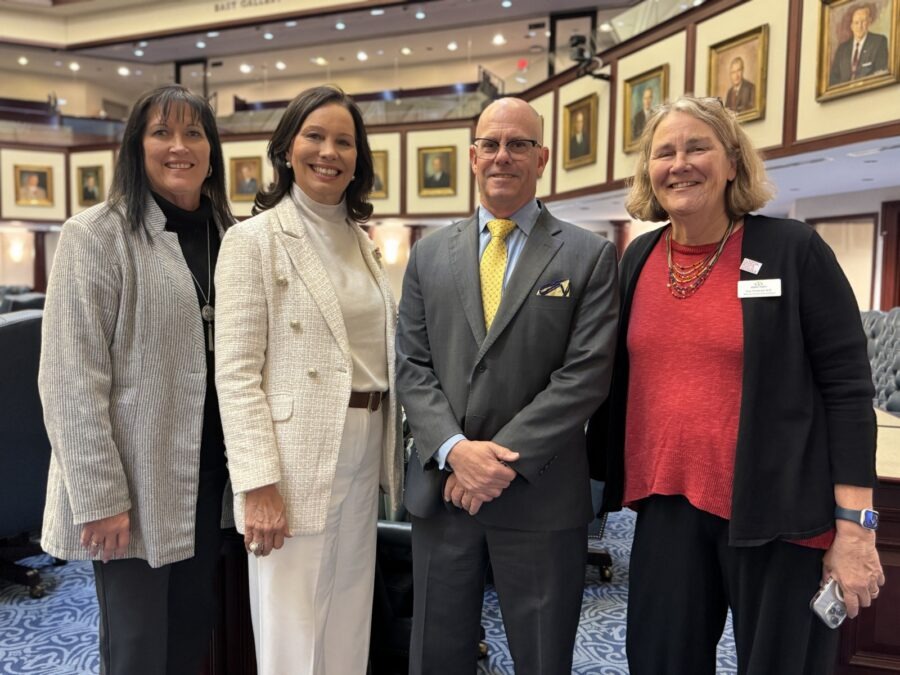
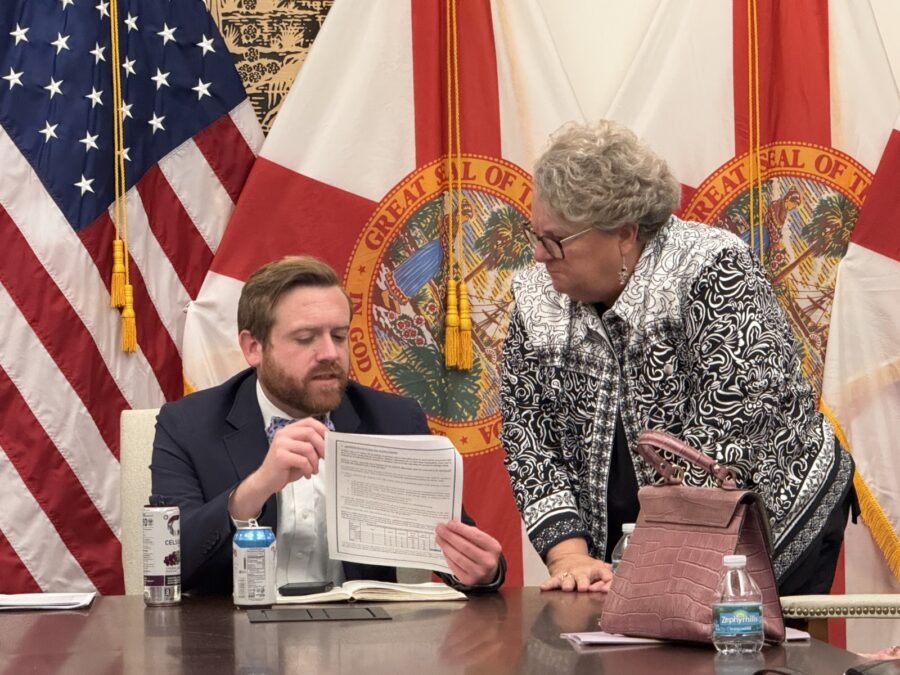
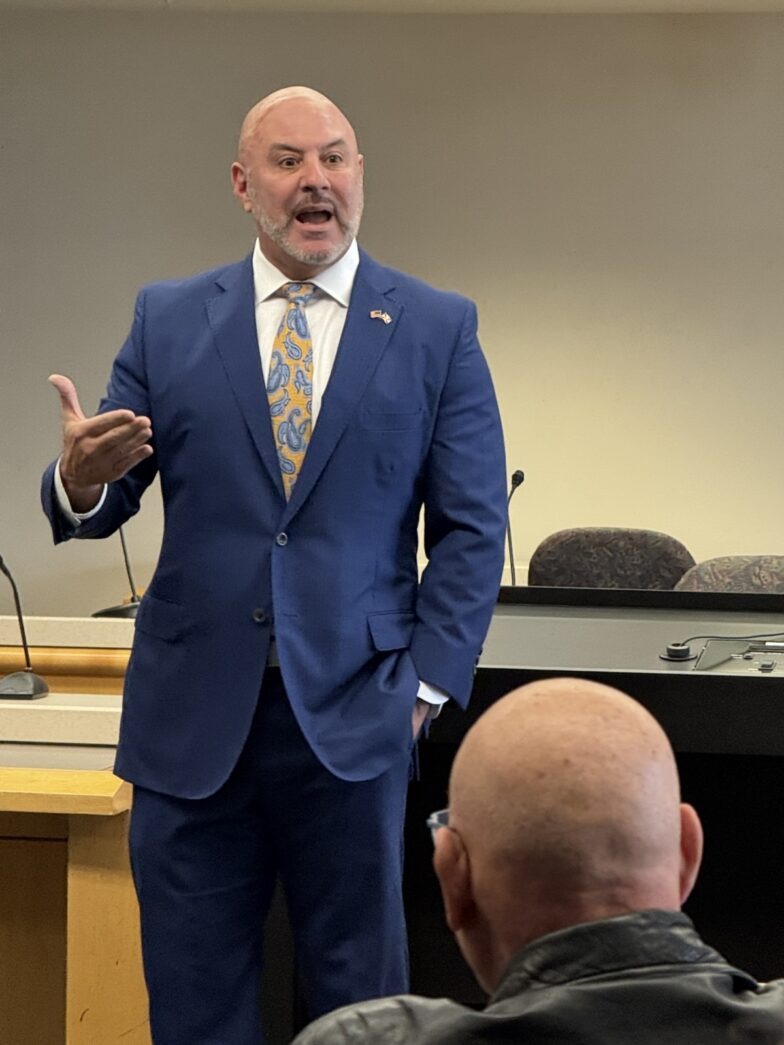
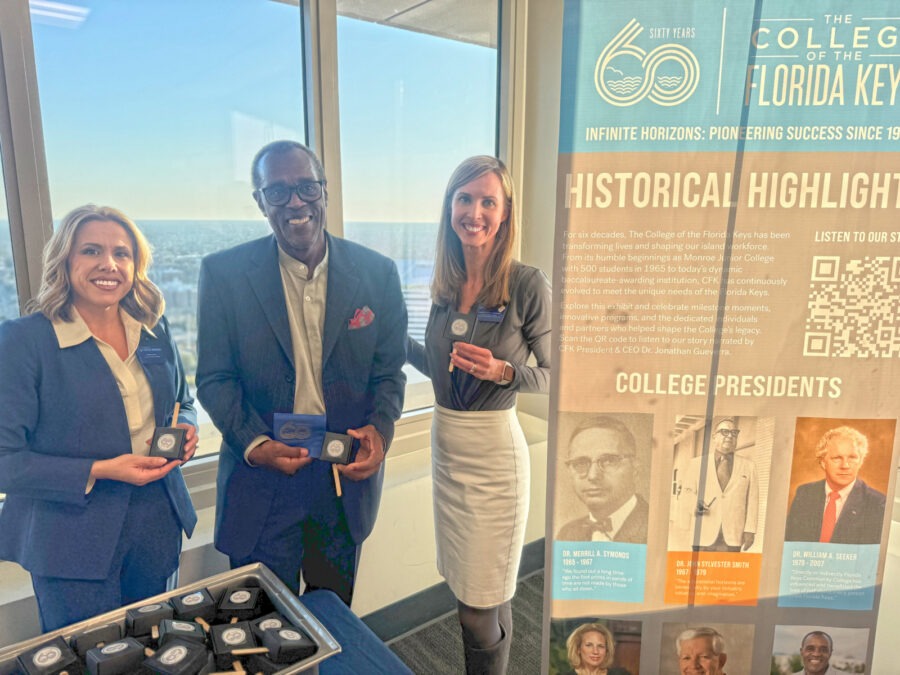
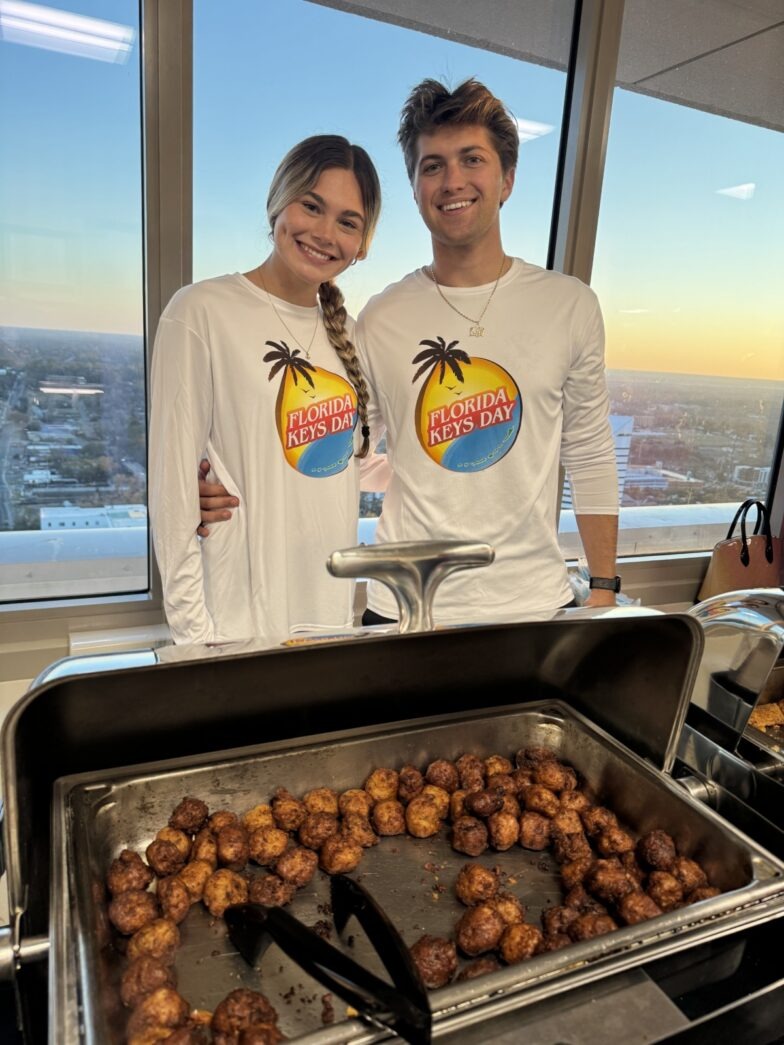
As the rest of Florida battled a brutal cold snap, government leaders and nonprofit reps from the state’s warmest county brought the needs and voices of Monroe County to the state capitol for Florida Keys Day 2026 on Feb. 5.
What began 16 years ago as a class project for Leadership Monroe County Class XVII now spills into multiple days jam-packed with meetings with legislators, cabinet officials and regulatory agencies, with some Keys cities sending representatives days before the official “Florida Keys Day” began.
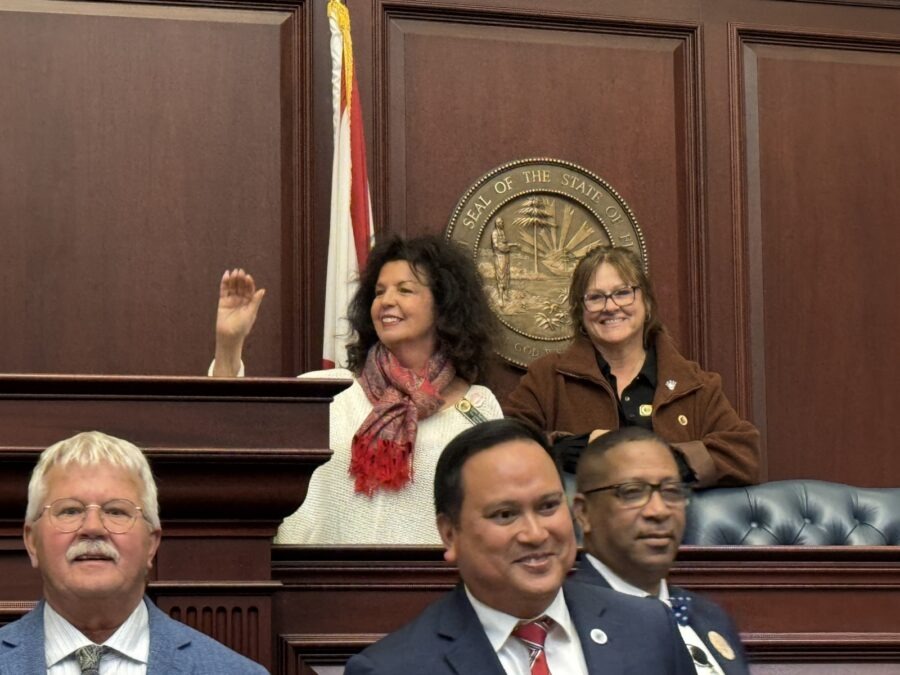
Recognition of the Keys delegation from the House floor by state Rep. Jim Mooney on Feb. 4 preceded a welcome reception hosted by Mooney and state Sen. Ana Maria Rodriguez. Mooney again opened the doors of his office to the group the following morning before a nonstop string of legislators, state agency officials and cabinet members took their turn addressing the state’s southernmost county. And of course, a reception with flowing drinks, live music, conch fritters, fried shrimp and mahi, and chocolate-covered Key lime pie awaited all in the Capitol at the end of the day.
Speaking to the Keys group, Florida Restaurant and Lodging Association president and CEO Carol Dover acknowledged the devastating effects of recent immigration enforcement on an already-severe labor shortage in the island chain.
“The (immigrants) who want to work, stay out of jail and provide a service and work in our industry, we need to find some better path for them,” she said. “We are dying, and you’re not the only county. … If we don’t come up with something, our industry is going to break.”
She floated a potential solution to include work permits, driver’s licenses and specialized identification cards – without voting privileges – for workers who’d been in the U.S. for more than eight years with no criminal records, renewable on an annual basis.
Michael Wickersheim, Citizens Property Insurance legislative & cabinet affairs director, touted a 58% reduction in policies for the state-run agency as new private companies return to Florida, along with steady rates or decreases for the majority of policyholders in 2026. Several from the Keys contingent pressed Wickersheim, along with Office of Insurance Regulation commissioner Michael Yaworksy, on Citizens’ controversial requirement for homeowners to maintain separate flood insurance policies in order to be covered for wind damage.
“We’re the only builder of the affordable homeownership model that we need (in the Keys) so dramatically,” said Habitat for Humanity of the Middle Keys executive director Chris Todd Young. “We build to 180 (miles per hour), we’re 15 feet in the air stilted, and that requirement for flood definitely hurts the affordability of the homes for our owners.”
Rudy Powell, Department of Transportation chief engineer of operations, outlined multiple bridge rehabilitation projects in line for his department, including a $242 refurbishment of the Long Key Bridge that will open for bidding in 2029.
A replacement of the Seven Mile Bridge is scheduled for the late 2040s, he said, with smaller rehabilitation projects set for the existing bridge in the late 2020s. Islamorada’s Snake Creek Bridge will also be rehabilitated, but not replaced as a fixed-span bridge as some concept drawings have suggested, he added.
Islamorada Village Manager Ron Saunders asked whether FDOT has any upcoming plans to widen portions of U.S. 1 to four lanes, discussed in various county commission and other government meetings in recent years. Powell said no such plans were in the pipeline.
As property taxes take center stage during the 2026 legislative session, Keys leaders heard support for various proposals from state officials – from chief financial officer Blaise Ingoglia backing systems to shield larger portions of home values from taxation through homestead exemptions, to Miami-based Rep. Juan Carlos Porras’ proposal to eliminate property taxes for Floridians 65 years and older. Both men said they fully expect at least one proposal to make the ballot for Floridians’ approval this November.
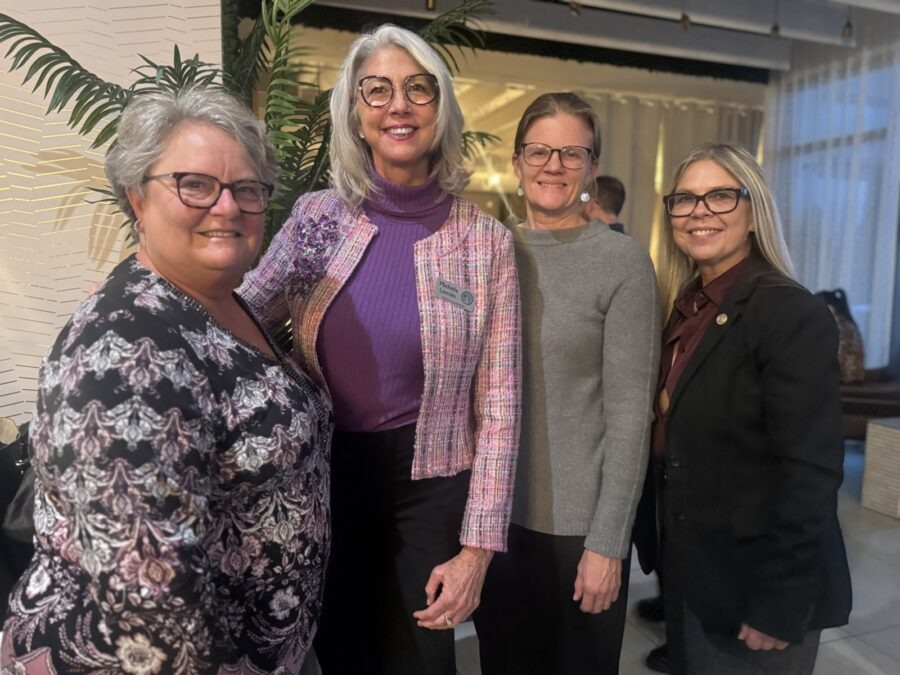
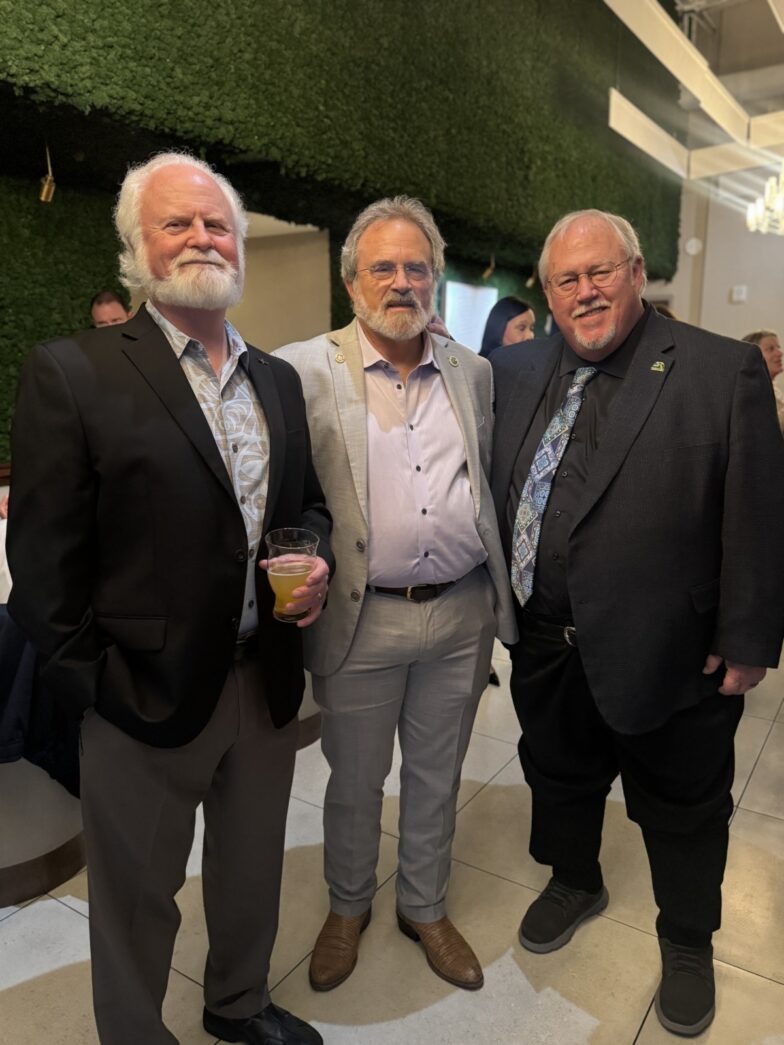
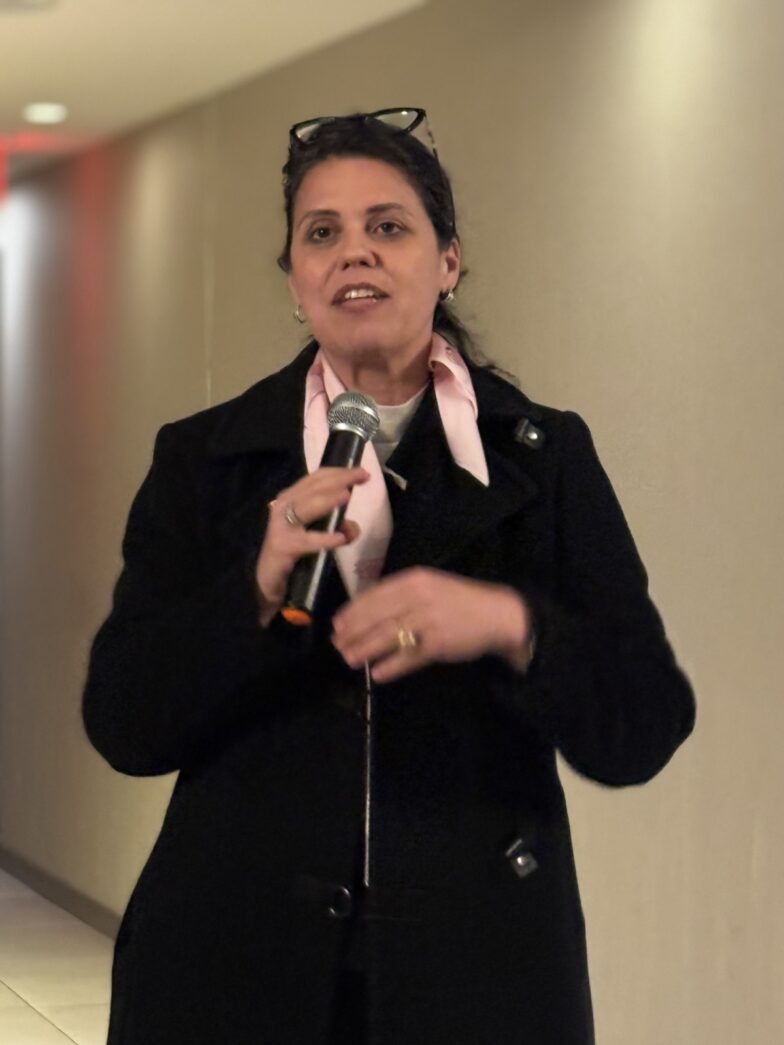
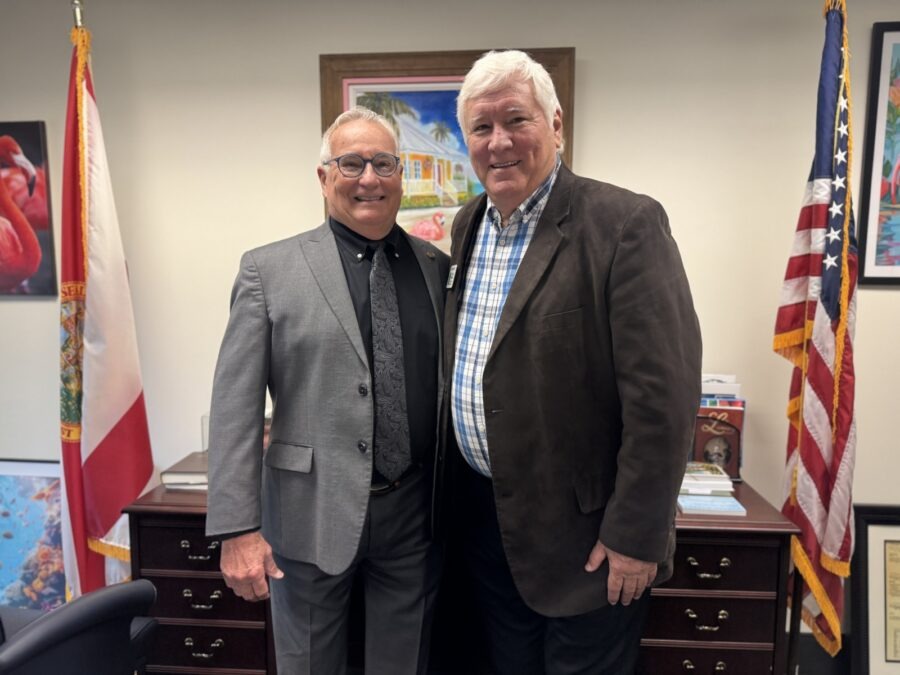
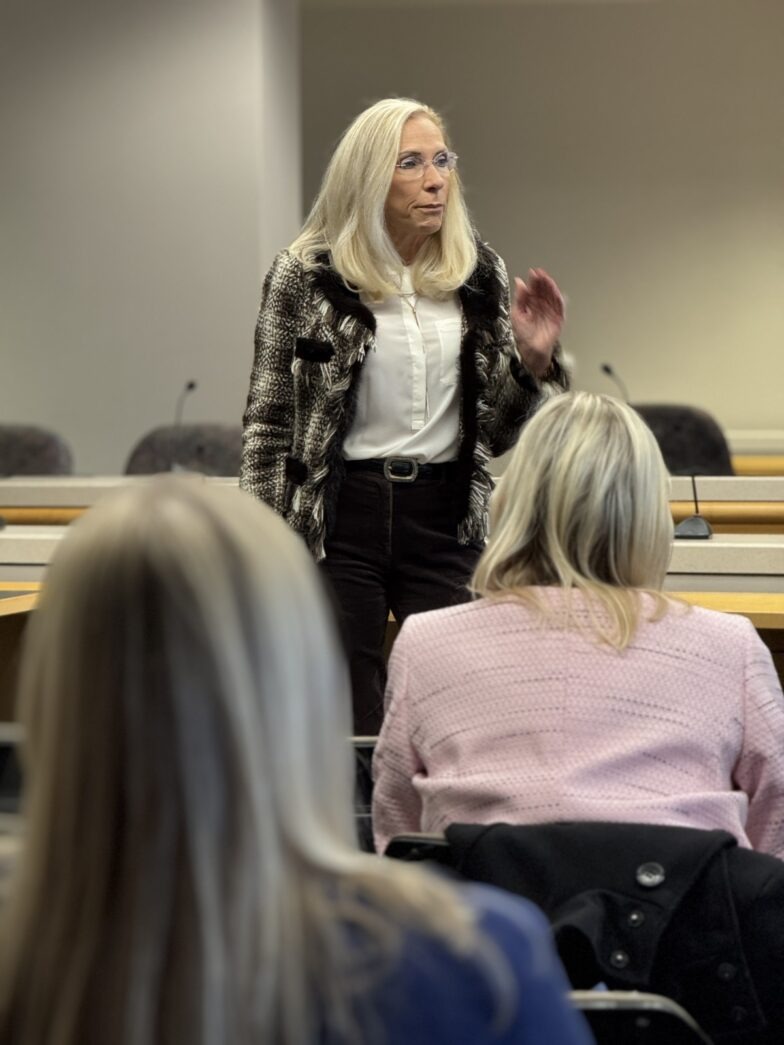
While Ingoglia said his priority was to make homeownership more affordable by discouraging large-scale institutional investors from purchasing single-family homes, participants asked the CFO to consider support that would extend tax rebates or similar relief to homeowners who rent their properties full-time to the Keys’ vital workforce.
They argued Porras’ proposal, meanwhile, could disproportionately cripple smaller Keys cities with older populations. The problem would only multiply, they said, as even more senior newcomers would flock to Florida seeking property tax breaks.
Mayor Bruce Halle, representing the city of Layton, said his city manages just a $400,000 budget from a population of 210 residents.
“If 50% of our population is over 65, (that proposal) would be a problem,” he said.
And as the Florida Department of Government Efficiency continues to scrutinize local government spending, Ingoglia said he appreciated moves already made by county leaders, including significant layoffs in late 2025.
“By challenging the status quo and making people aware that this is an issue, by us actually looking, we think that we’re changing behavior,” Ingoglia said. “That’s one of the intentions.”
In December, the Florida Administration Commission greenlit a new batch of 900 new building allocations for use throughout Monroe County – 300 in January 2026, with an additional 150 added every two years. This year’s Keys Day group could breathe a sigh of relief without the looming threat of takings cases amid dwindling units – but meetings with Gov. Ron DeSantis’ deputy chief of staff Cody Farrill sent a strong message about how the new rights should be used, a critical distinction as Keys governments look to solidify their own plans to distribute the new units.
“All we wanted is for the first (300 units) to be available, and that was our way of meeting in the middle,” Farrill said. “We won’t force them to give out all (900) immediately, because that’s not smart growth. … But that first (300) had to have been made available if people wanted them. … I don’t believe you can hold them.”
As the contingent returned to Monroe County, the Keys Weekly followed up with local leaders to learn their biggest “wins” from their days in the capital.
Monroe County
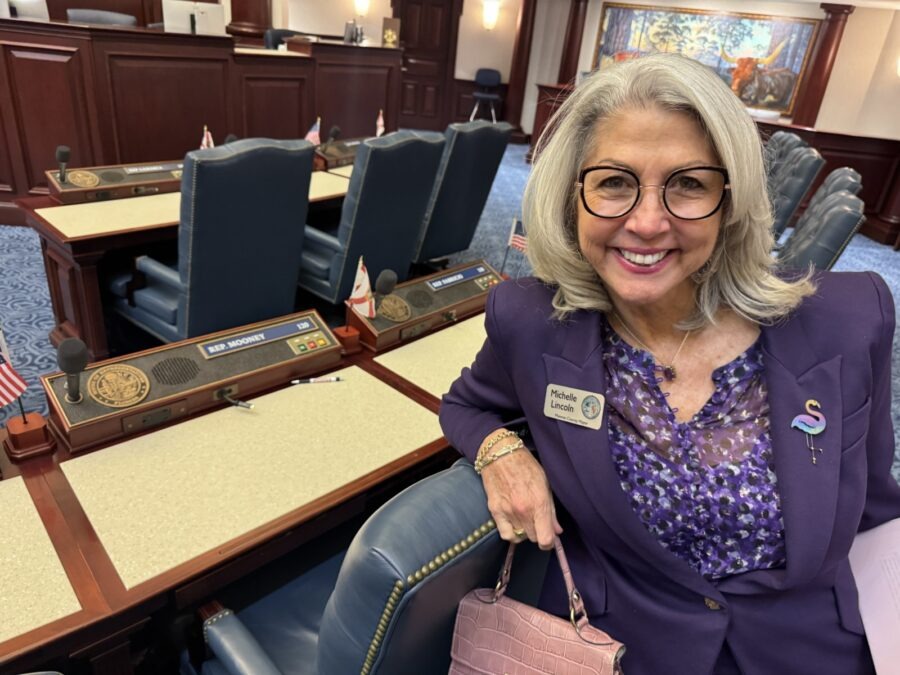
Mayor Michelle Lincoln said a sitdown with FWC Executive Director Roger Young reinforced critical work already underway to preserve Keys waters, from mooring field installations and derelict vessels to support for artificial reefs.
“It’s taken us years, but we are moving that needle, and we have the buy-in by all the agencies, the state and the funding coming together for us to make an environmental impact,” she said.
“We’re down to 81 derelict vessels in the entire county,” Young told county leaders in a scheduled meeting. “People said we couldn’t do that, we questioned why, and we finally got it done. Sometimes you’ve got to break the rules and rewrite them.”
Marathon
Funding for a federally-mandated deep wastewater injection well sat atop Marathon’s wish list, and City Manager George Garrett told the Weekly signs were looking promising for a $5 million special appropriation in the state budget as the first step in a multiyear request.
A meeting with Farrill left city leaders optimistic about modifications to Marathon’s Memorandum of Understanding with the Florida Department of Commerce, slimming down the types of building permits that must be sent to Tallahassee for an extra 45-day review after the city’s own process. If successful, a new MOU would allow for local review of smaller permits like pavers and fencing, while still running new construction by the state.
“This year, the fact that we were able to meet with the governor’s office, and they were so positive about making sure that happened, that was a home run for us,” Garrett said.
Key Colony Beach
Mayor Freddie Foster said his city was able to thank the Department of Environmental Protection for a $2.3 million storm drain improvement project. He called another meeting with the Department of Commerce “extremely enlightening” as Key Colony works toward upgrades in its sewer plant and stormwater management. He thanked both Mooney and Rodriguez for their support of a $1 million appropriation request, potentially used to fund a new motor control center for the sewer plant.
Islamorada
Village Manager Ron Saunders said his contingent teamed up with the Key Largo Wastewater District in reinforcing the need for Department of Commerce funding to improve the Upper Keys’ wastewater systems, in the headlines for several breaks over the past few years. Another session with FDOT discussed improvements to transportation, possibly adding a trolley or bus system to improve congested areas of Islamorada. Saunders said he was also able to deliver the messages personally to Senate president Ben Albritton and president-designate Jim Boyd.
“It was good Tallahassee meetings, but also good talking to people from the Keys up there,” he said. “We’re all in one spot, and it’s rare that happens.”
Key West
Mayor Dee Dee Henriquez did not return a call seeking comment by press time.