













One of the busiest spots on Stock Island these days is a place no one wants to be.
A surge in new customers signals success for most businesses, but for a food pantry, it’s a sign of deepening struggle. And the Star of the Sea (SOS) Foundation’s food pantries on Stock Island and Key Largo have seen triple its usual volume of visitors over the past few weeks, an increase that CEO Morgan Tracey attributes to the federal government’s cancellation of SNAP benefits, which used to be called food stamps.
“We usually register one or two new clients every day,” said Tracey. “Last week we had 28 new registrations in four days.”
The Stock Island food pantry typically receives an average of 100 to 120 visits per day, but that average has spiked in recent weeks to 200 or more.
“Last Thursday, 225 people came through,” said employee John Hubbard. “And none of them want to be here. They’re all saying, ‘I never expected to need a food pantry. I don’t want to be here. I’m usually the one donating food to other people.’”
But times get tough for everyone, and the SOS Food Pantry, 5640 Maloney Ave., Stock Island, is here to help — no matter how many people need it.
But they can’t do it alone. And fortunately, in a community like Key West, they don’t have to. Tracey said she has been astounded in recent weeks by the number of unsolicited donations they’ve been receiving from people who watch the news and understand the struggle and uncertainty facing thousands of Keys families that depend on the SNAP benefits. The assistance comes in the form of a debit card that gets refilled monthly with an amount that’s dependent on the size of the family and their income. But as of Nov. 1, those cards either didn’t get refilled or the amount was reduced by 35% in response to the federal government shutdown, which started on Oct. 1 and could end soon if Congress approves a proposed agreement this week.
“In my opinion, food pantries are often the ‘canary in the coalmine’ and when we see an increase in clients, it is an indicator of larger affordability and stressful situations for our residents,” said Leah Stockton, director of development at AH Monroe, which operates the Loaves and Fishes Food Pantry, which has seen an approximate 30% increase in clients over the past few weeks, most of whom are new clients.
“Clients include teachers, foster parents, military and others, and we typically serve about 250 people per month,” Stockton said. “But again, this has increased significantly in recent weeks. Given this increased need, food pantry operations currently cost about $5,000 per month, so any support for FKOC Loaves and Fish would have a tremendous impact in keeping our community fed.”
Farther up the Keys in Marathon, Marj Roberts serves as the director of Keys Area Interdenominational Resources (KAIR), which currently serves meals to roughly 80 people a day while providing more than $500,000 in rent and utility assistance to families in crisis in 2025 alone.
She told the Keys Weekly the new challenges compound a squeeze that started during the pandemic, when supermarkets improved their inventory system improvements to adjust to changing demand in real time to prevent waste and boost profits. Much of that “waste,” as in unsold food, used to go to local food pantries.
“Where we used to get hundreds of pounds of meat, for example, from Publix and Winn-Dixie, now we get very little, because those inventory systems are getting so good and the stores can plan on a dime.”
In Monroe County, 7.4% of the county’s 34,630 households received SNAP in 2023. That’s 2,562 households, many of which include three or more people, many of them children and senior citizens. The majority of the households receiving SNAP benefits include at least one working adult.
“A lot of people don’t want to admit to us that they receive SNAP (Supplemental Nutrition Assistance Program) benefits, because they’re afraid if they get those benefits, then they won’t be eligible to receive food from us.
“But that’s not the case at all,” Tracey said, emphasizing that the food pantry turns no one away. They also don’t ask about citizenship or immigration status, she said, adding that an ID and proof of residency in Monroe County are the only requirements.
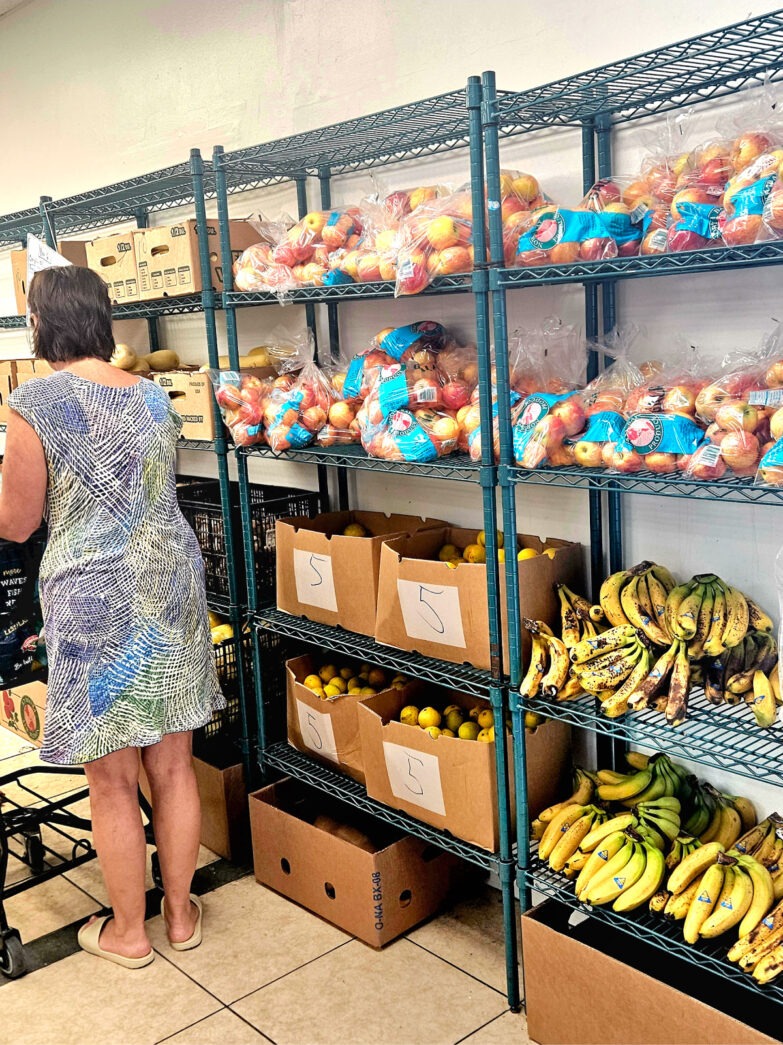
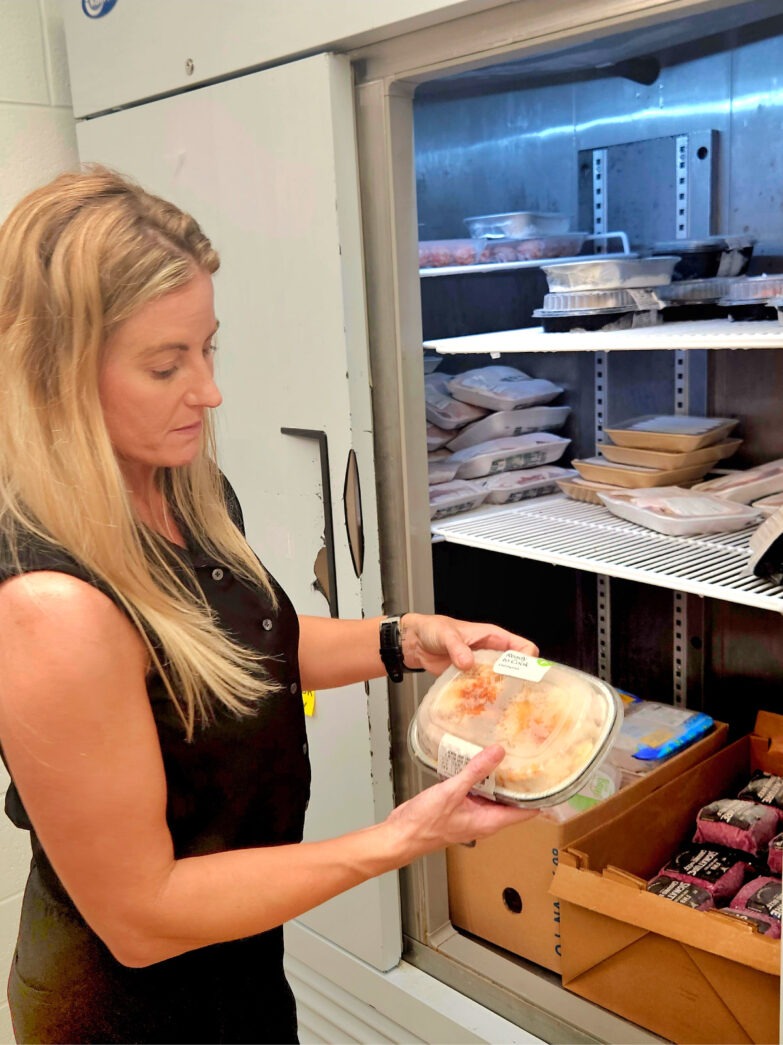
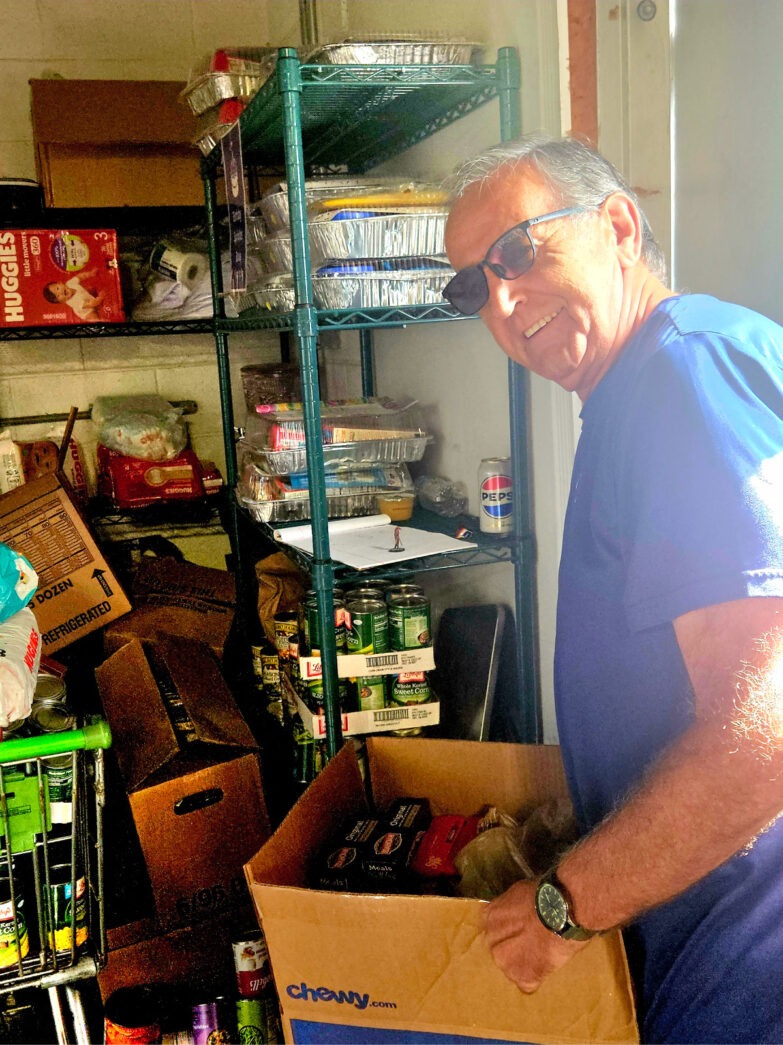
“Even just a piece of mail addressed to them at a Monroe County address is fine,” she said, while walking through the pantry that is set up like a very small grocery store, with a produce section, a large freezer for meats, a rack of bread products and aisles of dry goods, meaning nonperishable items like cereal, rice, beans, canned vegetables and soups and pasta. The peanut butter and jelly section is essential for families with children, Tracey pointed out.
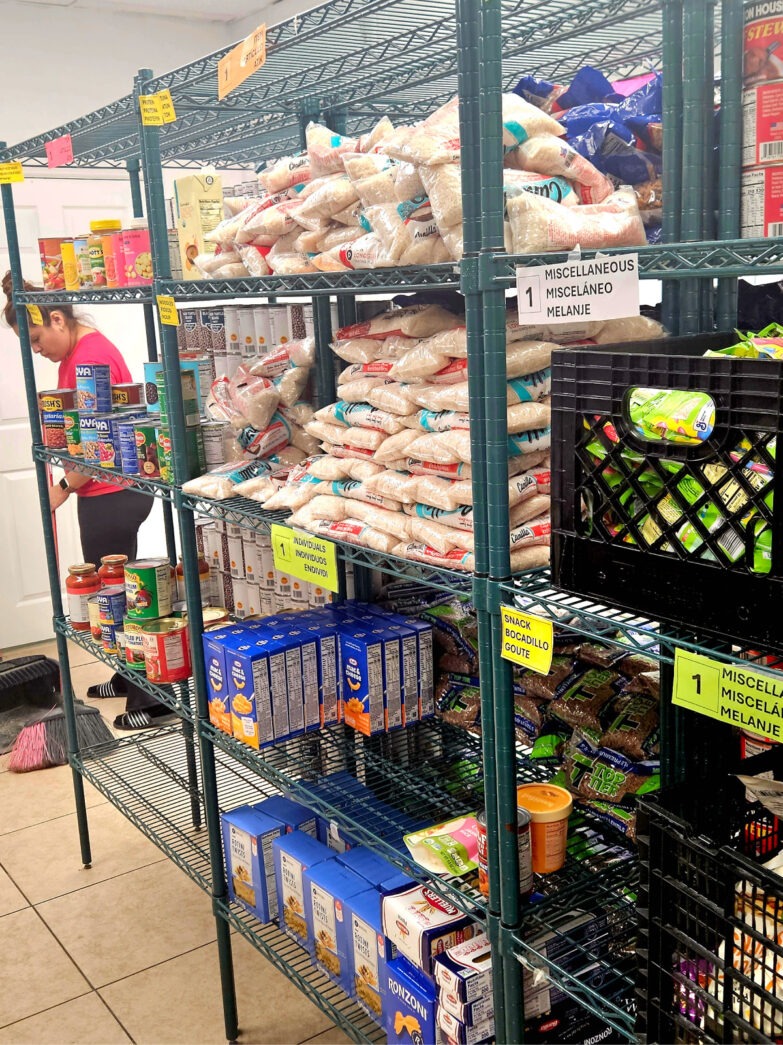
“We set this up as a self-service pantry, so our clients can actually select their own items as they would in a grocery store,” she said. “One of our volunteers goes through with them, as there are limits to the number of items in each category that a client can take, according to the size of their household.
In the middle aisle, volunteers were restocking shelves with boxes of macaroni and cheese that had just been donated.
“The donations have surged as much as the demand,” Tracey said. “I’ve never experienced such generosity in any community. People are coming in with the backs of their cars loaded and they’ll say, ‘I got all the BOGOs at Publix, so there was one for me and one for you of each item.’ Other people that couldn’t leave their job to go shopping and drop off a bag of groceries have sent us Instacart orders. And people are now starting to drop off items for Thanksgiving meals. It’s just been amazing.”
But the need never stops, and SOS Food Pantry is always grateful for donations of money, food and volunteer hours.
“A lot of people assume we don’t accept dairy products like milk and eggs because they’ll expire, but no way. Those things are gone the same day they arrive. So we’d love to get more milk and egg donations, as well as loaves of bread, peanut butter and jelly, pasta and pasta sauce and cereal.”