



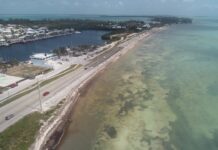


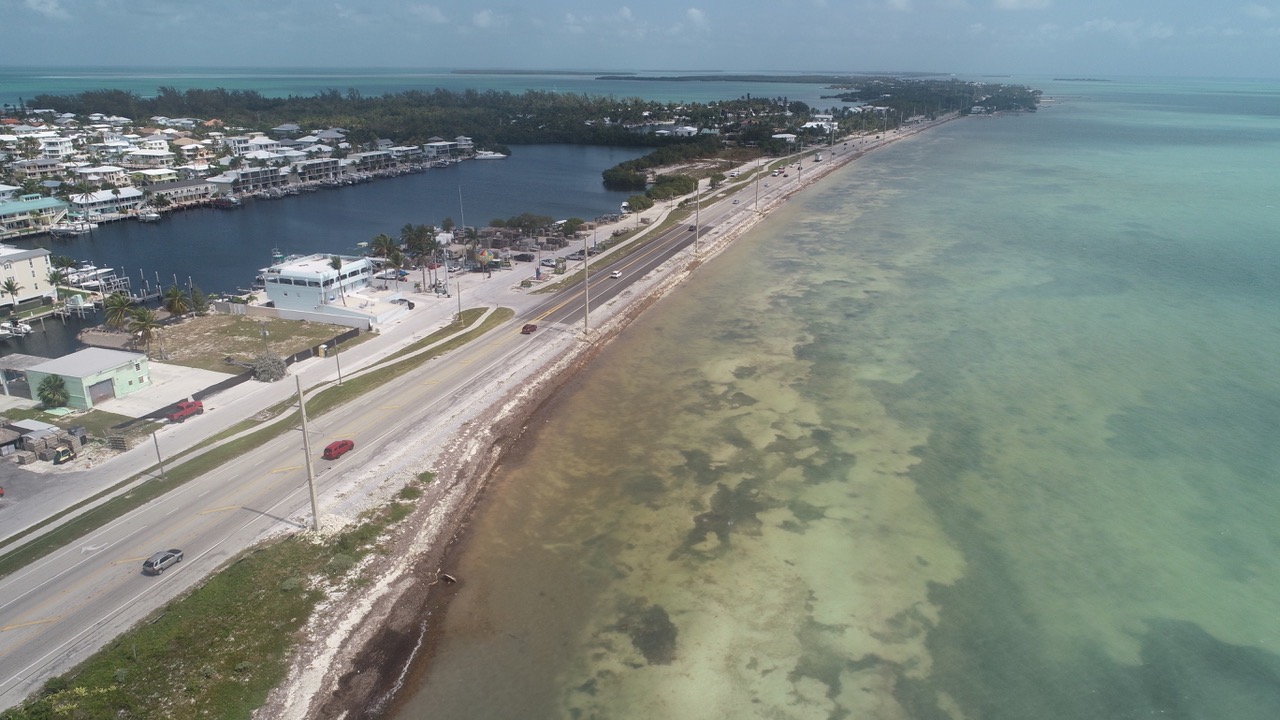
Sea Oats Beach eroded away with each passing storm. Now, village officials are seeking a restoration project to stabilize the shoreline, between MM 74.5 and MM 75 on Lower Matecumbe Key.
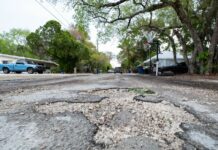
In late 2023, an $18 million project to elevate U.S. 1, from MM 73.8 to MM 76, anywhere between 1 and 2 feet was completed by contractors for the Florida Department of Transportation. Near the shoreline, crews also installed articulated concrete blocks and rip-rap to protect the road from washing away.
Previously, the stretch of road was prone to overwash from storms, like Hurricane Irma, which washed the highway out in 2017 and led to extensive work to repair the surface for cars to pass.
Last October, the village hired the environment and engineering firm RES Florida Consulting to design a shoreline stabilization solution. A feasibility study at Sea Oats determined what it would take to install an artificial reef. Nadia Locke, RES consulting professional, told village officials at a recent council meeting that the area was too shallow to meet permit criteria. A breakwater was deemed a more appropriate solution for the two beaches.
“That will slow down wave action, control erosion, trap sand and provide habitat for marine species such as coral and vegetation,” she said.
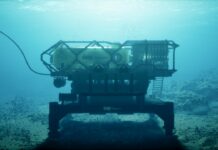
Patrick Shearer, RES senior engineer, said they are examining the potential use of reef arches and wave attenuation devices off Sea Oats Beach for shore stabilization. Reef arches are nature-based structures coastal engineers and environmental restoration professionals use to rebuild shorelines and ecosystems. The honeycombed structure mimics reef formations, creating shelter for aquatic life and providing a safe place for vegetation growth. The wave attenuation devices minimize wave energy while stopping nearshore erosion.
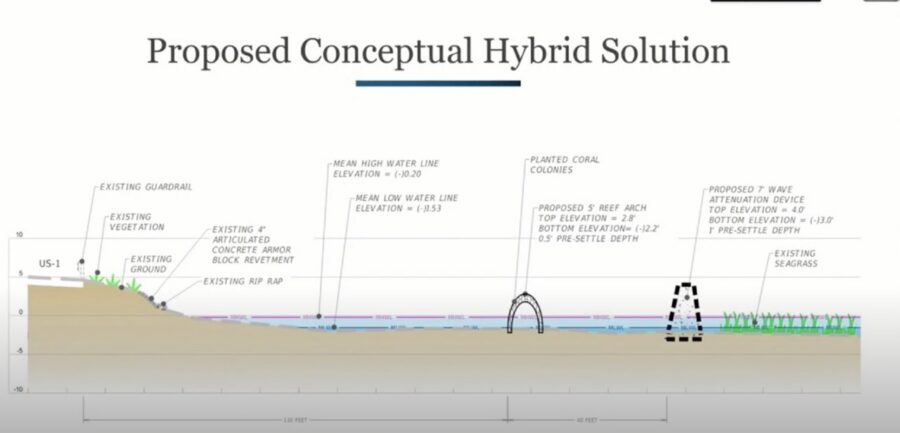
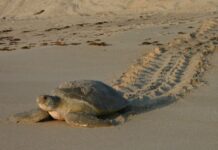
Reef arches were recently deployed at the Indian River Lagoon. The project brought more sand on the shoreward side of the structure due to lower wave energy. Wave attenuation devices were recently deployed by the Florida Department of Transportation to protect seawalls along the South Fishing Pier’s access road at the Skyway Bridge in Tampa from persistent wave energy and erosion.
“We’re looking at placing them a bit offshore just waterward to mean low water so that structures will always be wet,” Shearer said. “There’s a sandbar at the site and we’re looking at placing them on the waterside of the sandbar, but just inside of seagrass polygons.”
Shearer added that permitting requirements state there must be gaps in the breakwater devices every 75 feet for sea turtles, other marine life and water to flow through. He also said they will be working with University of South Florida professors on a wave model to help determine sand accumulation, wave dampening and making the aesthetics work.
“We want to make sure we’re creating something that’s pleasing and promoting habitat,” he said.
As Locke told village officials, the shoreline and nearby infrastructure remains vulnerable to severe events.
“Even though DOT installed articular blocks, it doesn’t necessarily stabilize the shoreline,” she said. “And as the shoreline continues to erode, the road becomes vulnerable again.”
Consultants are seeking to hold public meetings in April and May, with the hope of reaching a completed design later in the year. The village has put in requests for funding from the state and federal governments.