







Keys Marine Laboratory (KML) recently held high-profile visits to discuss research, education, reef restoration and land-based seawater systems that support restoration partners in the Florida Keys.
KML’s 8-acre facility serves as the University of South Florida’s (USF) southernmost campus and hub for research, education and reef restoration in the Middle Keys operated by the Florida Institute of Oceanography (FIO).
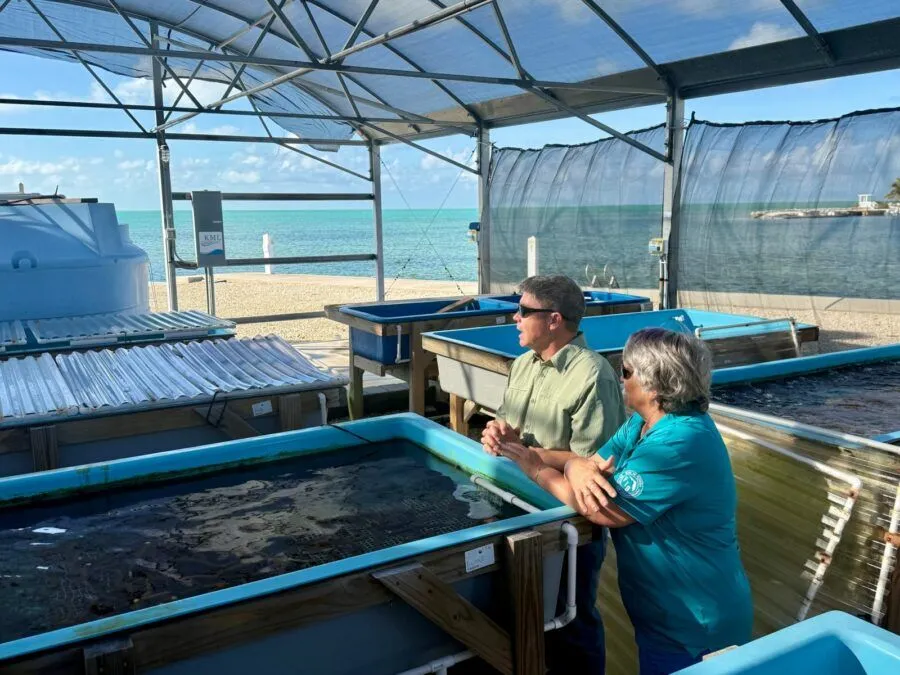
Gil McRae, director of the Florida Fish and Wildlife Research Institute (FWC-FWRI) in St. Petersburg, toured KML’s landmark FWC Coral Reef Restoration Seawater System (FWC CRRSS). Completed in March 2022, the CRRSS provides reef-quality, temperature-controlled seawater to 12, 240-gallon flow-through tables. It’s approved by FWC as a land-based master coral nursery.
Funded by the Florida Legislature, the CRRSS project at KML in Layton to enhance land-based capacity for temporary storage of newly propagated corals arriving in the Florida Keys before outplanting. Recurring funds support operation, maintenance and long-term management of the CRRSS in collaboration with the Florida Institute of Oceanography at KML. The intent is to ensure near-site acclimation for rescue corals and to sustain ongoing restoration capabilities and upgrades, with KML providing access for FWC-approved projects.
Gil was pleased to see two additional systems online, and KML gratefully acknowledges continued support and recognition as a restoration hub in the Florida Keys.
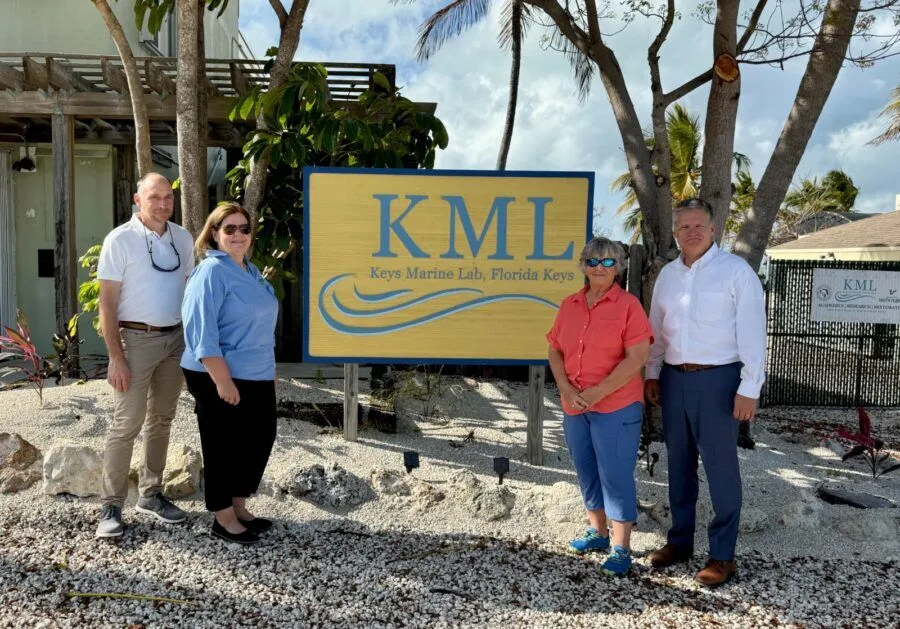
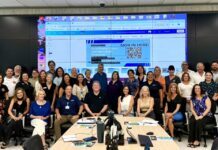
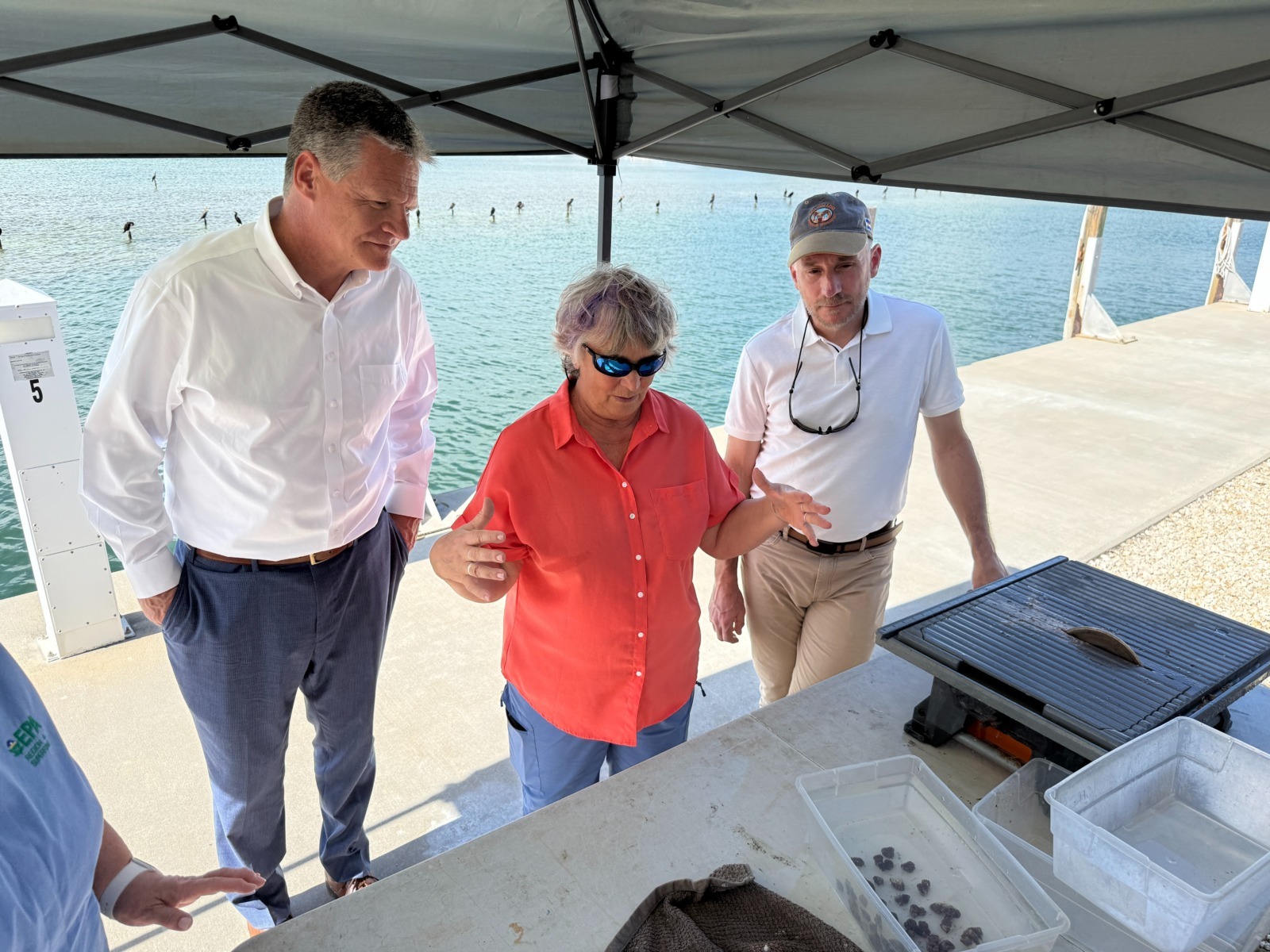
U.S. Environmental Protection Agency (EPA) Region 4 leadership visited KML, including Kevin J. McOmber, regional administrator; Jeaneanne Gettle, deputy regional administrator; Wade Lehmann, head of the Ocean & Estuarine Management Section; and Kano Ho, Special Assistant to the Regional Administrator.
Region 4 is EPA’s largest region, serving upwards of 63 million people across eight Southeastern states — Alabama, Florida, Georgia, Kentucky, Missouri, North Carolina, South Carolina and Tennessee— and six federally recognized tribes.
McOmber expressed interest in hearing firsthand reef restoration stories since the major 2023 bleaching event. KML Director Cindy Lewis shared updates on ongoing restoration efforts, including EPA-funded projects that have supported several KML users’ research projects in advancing their restoration work.
In November 2025, The Florida Institute of Oceanography (FIO) welcomed Captain Michael Kahle as its new director, and this occasion represented his first visit to Keys Marine Laboratory. Kahle brings more than 25 years of distinguished leadership in national security, crisis management and interagency collaboration. Most recently, he served as Sector Commander for the U.S. Coast Guard, Sector St. Petersburg, where he led over 2,600 personnel and oversaw all maritime law enforcement, port security and regulatory operations along Florida’s Gulf Coast, including the Tampa Bay region.
His appointment strengthens FIO’s collaboration with USF and KML to expand ocean access, advance workforce development, and promote interdisciplinary research. Kahle’s experience in strategic planning, risk management and cross-sector partnerships will help guide the growth of KML’s research enterprise and impact.
For more than 30 years, KML has offered a unique location, dedicated on-site scientific support, and a comprehensive full-service marine field station. With easy access to Florida Bay, the Everglades National Park, Florida’s Coral Reef and the Atlantic Ocean, KML supports vital research on the subtropical and tropical marine and terrestrial ecosystems of the southeastern United States.
KML facilitates college-level education and research for institutions and stakeholders at local, state, national, and international levels. Its primary purpose is to function as a hub facilitating a wide range of academic, research, and reef restoration. Over 245 organizations hailing from more than 42 states across the United States and 53 organizations from 29 countries worldwide, have benefited from the services and resources provided by KML since its inception in 1991.
KML serves as a regional hub for academics, researchers, and restoration efforts, supporting over 150 research and academic groups totaling more than 800 individuals annually. The laboratory provides a nexus where leading minds in marine and oceanographic science collaborate to develop solutions for combating environmental challenges and restoring the only living barrier reef system in the continental United States.