











It should not be surprising that a place so rich in history as the Florida Keys also boasts a wealth of prep sports history. The annals of high school sports in Monroe County stretch back as far as 1913, when the Hargrove Institute in Key West put together a basketball team just 22 years after the sport was invented. Fast-forward another 22 years and Monroe County officially kicked off its gridiron history.
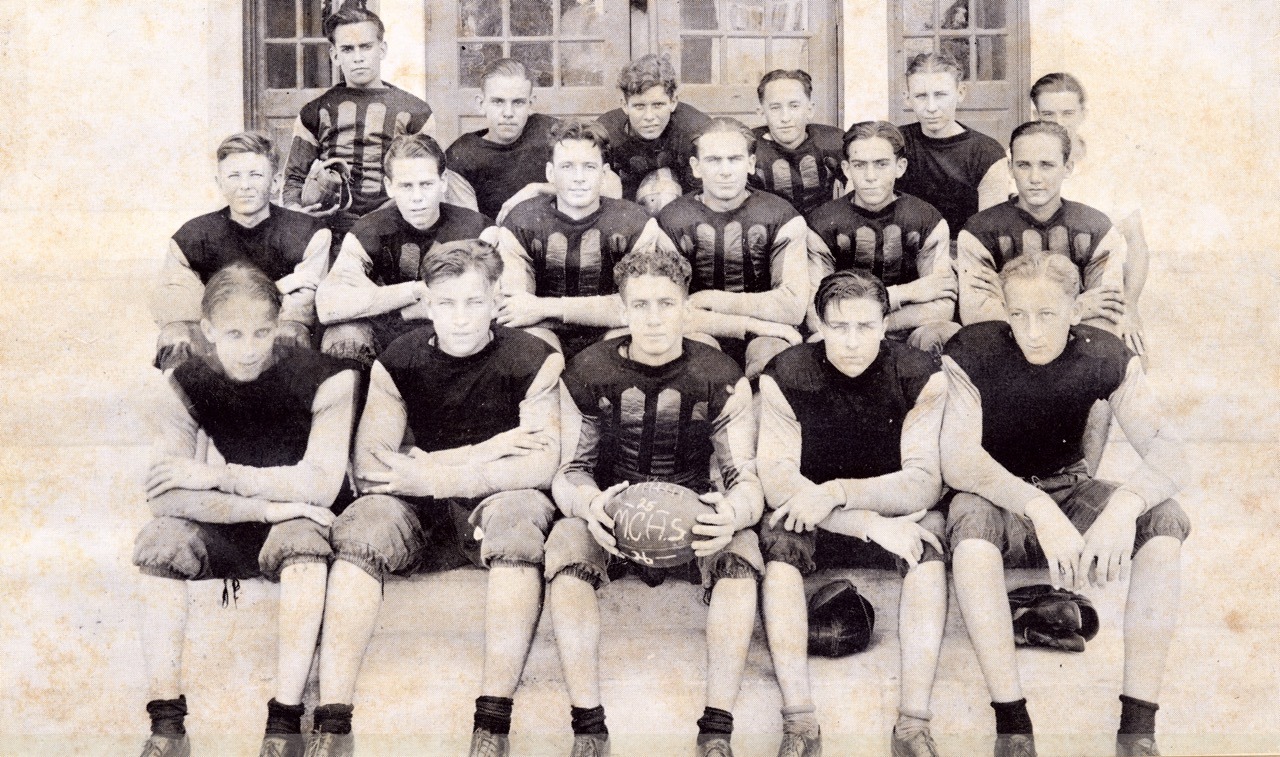
Prep football was first noted in Key West 99 years ago. Football was not new to the Southernmost City; it was just new to high-school athletes. In fact, the first teams faced by the Fighting Conchs of Monroe County High School, later Key West High School, were the enlisted men stationed on the island. The Conchs played against groups including the Navy, the Navy Hospital and the Marines. Games were played at the Army barracks, now Peary Court, and the field conditions we complain about so vehemently today were likely far more terrible then.
As far as actual competitions against other high school teams, the Conchs did have a few that first year. The records for Key West’s inaugural season are sketchy and difficult to come by, but it is clear that coach Peter Christiansen was at the helm of an 11-man gridiron squad that traveled via train and ship to the mainland to play against Miami High, Saint Petersburg, Fort Lauderdale (to face the Flying Tarpons) and to Lemon City, which was the area of Miami near Little Haiti today.
That first team had hopes of traveling to Cuba with the local Navy crew, which was going to face the University of Havana, but it is unclear whether that ever happened. What did occur was the worst thumping a Keys team ever endured in a football contest when St. Petersburg, the state champ that season, scored 96 points on the scoreless Conchs.
The Conchs were back for more in year two and continued to play a mix of high school and adult teams. Their opening game was a rematch against Saint Petersburg, where Monroe County High School lost 28-0, far better than their first encounter. The Conchs made a three-day trip to play the Green Devils aboard the steamship Cuba. The trip was not a sight-seeing extravaganza; it took that long to get the team and a dedicated fanbase of 20 to and from St. Pete, making our modern transportation seem a bit less worrisome.
Later that year, the team had to be rescued at sea when their transportation began to leak a few miles offshore. It is said that the team helped bail as they waited for the Coast Guard, who eventually transported them to Fort Myers for their game. The school’s yearbook the following spring states that the trip took 25 hours, a bit different from the high-speed ferry you can hop aboard today. But it was not all doom and gloom for the Conchs; they picked up their first win against Lemon City High School that season. Lemon City, no doubt, was still digging out from the Miami Hurricane of 1926, a Category 4 monster that destroyed much of Miami and Fort Lauderdale on Sept. 20 of that year.
In 1927, Monroe County High School officially changed its name to Key West High School, but many already called it that. In the first official year of being called Key West High School, one could argue that the first win was that season, against a team of Marines stationed in town. Regardless, it would be the last year of prep football in the Keys for many years. The effects of the Great Depression were just too much for the time and expense of football to overcome.
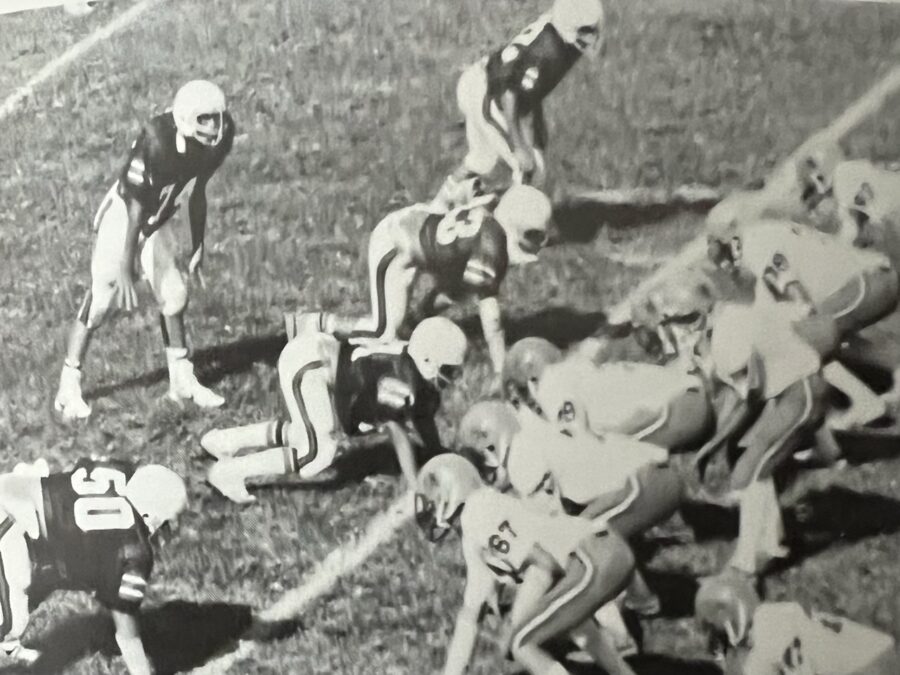

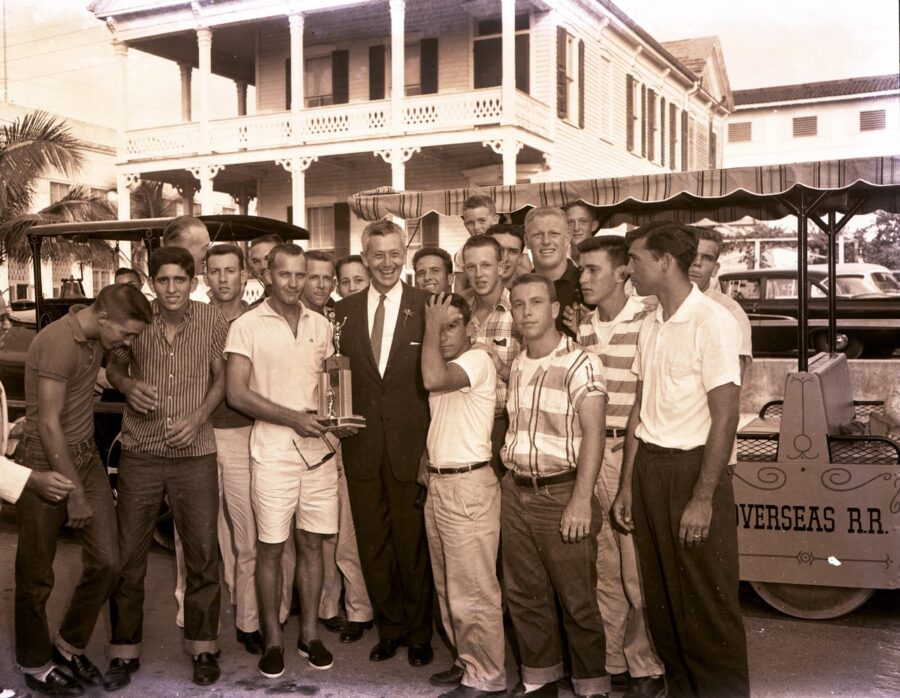

Football returned to the Keys in 1948, when the Tigers of Douglass School fielded a team. At that time, schools were still segregated by race, and the Black students attended Douglass High. Their football games were the only prep gridiron contests that year and were played at Ocean View Park. Some of Key West’s best athletic teams wore Tigers uniforms.
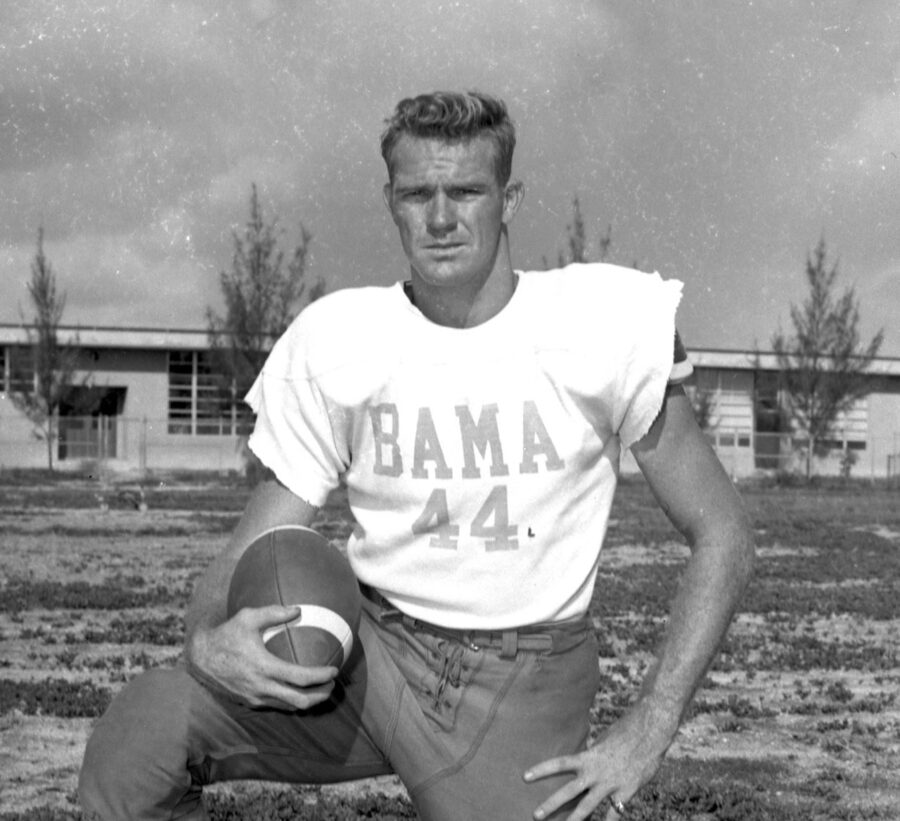
By the time Conch football kicked off again, it was 1951, and several of the athletes from the inaugural season had sons playing for Key West. That season, the Conchs’ travel was a bit less difficult; they took an airplane to play against Cristobal High School in Panama. The Keys had their first All-State player that season in Ken Bazo, who later played at FSU. Two seasons later marked the first undefeated season in Keys gridiron history. Key West was 8-0-2 in 1953 and won the Gold Coast Conference Championship. No Key West team has gone undefeated since.
Marathon opened for business in 1957 and fielded a flag football team. The Dolphins and Hurricanes enjoyed an annual flag football game, beginning their rivalry prior to the first Battle of the Keys event. The 1950s produced some of the greatest gridiron athletes in Keys history, including Red Stickney, Boog Powell and George Mira. Powell and Mira were wooed heavily by colleges in baseball and football, with Powell choosing the former and Mira the latter.
1964 marked Coral Shores’ first year of tackle football, when they put together a six-man team. The ’Canes went 5-0 that season, marking the only Keys football team to finish the season undefeated and untied. The following year, Douglass School closed and the students and athletes of Monroe County experienced integration. However, that same year, Mary Immaculate put together an 11-man tackle team after not being able to field enough athletes for six-man the year before. The ’60s saw talented athletes from Keys teams including Mike Blatt, Joe Mira, Charles Powell and Bobby Menendez, the namesake of Key West’s gymnasium.
In 1966, Coral Shores had an 11-man football team for the first time. They traveled to Freeport in ’69 for an international matchup in the Bahamas. Then in 1970, Marathon added 11-man football to its offerings and the first (and second) Battles of the Keys took place. Coral Shores won both contests between the two teams in a rivalry that continues to this day. In 1979, Island Christian School added a team, making it five Keys teams competing that season. Mary Immaculate closed its doors in 1985, and Island Christian had a short hiatus, then scaled back to eight-man football between 2009 and 2016. For the last eight years, only the three public schools have taken snaps across the Keys, and it appears that will be unchanged next season, which will mark a century of prep football in Monroe County.