


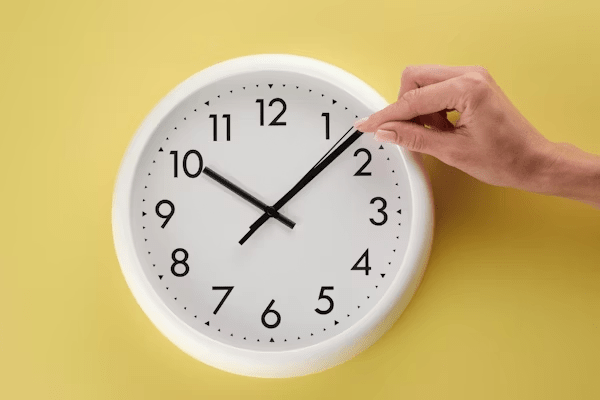
Twice a year we perform one of the strangest rituals modern societies have agreed to participate in: We change the clocks and collectively pretend it’s not a big deal.
“Spring forward,” they say. As if losing an hour of sleep is something to celebrate.
For some people it’s barely noticeable. For others, the week following daylight saving time feels like someone unplugged their brain, their patience and possibly their coordination. You’re tired, a little foggy and somehow hungrier than usual. Coffee stops working as well. Your sleep schedule suddenly resembles that of a college freshman during finals week.
You’re not imagining it. There’s real biology behind why this tiny one-hour shift messes with us.
Your body runs on something called a circadian rhythm, an internal clock that regulates sleep, hormones, digestion, body temperature and even mood. This rhythm is heavily controlled by light exposure, especially morning sunlight. This rhythm is so important it got its own full-page article here a few m+onths back (I highly recommend you check it out).
When the clocks suddenly jump forward, your body doesn’t magically adjust overnight. Your internal clock is still running on the old time. So, when the alarm goes off, your brain may still believe it’s an hour earlier.
Essentially, daylight saving time gives you a tiny version of jet lag – without the vacation. In my opinion, that is so rude. But what is even ruder is that scientists know it’s also dangerous.
Researchers have studied this pretty extensively, and the results are fascinating. In the days following the springtime change, studies show increases in heart attacks, workplace accidents and car crashes. Sleep duration drops, concentration suffers and people report higher levels of fatigue and irritability.
Losing that one hour may seem small, but biologically it’s enough to throw the system out of sync.
Part of the reason is that sleep is one of the most delicate biological systems we have. Hormones like melatonin and cortisol rise and fall in predictable patterns throughout the day. Even a small disruption can shift that rhythm.
It’s like what happens when you travel across time zones. Your body slowly catches up, but it takes several days for everything to fully recalibrate. And for some people, especially older adults, the adjustment takes longer.
Now before you start shaking your fist at the clock on your microwave, there are a few simple things that can help your body adapt more smoothly.
First, get morning sunlight. This is one of the most powerful signals you can give your circadian rhythm. Even 10 to 15 minutes of natural light in the morning helps tell your brain, “Okay, this is the new schedule.”
Second, keep your sleep and wake times consistent. It can be tempting to stay up later when the evenings feel brighter, but consistency helps your body stabilize faster.
Third, move your body during the day. Physical activity reinforces your sleep-wake cycle and helps you fall asleep more easily at night.
And finally, be a little patient with yourself. If you feel a bit foggy for a few days, that’s not weakness, that’s biology doing its thing. Your body is remarkably adaptable, but it still appreciates a little time to catch up.
Every year, the debate resurfaces about whether we should abandon daylight saving time entirely. Some experts argue that staying on standard time year-round better supports our natural circadian rhythms. I am in that group of experts.
Until that decision gets sorted out, however, we’ll continue the twice-yearly tradition of collectively adjusting the clocks and wondering why Monday feels harder than usual.
So, if you find yourself a little extra tired the last two weeks, don’t worry. It’s not you. It’s the clock.


