


By Liah Continentino
Florida is no stranger to introduced species. From green iguanas to Brazilian pepper, many non-native plants and animals have settled into our environment.
While some cause little trouble, others can create serious problems for wildlife, home gardens and farms.
One of the newest arrivals is the two-spot cotton leafhopper (Amrasca biguttula), also called the two-spot cotton jassid. This tiny insect is about the size of a grain of rice, but it can cause big damage. Native to Asia, it was first found in North America in 2023. By late 2024, it reached Florida and has since been reported in Georgia, Alabama and South Carolina. Its quick spread is likely due to its ability to feed on many common crops and landscape plants.
The two-spot cotton leafhopper is selectively polyphagous, meaning it eats several kinds of plants but prefers certain ones. Its favorite plants include okra, soybeans, cotton, sunflowers, eggplants, potatoes, mung beans and cowpeas. Many of these are important farm crops and common in home vegetable gardens. It can also feed on members of the hibiscus and nightshade families, which include several native plants and popular ornamentals.
It is important that gardeners and residents keep an eye out for this new pest. Checking plants regularly and reporting what you see helps scientists monitor and manage new species before they become widespread.
Identifying the two-spot cotton leafhopper
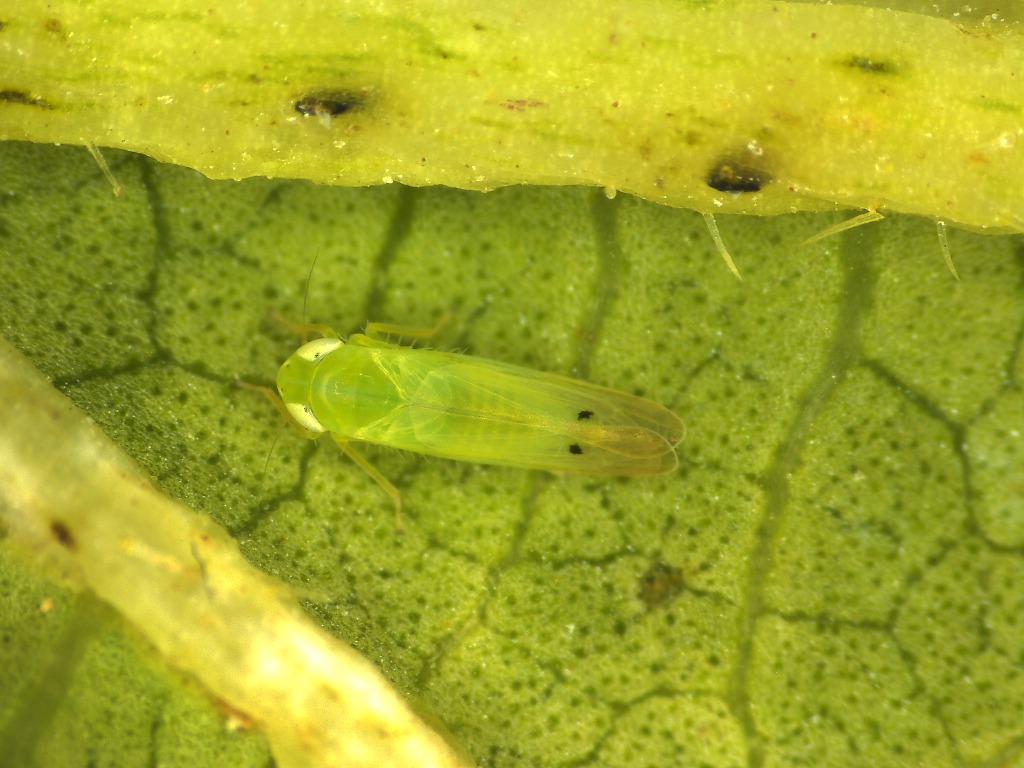
Adults are small, pale green insects with yellowish wings, two black spots on the head, and one black spot on the tip of each wing. They usually sit on the underside of leaves, and adults “hop” when disturbed.
Due to their size, damage is often noticed before the leafhoppers themselves. Leafhoppers are considered “piercing-sucking” insects due to their feeding strategy, piercing plant tissue and feeding on sap. Their feeding causes a type of damage called hopperburn, which includes premature leaf drop, yellow or bronze leaf edges, leaves curling or cupping downward and stunted growth or fewer flowers/fruits.
These symptoms can look like drought or nutrient problems, so it’s important to look closely for the insects as well.
What to do if you suspect leafhoppers
If you believe you’ve found two-spot cotton leafhoppers, contact the Monroe County Extension Office for confirmation. If you find large numbers, samples should be sent to the Florida Department of Agriculture and Consumer Services, Division of Plant Industry. Instructions for submitting samples can be found at www.fdacs.gov/dpisamples.
Managing two-spotted cotton leafhoppers
While scientists are still working on management guidelines for this species, gardeners are advised to implement integrated pest management practices:
- Scout often: Check leaf undersides for leafhoppers or hopperburn. Sticky traps may help detect activity. If you find leafhoppers, cover the affected leaves with a bag, prune them and dispose of the plant material in the trash.
- Avoid over-fertilizing: Too much fertilizer can make plants more appealing to pests.
- Biological control: Beneficial insects such as ladybugs, spiders, lacewings and minute pirate bugs naturally eat leafhoppers. Conserving these insects in your landscape helps your garden stay in balance.
- Chemical control: Horticultural soaps and oils may help. If more control is needed, contact the Extension Office for guidance on insecticides. Always follow label instructions and use chemicals carefully to avoid harming helpful insects and pollinators.
The arrival of new pests can be overwhelming, but through community awareness, early reporting and science-based management, we can support our gardens and local ecosystems.
For specific horticultural recommendations or questions, contact Liah Continentino at Continentino-liah@monroecounty-fl.gov or 305-998-9580.


