



“Horses are, of course, the story, but are they always the whole story?”
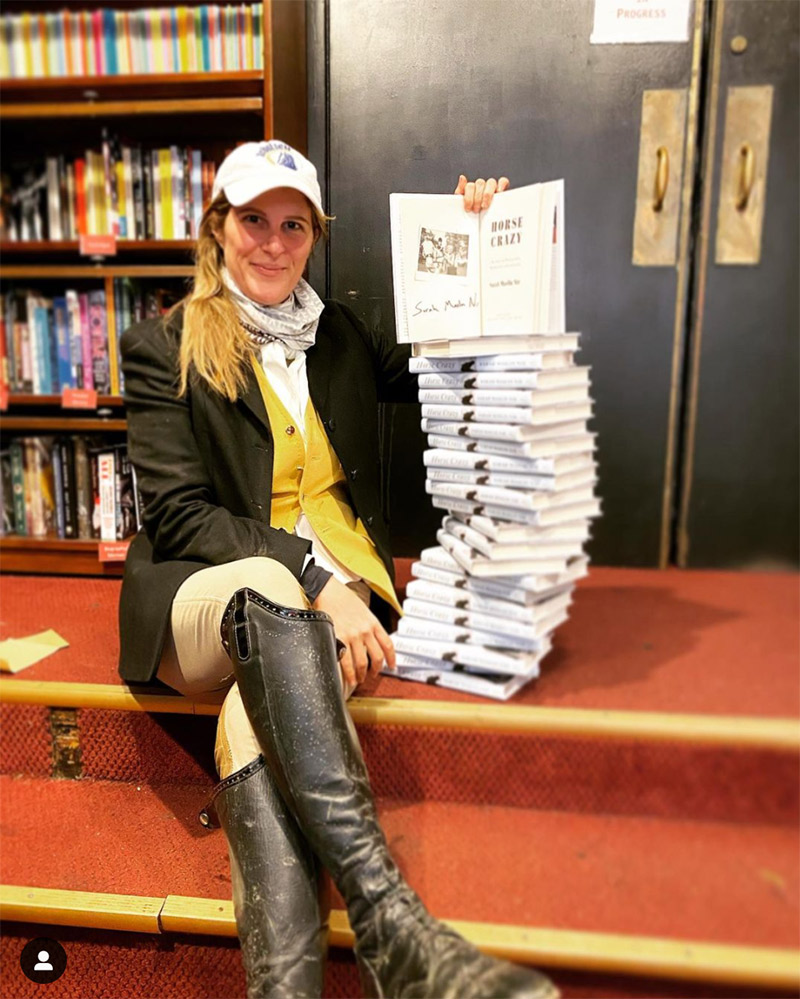
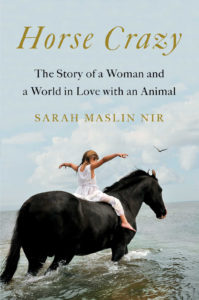
Sarah Maslin Nir quoted the above as she previewed the magic of her new book, “Horse Crazy,” for the Keys Weekly. She will unravel the genesis of her braided memoir in a Zoom talk hosted by Islamorada Library on Saturday, Feb. 6.
“‘Horse crazy’ ‒ it’s like ‘boy crazy,’ but for horses. It’s about people like me who find horses to be this incalculable, ineffable, compelling creature,” she said.
Published in August 2020, the book is the result of Nir’s lifelong love of the animals. She began riding when she was 2 and fell in love immediately after falling off her first horse.
“My first horse memory … I fell off the horse I was riding. I thought I would be crushed, but the horse jumped over me,” she said. “It imprinted on me the idea that horses would always take care of me.”
This mindset and various horses on her journey have guided Nir ‒ through fractured family experiences, loneliness and learning to feel comfortable in her own skin. As such, each chapter of the memoir details a different horse as the framework through which she comes to understand something deeper about herself.
As an acclaimed New York Times reporter and 2016 Pulitzer Prize finalist, Nir also traveled the world documenting the news and meeting other horse aficionados along the way. “Horse Crazy,” includes their stories and epiphanies alongside her own.
“I collect stories as a reporter for the New York Times, and everywhere I go, all over the world, when I put down my official notebook, I pick up my other one and go find the horses and the people who love them,” she said. “That’s my compulsion. I’ve found horse people like me in Rajasthan, in Senegal, and even in the arctic wilderness. I realized I was really searching for myself and what compels me about these animals.”
Her book is the culmination of these explorations, a love letter to her beloved equines and the people who, like her, find their “true north” in horses. More than that, it is a coming-of-age story and an exploration of identity, with Nir and her other characters coming to terms with who they are as they mount up and canter onwards, always guided by their own horse crazy.
She uncovers the lost legacy of black cowboys in the American West. Although one of every four cowboys was Black, they’ve all been “totally erased” from our western origin narrative. Nir explained, “If Black people came into the American story, they came under a whip and chains. That’s not the America we wanted to remember, but we need to.”
Nir learned of the role Black cowboys played in taming the West through her experiences in a small horse barn on Randalls Island in the middle of the Harlem River. Its owner, one of the last Black cowboys of New York, told her about the Black cowboy’s erasure from history.
“The Black cowboys were here long before we were having discussions on Black Lives Matter and inclusion,” she explained. While they seemed like outsiders in the western tales that had omitted them, they weren’t. In the same way, Nir came to understand that she was just as much of a part of the world of horses as the elite equestrian clubs, where she feared she would never belong.
“Identity is what you make of it,” she said. “You can own it, and not let anyone else erase you from the story.”
Nir also talks about how she galloped alongside fox hunters with a woman who was simultaneously riding away from a broken marriage. And about the time she befriended a British socialite who became the “Marwari’s steward across the Atlantic.” This woman came to raise 12 Marwari horses, illegal to export from India, on Martha’s Vineyard after smuggling the horse breed’s semen across the seas for 30 years, lining up with her 30-year affair with the safari guide who took her on her first, life-changing Marwari ride.
These stories and others guide Nir’s readers through their own journeys, into their passions and what drives them.
“It’s not just a book for horse nuts. It’s a book about obsession and understanding obsession. Obsession isn’t derogatory to me; it teaches us about who we are and what we care about. It’s about belonging,” Nir said.
For a Zoom invitation for the talk, email caria-charlotte@monroecounty-fl.gov.